Mauritania launches the Global Soil Doctors Programme to put soil health at the heart of farming
Mauritania has launched the Global Soil Doctors Programme, a global initiative led by the Global Soil Partnership (GSP) of the Food and Agriculture Organization of the United Nations (FAO), to strengthen national capacities for sustainable soil management (SSM) and support farmers in protecting their soils. The programme comes at a critical time, as soils in Mauritania are increasingly exposed to soil organic matter loss and salinization, driven by recurrent drought conditions and fragile agroecosystems.

The first training session was held in Kaédi, in the Gorgol region, and was coordinated by the Ministry of Agriculture and Food Sovereignty (MASA) with technical support from FAO Mauritania, under a project funded by the Government of Japan. The activity marks an important step toward building a national network of soil doctors in the country.
Training future soil doctors
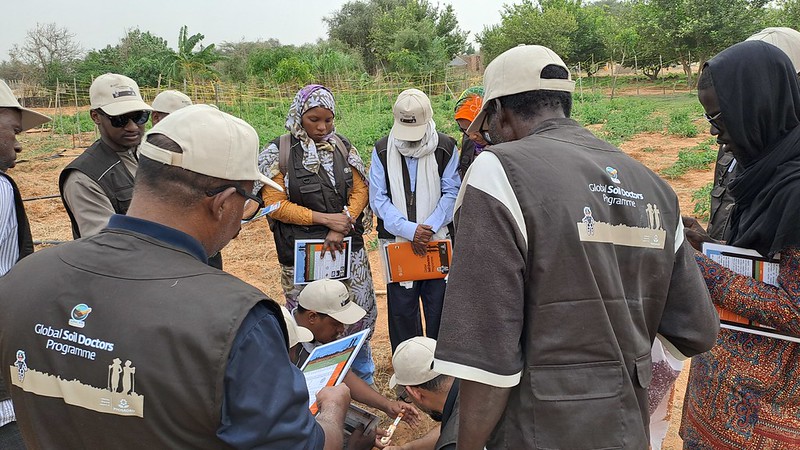
The five-day training, hosted at the National Centre for Agricultural Development Research (CNRADA), brought together 20 trainers (3 women and 17 men) from MASA, national extension services and FAO field teams, as well as soil experts. Participants will serve as multipliers and are expected to later provide support to farmers in their communities as certified soil doctors.
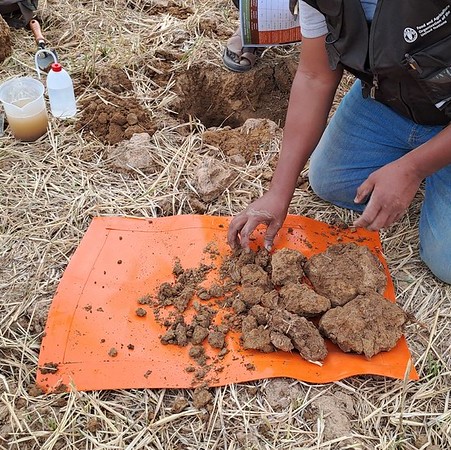
Training sessions combined presentations and hands on field exercises, conducted in Arabic and French, using illustrated posters and simple diagnostic tools. Participants learned how to visually assess soil texture, structure, organic matter, pH and root development directly in the field.
 Practical solutions adapted to local conditions
Field activities were carried out on horticulture plots and rice fields around Kaédi. Observations highlighted common challenges such as low organic matter, soil compaction and risks of salinisation.
Based on these observations, participants discussed practical solutions adapted to local conditions, including:
- increasing the use of compost and organic inputs;
- reducing or avoiding tillage;
- improving irrigation and drainage systems;
- promoting crop rotations and intercropping with legumes; and
- exploring conservation agriculture practices.
These recommendations will guide future advisory work carried out by soil doctors with farmers. As one extensionist explained, “When I return to my community, I already know which farmers I will train as soil doctors. I know they will be enthusiastic about using these practical tools to help other farmers manage their soils.”
Toward a national soil doctors network
The training represents the first phase of the Global Soil Doctors Programme in Mauritania. In the coming months, additional training sessions will be organized, educational materials will be translated into Arabic and 45 farmers are expected to be trained by the MASA trainers and certified as soil doctors.
As the national promoter of the programme, MASA will coordinate implementation and reporting, with continued technical support from FAO and its GSP. A national database of trainers and soil doctors will also be developed to support long-term coordination.
Strengthening cooperation for healthy soils
Through the GSP, Mauritania will continue to collaborate with international technical networks on key issues such as soil salinisation, conservation agriculture and sustainable rice production. These partnerships will help adapt proven approaches to the country’s dry and fragile environments.
The launch of the Global Soil Doctors Programme in Kaédi marks an important milestone in Mauritania’s efforts to protect its soils, support farmers and promote more resilient and sustainable agrifood systems.