The SWM Programme works with over 80 communities to enhance their ability to manage their natural resources. We also partner with local and national institutions to help improve their wildlife management capabilities. Capacity building and training are an essential part of this process. Thousands of training days have been organized since 2018. The focus is broad and includes topics such as hunting offtake monitoring, camera trap distance sampling to measure wildlife abundance, human-wildlife conflict mitigation measures, anti-poaching and wildlife reporting.
Wild Meat Dialogues: a webinar series for Asia and the Pacific
The Wild Meat Dialogues brings together researchers, practitioners and policy makers to share knowledge and build collaboration around sustainable wild meat use and consumption across Asia and the Pacific.
Across these sessions, we'll explore what we know and what we still need to learn about the role of wild meat consumption on rural food security and livelihoods, its impacts on biodiversity and zoonotic disease risk, and the policies, governance frameworks and the various approaches that can support sustainable wildlife management across the region.

RESSOURCE+ Project Massive Open Online Course
Entitled "Identifying and enumerating waterbirds in North Africa and the Sahel – How and for what purposes?", this new modern, open online course offers an advanced introduction to the identification of waterbirds in the region and to counting techniques. It provides an overview of the ecological, economic and social challenges faced by wetlands. It is part of the training activities carried out within the framework of the RESSOURCE+ Project, which has already enabled many professionals to be trained in different countries of the Sahel and aims to strengthen skills in order to develop networks of observers and experts in international waterbird counting.
It includes approximately 40 hours of learning, 35 animated sequences, ten video interviews, more than 5,000 photos and videos of birds and 210 species identification factsheets and is now available on the International Union for the Conservation of Nature (IUCN) Programme on African Protected Areas and Conservation (PAPACO) platform. It is currently available in French (an English version will be released in the future).
Train yourself to identify and count waterbirds in North Africa and the Sahel!
10/07/2025
Discover the brand new MOOC in French of the RESSOURCE Project: "Identifying and counting waterbirds in North Africa and the Sahel – How and for what...
Free, Prior and Informed Consent
The importance of Free Prior and Informed Consent for communities is complex and difficult to explain in an impactful way. To initiate discussions with communities an engaging animation with accompanying posters was produced in many local languages (e.g. Lingala, Swahili, Tonga, Betsimisaraka, Tsimihety and Lozi).
Human - Wildlife Conflict (HWC) Community trainings
The SWM Programme addresses human–wildlife conflict by supporting communities in the Kavango‑Zambezi region to balance wildlife conservation with sustainable livelihoods. This training material provides practical tools and community-led approaches to foster coexistence and strengthen both people and nature. Learn more on the HWC Toolkit dedicated page.
Alternative protein production
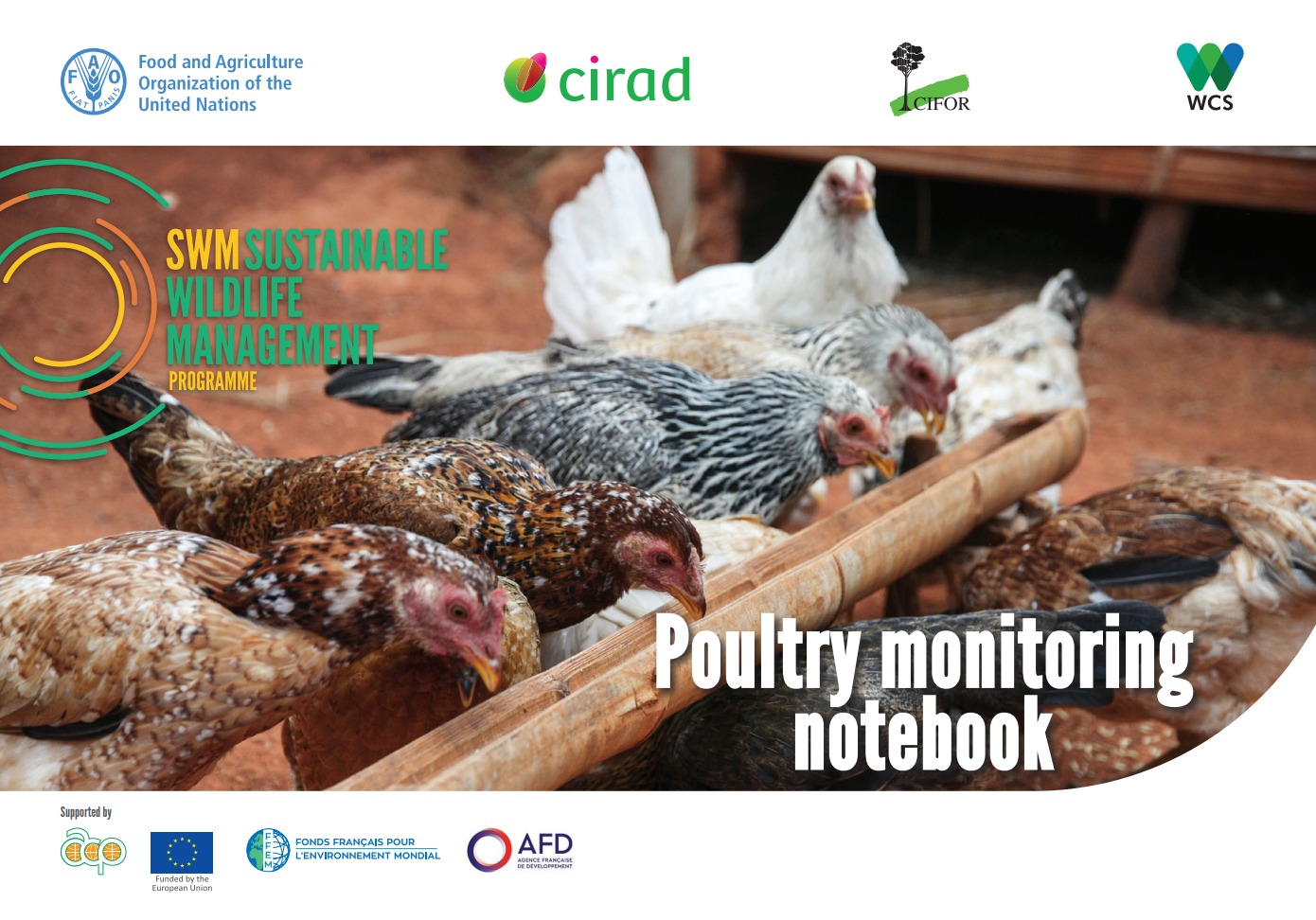
An engaging series of eight videos on sustainable poultry production has been produced and used to help small-scale family farmers improve their poultry production (meat and eggs) for family consumption and sale. The aim is to reduce dependence on wild meat and to improve family nutrition.
Camera trap distance sampling
Camera Trap Distance Sampling is a method to estimate wildlife abundance or density. A training video was produced to help field technicians and communities design a survey, and a second video was produced on how to analyse the camera trap recordings.
Camera Trap Distance Sampling (CTDS) - how to set up a survey
11/10/2023
This training video aims to help you design a camera trap distance sampling (CTDS) survey. CTDS is a method used at several Sustainable Wildlife...
Camera Trap Distance Sampling (CTDS) - how to process video data
10/10/2023
This training video aims to help you process images from a camera trap distance sampling (CTDS) survey. CTDS is a valuable method that is being implemented...
Publications