


The theme for each International Day of Forests is chosen by the Collaborative Partnership on Forests.
How will you mark the day?
- Share the video, forest fact animations, logo and banners - available in multiple languages. Check out the International Day of Forest social media kit for more resources.
- Join the conversation on social media using the #ForestDay hashtag. Pass on some of this year's key messages or take a photo of your favourite forest and share online.
- Organize or join events celebrating forests: tree plantings, symposiums, art exhibitions, photo competitions or host a student debate.
- Don’t forget to tell us about it at [email protected] and send us photos so we can add them to the gallery of events happening around the world.
Spread the word!
Join the #ForestDay campaign by sharing our free material on digital channels and raise awareness about forests.
Past years

For more information, visit the International Day of Forests 2026 webpage.


For more information, visit the International Day of Forests 2019 webpage.

Radio and video interviews
Philadelphia: Community engagement for a greener city
Forestación de laderas para reducir el riesgo de desastres
Simone Borelli, FAO Forestry Officer (English, Spanish)
Stefano Boeri: Innovative urban forestry practices for greener and heathier cities
Publications
Unasylva 250 Forests and Sustainable Cities
Forests and Sustainable Cities: Inspiring stories from around the world
How much do you know about forests and cities? Take our quiz to find out.

Key messages


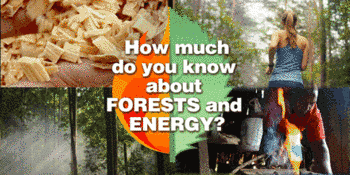
Forests and energy
Watch and share the International Day of Forests video - available in 8 languages (English, Arabic, Chinese, French, German, Italian, Russian, Spanish)
Quiz
Publications
Incentives to promote sustainable wood energy in sub-Saharan Africa
Key messages
Wood energy from the forest: a major source of the world’s renewable energy
Woodfuel provides 40% of today’s global renewable energy supply – as much as solar, hydroelectric and wind power combined. About 50 percent of global wood production (around 1.86 billion cubic meters) is used as energy for cooking, heating, and electricity generation. For 2.4 billion people, woodfuel means a cooked and more nutritious meal, boiled water, and a warm dwelling.
Wood energy: powering economic development
Almost 900 million people, mostly in developing countries, are engaged in the wood-energy sector on a part- or full-time basis. Modernizing the wood energy sector can help revitalize rural economies and stimulate enterprise development – greater investment in wood energy production and advanced wood fuels can provide revenue to finance better forest management, more growing forests and more jobs.
Wood and trees: optimal urban living and lower energy bills
Strategically placed trees in urban areas can cool the air by between 2-8 degrees C.
Wood energy: mitigating climate change and fostering sustainable development
Globally, forests hold an energy content approximately 10 times that of the world’s annual primary energy consumption. They thus have significant potential as renewable resources to meet global energy demand.
Forests for energy – now and in a future global green economy
Greater investment in technological innovation and in sustainably managed forests is the key to increasing forests’ role as a major source of renewable energy. In this way, we invest in our sustainable future, in meeting several Sustainable Development Goals and in growing a green economy.
Increased areas of sustainably household and community woodlots and the use of clean and efficient wood stoves can give millions more people in developing countries access to cheap, reliable and renewable energy.
#LoveForests: IDF 2017 video campaign
Thanks to everyone who joined the campaign! We received over 100 videos from across the world. See a compilation video here.
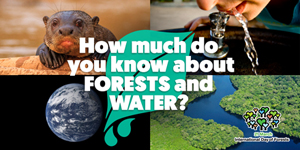
Celebrating forests and water
Take the forest quiz!
Press releases
FAO launches new forest and water programme, FAO Headquarters
Publication: Forests and Water - International Momentum and Action
Key messages
1. Forested watersheds and wetlands supply a significant proportion of the world’s accessible fresh water for domestic, agricultural, industrial and ecological needs
Forests are a key component of watershed management – an integrated approach of using natural resources in a given geographical area drained by a water course. It is by maintaining and providing high-quality freshwater that watershed areas have a pivotal role in the earth’s ecology and contribute significantly to the wealth and welfare of human societies.
2. About one-third of the world’s largest cities obtain a significant proportion of their drinking water directly from forested protected areas.
The populations of major cities such as Mumbai, Bogotá and New York rely on forests for their water supplies. This number will increase as urban centres grow in size and population.
3. Nearly 80 percent of the world’s population – 8 out of 10 people - is exposed to high levels of threat to water security
By 2050, an extra 2.3 billion people are projected to be living in river basins under severe water stress, especially in North and South Africa, and South and Central Asia.
4. Forests act as natural water filters
Forests minimize soil erosion on site, reduce sediment in water bodies (wetlands, ponds, lakes, streams, rivers) and trap or filter water pollutants in the forest litter.
5. Forests minimize soil erosion on site, reduce sediment in water bodies (wetlands, ponds, lakes, streams, rivers) and trap or filter water pollutants in the forest litter.
Forests are at the forefront of reducing the effects of climate change. In respect of water, one benefit is forests’ cooling effect on the environment produced through evapotranspiration and the provision of shade. The impacts of climate change may also be manifested in an increase in catastrophes such as floods, droughts and landslides – all of which may be influenced by forest cover. Moreover, large-scale deforestation can have an impact on precipitation patterns.
6. Improved water resource management can show considerable economic gains
By 2030, the world is projected to face a 40 percent global water deficit under the business-as-usual climate scenario. However, every US$1 invested in watershed protection can save anywhere from US$7.5 to almost US$200 in costs of a new water treatment and filtration facility. In developing countries, a US$15 to US$30 billion investment in improved water resources management could have direct annual income returns in the range of US$60 billion.
7. Forests have a crucial role in building and strengthening resilience
When sustainably managed, forests contribute significantly to reducing soil erosion and the risk of landslides and avalanches, natural disasters which can disrupt the source and supply of freshwater. Forests protect and rehabilitate areas prone to soil degradation and erosion in upland areas.
Forests also reduce the effects of small-scale, frequent or local flooding, and prevent and reduce dryland salinity and desertification. Partial or complete removal of tree cover accelerates water discharge, increasing the risk of floods during the rainy season and drought in the dry season. However, the services provided by ecosystems around the world, particularly wetlands, are in decline. Between US$4.3 and US$20.2 trillion per year of ecosystem services were lost between 1997 and 2011 due to land use change.

2014 theme: Our Forests, Our Future
Press release: FAO launches new satellite-based data on forest resources on the International Day of Forests
The video is also available in:
Arabic | Chinese | English | French | German | Italian | Japanese | Portuguese | Russian | Spanish | Turkish
Media and multimedia
Video Changing landscapes of the Mediterranean
International Day of Forests events

School children planting pine seedlings, Ukraine
Celebrating the International Day of Forests

- FAO headquarters, Rome. March 2013
At FAO headquarters in Rome, Italy, an opening ceremony and technical seminar provided updated country-based information on the ways in which forests can maximize landscape products and services. The publication Forests and Water – International Momentum and Action was launched during the seminar.
Tlemcen, AlgeriaIn conjunction with the Third Mediterranean Forest Week, the Day was launched with a press conference, release of the publication State of Mediterranean Forests and tree planting activities in Tlemcen, Algeria.
Contact us
Email: [email protected]