


From Fields to Markets
Transforming Smallholder Farmers into Agribusiness in Mozambique
©FAO/Ricardo Franco
Smallholder farmers are the foundation of Mozambique’s agrifood systems. They cultivate most of the crops that feed families and sustain local markets. Yet many continue to face widespread constraints, including limited access to improved agricultural practices, financial services, and reliable markets. These challenges keep production low and incomes unstable, making it difficult for rural households to move beyond subsistence-based livelihoods.
To help close this gap, the Food and Agriculture Organization of the United Nations (FAO), in partnership with the Government of Mozambique and with funding from the European Union through the PROMOVE Agribiz program, has developed a stepwise model that supports farmers to progressively strengthen their technical, organizational and entrepreneurial capacities. The initiative, implemented in the provinces of Nampula and Zambézia, accompanies farmers from the earliest stages of learning improved practices, all the way to formalizing associations that engage in local and national markets.
The pathway begins at community level, through Farmer Field Schools (FFS), where groups of farmers learn together through hands-on experimentation in their own fields. This method does not simply introduce new techniques, it encourages observation, problem-solving, planning and collective decision-making. Over time, these groups reinforce social cohesion and local leadership, helping farmers to organize themselves and support one another.
As their confidence and production capacity grows, farmers transitions go to Farmer Business Schools (FBS). Here, the focus shifts from production to business management with experience in commercial activities. Farmers begin to analyze costs, calculate profits, understand market opportunities, and manage their farms as viable small enterprises, while also deepening their understanding of market dynamics, key suppliers, and potential buyers. This is often the moment when the idea of “farming as a business” becomes a reality.
To help turn ideas into action, the program provides competitive microgrants ranging from USD 1 500 to 15 000, co-financed by at least 20 percent from the groups themselves. With this initial investment, associations are able to purchase equipment, improve storage, packaging and launch processing and marketing activities. The co-financing element ensures ownership, accountability and long-term sustainability.
Once these foundations are in place, farmers are supported to formalize their organizational structures and legally establish associations. These associations can improve the amount of produce and the quality standards and, thus, increase their bargain power negotiating better prices, in local, regional and national supply chains. Many have begun to diversify their activities, adding value through processing, packaging and storing; improving their position in the market in low periods of produce availability.
The results are visible on the ground. More than 10 700 farmers have participated in Farmer Field Schools, nearly half of them women. Over 4 700 farmers have progressed through Farmer Business Schools, and 38 operational agribusiness associations have been established, with women representing 58 percent of their membership. This shift in economic participation is helping to strengthen gender equality in rural economies. The actual second phase estimates 57 new associations to be established by the end of November 2025.
Across Nampula and Zambézia, farmers are now leading their own small enterprises. In Zambézia, the Wilipiha Wiwanana Wa Sicua Association, composed of 25 members, used its grant to install an irrigation system, construct a pump shelter, and expand year-round horticulture production. Their first season of production generated sales of USD 1 871, and the group now expects to earn up to USD 3 500 in the following cycle as they diversify their crops and expand market reach.
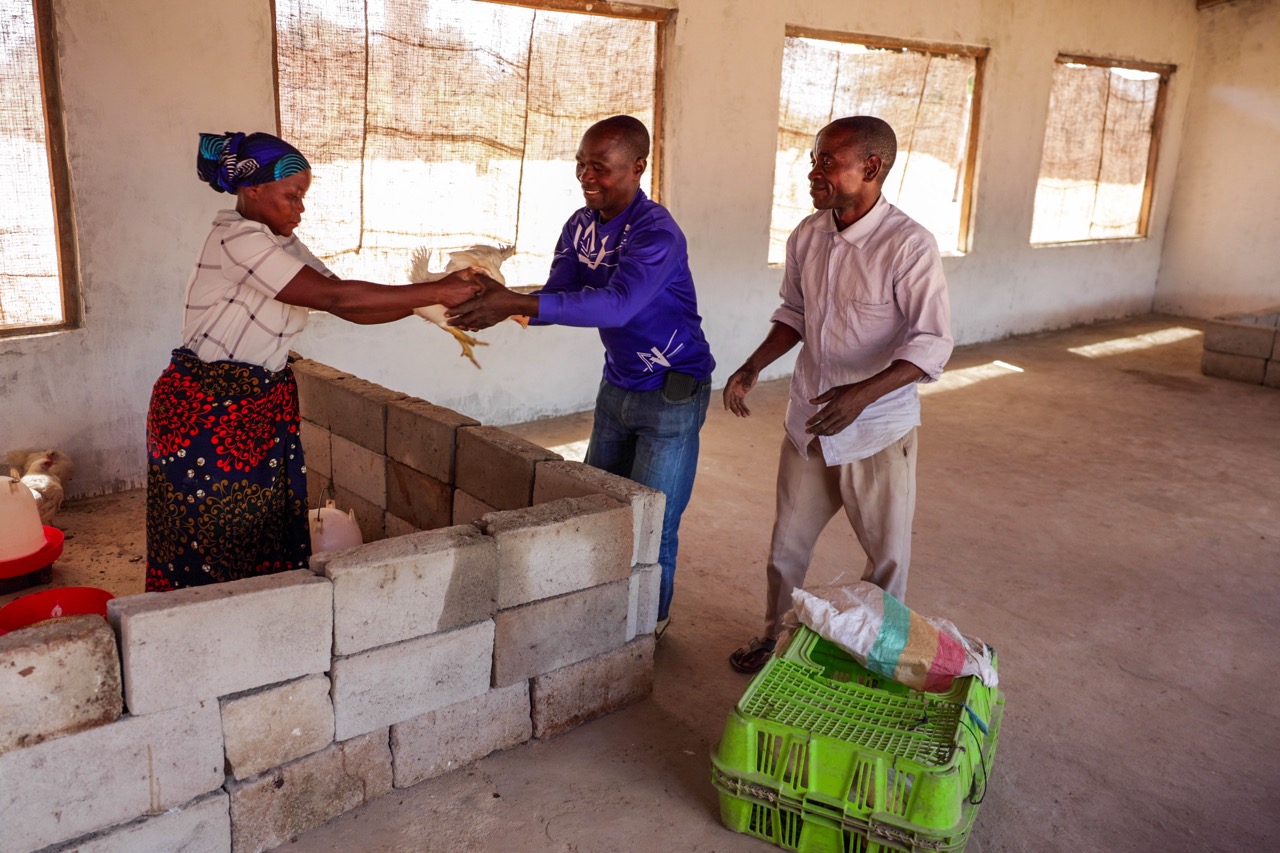
In Nampula, the Força da Mudança Association has transformed its poultry initiative from three initial production cycles to eight, reaching the point where the group now finances its own continuity. Their sales have more than doubled, and members report a renewed sense of stability and shared purpose within the community.
These examples reflect a broader transformation: when farmers have access to knowledge, organization, and capital, they can build viable businesses that strengthen rural economies, improve food security and expand opportunities for women and youth. The model also demonstrates strong potential for replication on a national and regional scale, particularly if integrated into agricultural extension systems and strengthened by partnerships with private sector buyers and financial institutions.
The journey from field to market is not only about increasing production, it is about expanding dignity, choice and opportunity. By investing in farmers as entrepreneurs, PROMOVE Agribiz is contributing to a more resilient and inclusive rural economy into markets in Mozambique—one where smallholder farmers are not only producers, but key actors in shaping the future of the agrifood systems in supply chain increasing consumers availability.
