Documents
Resource Partners
15 Jul 2014
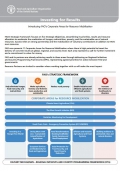
FAO’s Strategic Framework focuses on five Strategic Objectives, streamlining its priorities, results and resource allocation to accelerate the eradication of hunger, malnutrition, poverty, and the sustainable use of natural resources. Success relies on strong partnership and the mobilization of voluntary contributions in addition to FAO’s own resources. FAO now presents 11 Corporate Areas for Resource Mobilization where there is high potential to boost the delivery of concrete results at global, regional, and country level. Each area represents a call for further investment and a commitment to value for money. FAO and its partners are already achieving results in these areas...
Cooperatives
01 Jan 2014
This module concerns the organizational dimension of capacity development, and hence how to strengthen the capacities of organizations. Topics include assessment of organizational capacity, change management and tracking organizational change. Tools are provided.dfdf
Civil Society
10 Dec 2013
This note is meant to serve as a guide on how to ensure balance representation of Civil Society organizations in FAO activities or processes.
Balanced representativeness of Civil society has four main components that need to be ensured and look at, these are: constituencies, geography, gender andgroups. By ensuring that these four components are taking into account during relevant discussions, FAO will ensure that whether from meetings or processes,...
Civil Society
18 Jul 2013
Abstract:
FAO has been working for many years with hundreds of civil society organizations (NGOs, community-based organizations, professional associations, networks, etc.) in technical work, emergency field operations, training and capacity building, and advocacy of best agricultural practices. Over the past years, civil society organizations (CSOs) have evolved in terms of coordination, structure, outreach, mobilization and advocacy capacity. In this period, FAO has also undergone changes in management, revised its Strategic Framework and given a new impetus to...
Cooperatives
16 Oct 2012
Accumulated research and experience show that while small farmers acting alone did not benefit from higher food prices, those acting collectively in strong producer organizations and cooperatives were better able to take advantage of market opportunities and mitigate the negative effects of food and other crises.