


Emergencies and Rural Livelihoods
Investing in agricultural livelihoods protection
Agriculture is the main source of livelihood for a majority of crisis-affected populations, and plays a crucial role in saving lives while allowing families to produce their own nutritious food and generate income.
FAO helps vulnerable communities strengthen their food security by anticipating, preparing for and preventing crises; responding quickly and effectively when disaster does strike; and investing in stronger recovery and resilient livelihoods.
FAO also plays an important coordination role in humanitarian emergencies (as co-lead of the Global Food Security Cluster); engages in strategic partnerships with other UN agencies and regional partners; provides early warning information; and undertakes food security and resilience analysis to strengthen rural livelihoods.
Key messages
Agriculture has a critical role to play in building family and community resilience.
They must increase and diversify available food and help families to become self-sufficient.
They may include activities such as cash transfers, local and regional procurement of inputs, and public purchases.
FAO's Resilience Index Measurement and Analysis (RIMA), Global Information and Early Warning System on Food and Agriculture (GIEWS) and Integrated Food Security Phase Classification (IPC) are valuable tools and models. Investment in better information, data and statistics is critical to saving lives, and improving analysis, recommendations and action.
Humanitarian assistance and long-term development policies need to be better coordinated. FAO plays an important role as a reliable partner and co-lead of the Food Security Cluster, coordinating food security responses in humanitarian crises.
Featured resources

Hunger Hotspots - FAO–WFP early warnings on acute food insecurity: June to October 2025 outlook
16/06/2025
In the current edition of a regular joint bi-yearly report, the Food and Agriculture Organization of the United Nations (FAO) and the World Food Programme...

FAO in the 2025 humanitarian appeals
04/12/2024
This publication outlines FAO's request for USD 1.9 billion to assist 49 million people facing acute food insecurity in 2025. It highlights the escalating...

Governance challenges for disaster risk reduction and climate change adaptation convergence in agriculture - Guidance for analysis - Governance and Policy Series
19/07/2019
This discussion paper aims to help practitioners work in a more informed and politically sensitive way to integrate actions on disaster risk reduction...
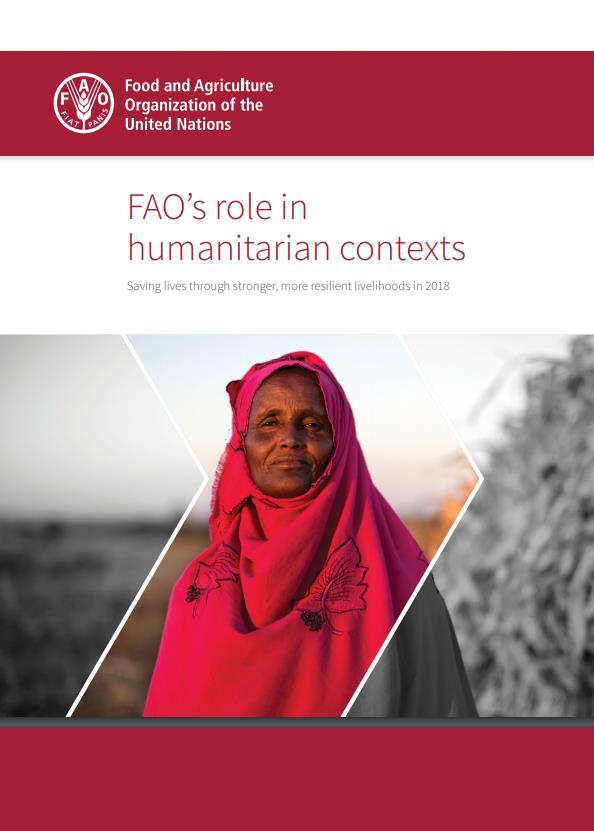
FAO’s role in humanitarian contexts - Saving lives through stronger, more resilient livelihoods in 2018
21/08/2018
Protecting livelihoods by providing emergency agricultural assistance from the onset of a crisis is crucial to save lives, while enabling people to...

Social Protection in Protracted Crises, Humanitarian and Fragile Contexts - FAO’s Agenda for Action for Social Protection and Cash-Based Programmes
10/01/2016
This note summarizes the role social protection can play in saving livelihoods while also enhancing the capacity of households to respond, cope and...
Sustainable Development Goals
Our work on this theme primarily contributes to:


