


Muchos sin reconocimiento y marginados
El 90% de los pescadores de captura y trabajadores de la pesca en el mundo pertenecen a la pesca en pequeña escala, y esta aporta más del 50% de la captura de peces en los países en desarrollo. Sin embargo, las comunidades de pescadores artesanales muchas veces son las más pobres y las más marginadas política y socialmente. Esta marginación muchas veces significa que estas comunidades carecen de acceso a servicios básicos como el agua potable y la vivienda, pero también a los servicios de escolarización y salud.
La mayoría de los trabajos pertenecen al sector informal. Las ganancias son inestables, en parte porque las capturas de peces varían con las estaciones. En algunos casos, no hay planes de protección social a los que tengan acceso los pescadores y los trabajadores del sector pesquero. En otros casos, existen planes, pero para los pescadores y trabajadores de la pesca podría ser difícil unirse a los regímenes de seguridad social que requieren el pago de una cuota mensual.
En general, la pesca se considera una ocupación muy peligrosa y, a menudo, los trabajadores deben soportar largas horas de trabajo y malas condiciones de salud y seguridad ocupacional. La violencia, el trabajo infantil, el trabajo forzoso, el abuso sexual y la falta de seguridad en el mar, en algunos casos, pueden aumentar la vulnerabilidad de los pequeños pescadores.
Acoplar el desarrollo social con la gestión sostenible de la pesca
Para que se reconozcan los derechos de los pescadores y trabajadores del pescado es fundamental que se les consulte sobre las decisiones que les afectan y los recursos de los que dependen. Los trabajadores formales e informales a lo largo de toda la cadena de valor de la pesca deben poder trabajar en condiciones decentes y con remuneración. Esto incluye a los trabajadores migrantes, que desempeñan un papel importante en la pesca a nivel mundial. El trabajo forzado, la violencia y la servidumbre por deudas deben terminar.
Reconociendo las circunstancias distintivas de los pescadores, la Organización de las Naciones Unidas para la Alimentación y la Agricultura (FAO) busca promover su inclusión económica y fortalecer su resiliencia y seguridad de medios de vida a través de la expansión y adecuación de los programas de protección social. Apoya el fortalecimiento de las capacidades nacionales al aumentar la comprensión de las barreras que enfrentan las pesquerías de pequeña escala para acceder a la protección social.
Las Directrices PPE llaman al desarrollo económico y social de las comunidades de pequeños pescadores para que puedan disfrutar de sus derechos humanos. Se exhorta a los gobiernos a garantizar que las normas internacionales se incorporen en las legislaciones nacionales. Esto incluye el derecho a un nivel de vida adecuado, el trabajo decente, y asegurar el suministro de sanidad, educación y otras necesidades esenciales.
Las Directrices PPE recomiendan que los Estados inviertan en el desarrollo humano de las comunidades de pequeños pescadores, y que integren la seguridad y la salud ocupacional en la gestión de la pesca. La seguridad social, el acceso al crédito y los regímenes de seguros son otra importante recomendación a los Estados para fortalecer las comunidades de pequeños pescadores. Los Estados también tienen la responsabilidad de poner en práctica las leyes que regulan la seguridad en el mar, y dar acceso a capacitación y equipo de seguridad.
El capítulo 6 de las Directrices PPE es sobre el desarrollo social, el empleo y el trabajo decente.
Vídeo de las Directrices PPE sobre
Publicaciones

Seguridad de los pescadores en pequeña escala en el mar
01/09/2019
Este manual sobre seguridad de los pescadores en pequeña escala en el mar tiene por objeto contribuir a una cultura de sensibilización en materia seguridad...

Informe del curso sobre directrices voluntarias para la sostenibilidad de la pesca en pequeña escala en el contexto de la seguridad alimentaria y la erradicación de la pobreza para los pueblos indígenas de Centroamérica.
01/12/2019
Durante siglos, la pesca ha sido una actividad de gran importancia para los pueblos indígenas (PI) en todo el mundo. Estos habitan y se relacionan con...

Uniendo esfuerzos para forjar el futuro del sector pesquero
19/01/2021
El presente folleto ha sido preparado por la OMI, la OIT y la FAO para brindarles orientación a las personas responsables de formular políticas y tomar...

FAO promotes training on Gender Transformative Approach for small-scale fisheries actors in Ghana
18/02/2026
The Fisheries Commission, in collaboration with the Food and Agriculture Organization (FAO), has trained 36 participants (50% men and 50% women) representing 13 stakeholder groups, including small-scale fisheries actors, academia, civil society, government representatives, and fisheries office...

Ghana inaugurates National Task force Team to advance the development of a National Plan of Action for Small-Scale Fisheries
27/01/2026
Ghana, supported by FAO, is currently in the process of initiating its National Plan of Action for Small-Scale Fisheries (NPOA-SSF), in line with the Voluntary Guidelines for Securing Sustainable Small-Scale Fisheries (SSF Guidelines). Marking a significant step toward strengthening sustainabl...

The Tanzania Women Fishworkers Association strengthens collaboration with Ministry of Livestock and Fisheries to empower women in small-scale fisheries
21/01/2026
The Tanzania Women Fishworkers Association (TAWFA), supported by FAO, met with the Permanent Secretary, Ms. Agnes Meena, at Government City, Mtumba, Dodoma. The meeting aimed at strengthening the collaboration between TAWFA and Ministry of Livestock and Fisheries (MLF) by providing TAWFA leade...

FAO raises awareness on responsible practices in small-scale fisheries during Jinja Fish Festival 2025
10/12/2025
The Food and Agriculture Organization of the United Nations (FAO) in collaboration with Small Scale Fisheries (SSF) partners and value chain actors (Fishers and Fish Workers, researchers, academics, and training institutions) organized the 7th edition of the Jinja Fish Festival from 6-7 Decemb...

Colombia inicia el desarollo del Plan de Acción Nacional para la Pesca en Pequeña Escala (PAN-PPE)
28/11/2025
Por: Kelly Rojas Correa, Consultora FAO
Con el acompañamiento de líderes y lideresas del sector pesquero, instituciones, ONG y aliados del Grupo Interinstitucional de Protección Social para la Pesca y la Acuicultura (GIPRO), la FAO lanzó el proyecto: Mejora de l...

Indonesia launches National Action Plan for Small-Scale Fisheries
25/11/2025
In a major step toward strengthening the country’s coastal fishing communities and sustainable fisheries management, the Ministry of Marine Affairs and Fisheries of Indonesia (MMAF) has officially launched the National Action Plan for Small-Scale Fisheries Management (NPOA-SSF) on 5 Nove...

Women in Indonesia’s Raja Ampat transform their livelihoods by making fish crackers
21/11/2025
Fish crackers are a popular and nutritious snack in Indonesia, where they are often enjoyed alongside other seafood dishes. In the Raja Ampat Regency, a group of islands in the east of the archipelago country, crackers have become a key source of income for women in coastal communities who previously did not have the opportunity to earn their own money.

From ice to price: how an ice-machine improve gains for women working in post-harvest fisheries activities in Madagascar
21/11/2025
On the beach of Toliara, Madagascar, women wait under the sun with their coolers ready. The first boats are approaching, and this time, their fish will stay fresh long enough to fetch a fair price.

Lessons from the river: Carrying forward the teachings of my ancestors
29/10/2025
Written by Tanikwah Lang
My fingers sting from the cold as I hold them over the fire, the warmth rushing back too quickly as the sun begins to wash away the morning dawn. Down the bank, I can hear my sisters laughing as they talk about how the last fish got away with the b...

Reeling in a better future for Tanzania’s women fish workers
16/10/2025
When Hadija Malibiche first started buying and selling fish in the coastal region of Mtwara, she worked alone and struggled to make a steady income. Like many women in small-scale fisheries, she had no access to credit, little bargaining power in the market, and few opportunities to grow her business. That changed after she joined a group of fishers that belongs to the Tanzania Women Fish-workers Association (TAWFA).

Tanzania hosts consultative workshop on mainstreaming biodiversity in fisheries management
13/10/2025
The Ministry of Livestock and Fisheries (MLF), in collaboration with the Food and Agriculture Organization of the United Nations (FAO), has convened a three-day consultative workshop in Dar es Salaam aimed at mainstreaming biodiversity into fisheries management in the context of the Kunming&nd...

Advancing the implementation of the National Plan of Action for Small-Scale Fisheries (NPOA SSF) in the Philippines
30/09/2025
The Food and Agriculture Organization of the United Nations (FAO) in partnership with The Philippines - Bureau of Fisheries and Aquatic Resources (BFAR) organized a Partnership Dialogue with National Government Agencies in support of advancing the implementation of the Nationa...

Empowering Pacific communities: FAO supports 5th Community-Based Fisheries Dialogue
26/09/2025
The 5th Community-Based Fisheries Dialogue (CBFD5) was held in Guadalcanal in Solomon Islands on 25-26 September 2025, building on the previous 5 years of successful collaboration and knowledge exchange between the Pacific region’s local fishing community groups and representatives, civi...

Bay of Bengal Countries develop roadmaps for small-scale fisheries: Regional workshop translated the SSF Guidelines into action
22/09/2025

Inauguration of the ice machine donated by FAO to the National Network of Women in Fisheries in Madagascar
12/09/2025

FAO organizes workshop with small-scale fisheries stakeholders to define the priorities for new project in Madagascar
11/09/2025
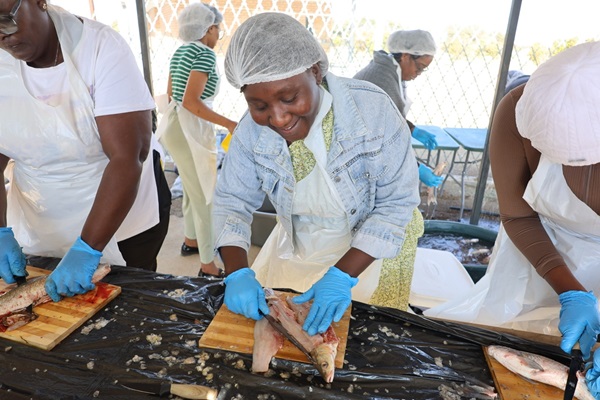
FAO empowers small-scale fishers and traders through climate-smart post-harvest trainings in Namibia
10/09/2025
In support of Namibia’s efforts to build resilient, inclusive, and sustainable agri-food systems, FAO has strengthened its collaboration with small-scale fisheries (SSF) communities through two Training of Trainers (ToT) and two supervised training workshops held in Keetmanshoop and Rund...

AWFISHNET’S leadership handover sets ambitious targets for women’s empowerment in Africa’s small-scale fisheries
08/09/2025

Dropping anchor in Mwanza: Global Learning Exchange will bring small-scale fisheries experts together in November
05/09/2025

Project’s quarterly call highlights progress and lessons learned ahead of project closure
02/09/2025


Conozca las Directrices PPE
- Gobernanza responsable de la tenencia
- Ordenación sostenible de los recursos
- Cadenas de valor, actividades posteriores a la captura y comercio
- Equidad y igualdad de género
- Riesgos de desastres y cambio climático
- Un enfoque de la basado en los derechos humanos
- Pueblos indígenas y la pesca artesanal
- La seguridad alimentaria y la nutrición
