


Our work
Through its Wildlife and Protected Areas Management Programme of Work, FAO actively supports Members to:
- pioneer innovative mechanisms to reduce unsustainable hunting practices, and ensure a transition to more sustainable levels of hunting and less unsustainable wildlife consumptive uses in urban areas;
- strengthen institutional and legal frameworks, safeguard Indigenous Peoples and build capacities to achieve sustainable wildlife management;
- provide technical assistance to prevent and reduce human-wildlife conflicts and promote coexistence, through an in-depth assessment of the root causes of conflicts; and
- enhance ecosystem health, particularly in forest and wildlife sectors, to support One Health, ensuring the well-being of both wildlife and human communities as well as preventing, detecting and controlling diseases that spread between animals and humans.
Forestry Regional commissions
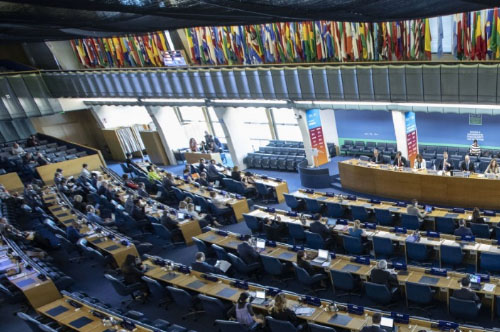
FAO's work on wildlife and protected areas management contributes significantly to the FAO Forestry Regional Commissions, particularly the African Forestry and Wildlife Commission (AFWC). By providing technical expertise, fostering collaboration and implementing strategies for sustainable practices, FAO supports the commissions to achieve their goals, which are related to the conservation and sustainable use of wildlife and protected areas management, particularly tailored to the specific needs and contexts of the African region.
Global processes
FAO collaborates with biodiversity-related conventions such as the Convention on Biological Diversity (CBD), the Convention on International Trade in Endangered Species of Wild Fauna and Flora (CITES), and the Convention on the Conservation of Migratory Species of Wild Animals (CMS) on technical and policy issues related to wildlife conservation and sustainable use, with a focus on food security and the livelihoods of local communities and Indigenous Peoples. Specifically:- FAO assists its Members to implement the Kunming-Montreal Global Biodiversity Framework by providing technical guidance on Targets 4, 5 and 9.
- Under CITES, FAO supports its Members to implement decisions on livelihoods, Indigenous Peoples and local communities, zoonotic disease risk reduction in wildlife trade, and international cooperation.
- FAO co-convenes the Scientific Task Force on Avian Influenza and Wild Birds with CMS, providing expertise on wildlife health and disease risks.
- FAO assists the Contracting Parties to implement the Agreement on the Conservation of African-Eurasian Migratory Waterbirds (AEWA) and the Ramsar Convention on Wetlands.
Partnerships
Since 1997, FAO Regional Office for Latin America and the Caribbean has been the technical secretariat for the Latin American Technical Cooperation Network on National Parks, other Protected Areas and Wildlife (REDPARQUES).
Since 2013, the FAO Forestry Division has served as the secretariat for the Collaborative Partnership on Sustainable Wildlife Management (CPW) and actively participates in various initiatives as a proactive member.

Activities

SDGs correlation
Highlights

FO:AFWC/2023/REP
2024
Report of the twenty-fourth session of the African Forestry and Wildlife Commission that took place from 30 October to 3 November 2023 in Arusha, United...