fao_logo Food and Agriculture Organization of the United Nationshelping to build a world without hunger chinamoa_logo
   FAO Agricultural and Development Economics Division (ESA)
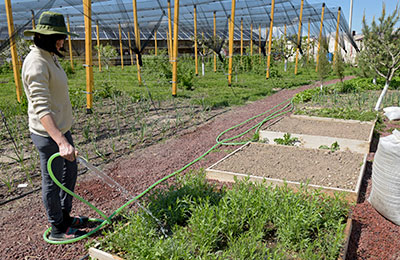
FAO/20040/H.Zhang
Home
Sessions
Panelists
Contact


> Opening Session
> Session 1 : The future of rural areas in an urbanizing world
> Session 2 : The future of agriculture in a globalizing world
> Session 3 : Environmental challenges to agricultural development and food security
> Session 4 : Frontiers of science for agriculture in the 21st century
> Session 5 : Targeting and delivering research for marginal areas and marginalized people
> Session 6 : Policy options for the future


Agenda : Frontiers of science for agriculture in the 21st century
Moderator: Zhai Huqu
Harnessing the best of scientific knowledge and technological breakthroughs is crucial as we attempt to "retool" agriculture to face the challenges of an increasingly commercialised and globalised agriculture sector. Modern science and technology can also help provide new impetus for addressing the age-old problems of production variability and food insecurity of rural populations living in marginal production environments. In a similar vein, science & technology both enables and drives the creation of increasingly sophisticated food chains that can deliver fresh and minimally processed food to demanding consumers.

Whilst the real and potential gains from science and technology are apparent, it is also necessary to take into consideration the fact that research and technology development are more and more in the private domain: biotechnology is a prime example.

Biotechnology holds great promise, but may involve new risks. In most countries, the scientific, political, economic or institutional basis is not yet in place to provide adequate safeguards for biotechnology development and application, and to reap all the potential benefits. Clearly the question is not what is technically possible, but where and how life sciences and biotechnology can contribute to meeting the challenges of sustainable agriculture and development in the twenty-first century, based on a science-based evaluation system that would objectively determine, case by case, the benefits and risks of each individual GMO. Similarly, the evolution of food chains has been led by the private sector with obvious benefits in terms of food safety and food price reductions. However, there have been casualties as some farmers and firms have been marginalised. In this case the question becomes one of whether there are technical solutions and business models that can enable engagement of such marginalised groups.

Modern science can also provide opportunities for enhancing input efficiencies and for developing more sustainable production systems. The extent to which farmers in developing countries benefit from such technologies, which are often highly knowledge intensive is a matter of debate. Furthermore, it is doubtful if they are compensated for the environmental good that such changes effect. Also to be discussed is the appropriate role of traditional knowledge and local genetic resources in future food systems.
Potential questions to be addressed :
What policies and global public goods contribute to the generation and diffusion of future innovations and technological advances?

How can equitable access be assured to any of the technological advances that are taking place today in the private sector?

How can modern science complement farmer knowledge in the management of local resources, including genetic resources?
Participants: Related Papers and Presentations:
Hans Herren Frontier of science for agriculture in the 21st century
Hans Herren
Jeffrey McNeely  
Gabrielle Persley  
Gavin Wall Presentation: Frontiers of Science Panel
Fengtong Zhang  
  FAO Contribution to Strengthening Plant Biotechnology in Developing Countries
Mahmoud Solh and Kakoli Ghosh


   comments?  please write to the webmaster