


The Technical Cooperation Programme (TCP) was created to enable FAO to make its know-how and technical expertise available to member countries upon request. TCP projects are subject to approval criteria that ensure relevance and sustainability of the assistance provided, while catalyzing results towards the achievement of the Sustainable Development Goals.
TCP Results since 2018
An updated monthly record of individual results from TCP Projects. For information on how the results are collected see TCP Results & Indicators
bb66288dd3844f379074de7687dd1742.png?sfvrsn=584981cf_38)
Technical Products Delivered
fa63ed06a0d0430184fced45fa03768a.png?sfvrsn=148c5a13_36)
Technical Facilities Upgraded
41cc3d90d9944ced85d6d535c7a07c60.png?sfvrsn=ff7b681d_46)
Outreach Products Created
.png?sfvrsn=4a83dc37_36)
Government Staff Trained
.png?sfvrsn=84a6bbc1_39)
Non-Gov Staff Trained
.png?sfvrsn=a0ae36d3_36)
Beneficiary Families
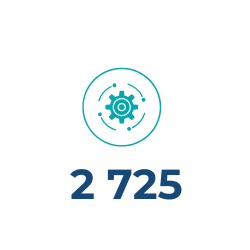
Completed Projects (overall budget USD 616 Million)
ba27cd81981941f292eded2997072ed8.png?sfvrsn=65b278eb_31)
Resources Mobilized USD
TCP Highlights
INFOCUS
CHANGEMAKERS

Celebrating TCP@50
The Food and Agriculture Organization of the United Nations (FAO) this year marks the 50th anniversary of its Technical Cooperation Programme (TCP
_b6b2f08c-4913-4a45-9fde-90286808f752.png?sfvrsn=98a03e14_18)
TCP and Strategic Alignment
TCP funded interventions are the most frequent project type in FAO. Around 40 percent of all projects approved in a year are TCP funded, and in many countries, TCP constitutes a major part of the field programme.

Changemakers
A series on how TCP funding leads to noteworthy change, and the people who make it happen

TCP as a Catalyst
By design, TCP projects are meant to complement ongoing programmes/activities. Given its scope, standalone use would unlikely be sustainable or effective. Emphasis is on complementing ongoing high priority...
Live

TCP Evaluation 2020 - Five Years Later
FAO welcomed the independent Evaluation of the Technical Cooperation Programme (TCP) which presented its report to Governing Bodies in late 2020.
Live

Results and Indicators
About 700 to 800 TCP projects are approved every biennium and more than 1 000 TCPs can be operational at the same time. The challenge to systematically monitor and document how the TCP delivers for Member Countries has been taken up since 2018.

TCP and Emergencies
Emergency TCP projects support both anticipatory action and immediate responses to disasters and early rehabilitation measures through the timely delivery of essential agricultural inputs, services and training...(more)

TCP and Covid 19
FAO's comprehensive and holistic COVID-19 Response and Recovery Programme is designed to proactively and sustainably address the socio-economic impacts of the pandemic. In line with the UN approach to “build back better,” and in pursuit of the Sustainable Development Goals...(more)

TCP and SIDS
Small Island Developing States (SIDS) are a group of low-lying island nations that are home to approximately 65 million people. Climate change, natural disasters and the distance from global markets make these nations particularly vulnerable.

Multi-Media
Examples of completed projects

Strengthen Capacity to Sustainably Improve Livelihoods in the Green Growth Economic Corridor through Development of Strategic Mechanisms to Bolster Partnerships and Resource Mobilization under Hand-In-Hand Initiative (HIHI)
01/2025
Despite significant economic growth over the past two decades, poverty and malnutrition remain high in the Lao People’s Democratic Republic. A Food Systems Assessment carried out in 2021 indicated that the country was faced by a triple burden of undernutrition, emergent overnutrition and micronutrient deficiencies.

Enhanced Resilience and Emergency Preparedness among Rural Dwellers
01/2025
Rural coastal communities in Ghana are among the populations most vulnerable to the impacts of climate change, such as drought, floods, rising sea levels and temperatures, the acidification of seawater and increased pests and diseases.

Enhancement of the National Phytosanitary System
01/2025
Ukraine is one of the world’s largest producers and exporters of grain, ranking among the top five global grain exporters with over 45 million tonnes of grain supplied annually to international markets.

Projet appui à la diversification agricole et à la lutte contre la malnutrition à Lalo
01/2025
Le projet a grandement contribué à l'amélioration de la sécurité alimentaire dans la commune d'intervention, laquelle est passée d’une phase de crise à une phase «sous-pression».

Creating Enabling Environments for Enhanced Climate Resilience in Agriculture
01/2024
Armenia, Kyrgyzstan and Tajikistan and North Macedonia are facing climatic changes and climate-driven hazards, escalating existing vulnerabilities in the agriculture and food production sector.
Working for the


Related links
- TCP Evaluation 2020
- Partnerships
- Resource Mobilization
- South-South Cooperation
- FAO in Emergencies
- TCP Report 2019
Contact