


CGE joins Hand-in-Hand Initiative to present the business case for investing in youth and women
The thematic session during the Investment Forum 2025 served as a strong reminder that productivity and profitability increase when investments are made with a focus on enhancing opportunities for women and youth.

Augustina Asor Tufuor, Founder and Manager of Ghanaian agribusiness Tropical Snacks, delivers remarks during the Investment Forum 2025 thematic session
©FAO / Matteo Minnella
“Every time a young person is told they’re too risky to invest in, innovation stalls. Every time a woman with a good business idea can’t get a loan, the economy loses. This translates into lost productivity, into innovation that never scales, into markets that grow more slowly than they could.”
Augustina Asor Tufuor, Founder and Manager of Ghanaian agribusiness Tropical Snacks, called this not just unfair, but inefficient – setting the scene for a vibrant discussion on the business case for investing in women and youth, held during a thematic session organized by FAO’s Hand-in-Hand (HIH) Initiative at the Investment Forum 2025.
The HIH Initiative supports countries facing the highest levels of poverty and hunger by using advanced geospatial and socioeconomic data to identify high-potential areas for agrifood investment. It brings together governments, development partners, and investors to drive inclusive growth, improve nutrition, and build climate-resilient agrifood systems.
During the session, the speakers highlighted the return on investing in women-led businesses and corporate initiatives focusing on gender equality and women’s empowerment.
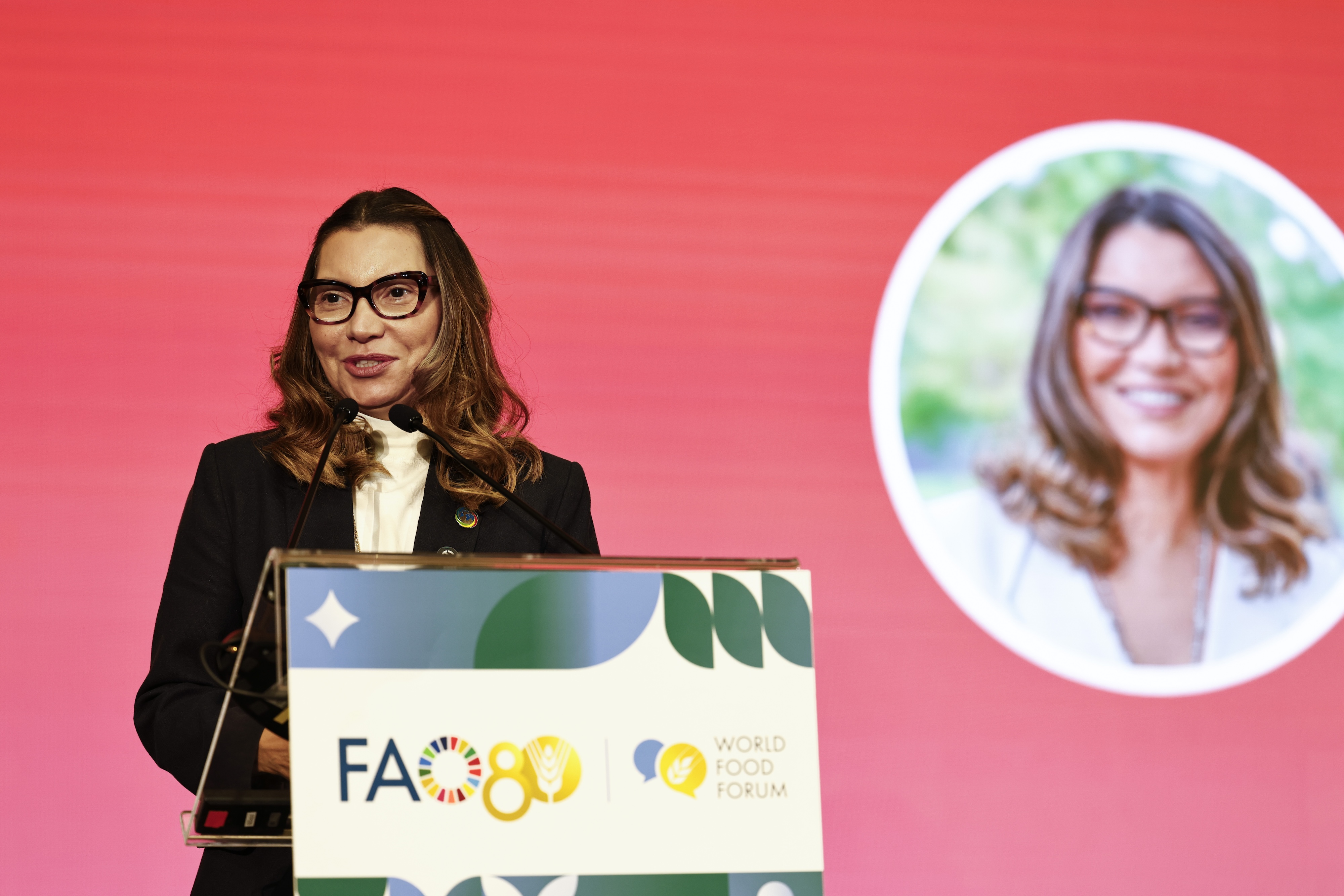
H.E. Janja Lula da Silva, COP30 Special Envoy for Women and First Lady of Brazil, underscored the role of investment as a tool to fight social, economic and gender exclusion, providing the right conditions for youth and women to access opportunities for growth and contribute to national economies.
“Women of all ages and youth hold great transformative capacities but need more opportunities and support to realize this power – both in food production and in off-farm value chains. This session has demonstrated that investing in rural women and youth is not only needed, but possible and strategic, benefitting all: those who invest, those who produce, and those who consume,” she highlighted.
FAO’s Chief Economist Máximo Torero noted that global initiatives such as HIH, the World Food Forum’s Youth Initiative and Commit to Grow Equality offer platforms to ensure capital efficiency, reduce risk for investors and foster inclusive, sustainable growth.
“Fulfilling the potential of women and youth requires strategies that are coherent and bring together our ecosystem of stakeholders,” said Mr Torero. “It calls for actions and investments both large and small which are tailored to the needs and interests of women and youth to boost livelihoods, increase opportunities, enhance resilience, drive innovation and access untapped markets.”
Successful solutions to enable youth and women
The panel discussion focused on practical approaches, providing real-world examples of the viability and strategic value of investments aimed at supporting women and youth in agrifood systems.

Neamat ElTazi, Founder and Chief Operating Officer of Dubai-based PoultrySync, told the audience of her company’s difficulties in attracting investors to the poultry industry: “Going to an investor and saying, ‘we work with chickens’ is not very exciting. We work on artificial intelligence and technology – but for chickens.”
She and her partner overcame the challenge by self-financing until their business was able to attract investors. Her advice focused on networking with other entrepreneurs and investors who can understand the challenges of female entrepreneurs, and identifying accelerators, grants or projects to boost enterprises.
Joining the event remotely, Wambui Chege, Director of Agrifood Systems explained the Mastercard Foundation’s ambitious goal of enabling 30 million dignified and fulfilling jobs by 2030, with agrifood systems recognized as the sector offering the largest work opportunities for young people.
She underscored the importance of targeting young people, and especially young women, with their specific needs and realities in mind. “If we are programming for young people, we have to program with them in the room and we must meet them where they are,” she said.
 From the private sector, Juan Antonio Rivas, Global Head – Sustainable Business Development at Olam Food Ingredients (ofi), highlighted the company’s focus on women and youth in its commitment to enabling prosperous farmers and thriving communities. Meanwhile, Germán Otálora, Programme Manager for Microsoft’s Airband Initiative in Latin America, shared stories from the coffee value chain in Colombia emphasizing the role of young people as intermediaries in propelling the adoption of agricultural technology by older relatives.
Representing the African Development Bank, Damian Ihedioha shared successful results – including productivity and quality gains – from two of the Bank’s flagship initiatives: the Empowering Novel Agri-Business-Led Employment (ENABLE) Youth Programme and the Affirmative Finance Action for Women in Africa (AFAWA) Programme.
South Sudan’s Minister for Livestock and Fisheries H.E. Onyoti Adigo Nyikec showcased the country’s efforts to enhance women’s land rights and support youth and women farmers with access to productive assets, markets, training and climate-smart technology. South Sudan presented a comprehensive investment proposal at this year’s Investment Forum.
Working together through global initiatives
CGE is a FAO-led global initiative bringing together a wide range of partners to increase financing and actions for gender equality and women’s empowerment in agrifood systems. Through the annual World Food Forum and initiatives such as HIH and CGE, FAO is supporting women and youth to play a greater role in transforming agrifood systems. CGE worked closely with the HIH Initiative in the lead-up to the Investment Forum 2025 thematic session.
The session served as a strong reminder that productivity and profitability increase when women and youth are granted greater access to markets, resources and training; when their voices are amplified in decision-making processes; and when investments are made with a focus on enhancing opportunities for women and youth.
The Investment Forum 2025 thematic session on “The Business Case for Investing in Women and Youth in Agrifood Systems – Driving Productivity and Profitability” took place on 15 October 2025 at FAO’s headquarters in Rome, Italy.
The session was moderated by Lauren Phillips, Deputy Director of FAO’s Rural Transformation and Gender Equality Division, while the panel discussion was moderated by Louise Mabulo, an environmentalist, chef and entrepreneur from the Philippines.
All images: © FAO / Matteo Minnella