
FAO's renewed Strategy for Private Sector Engagement 2026-2030
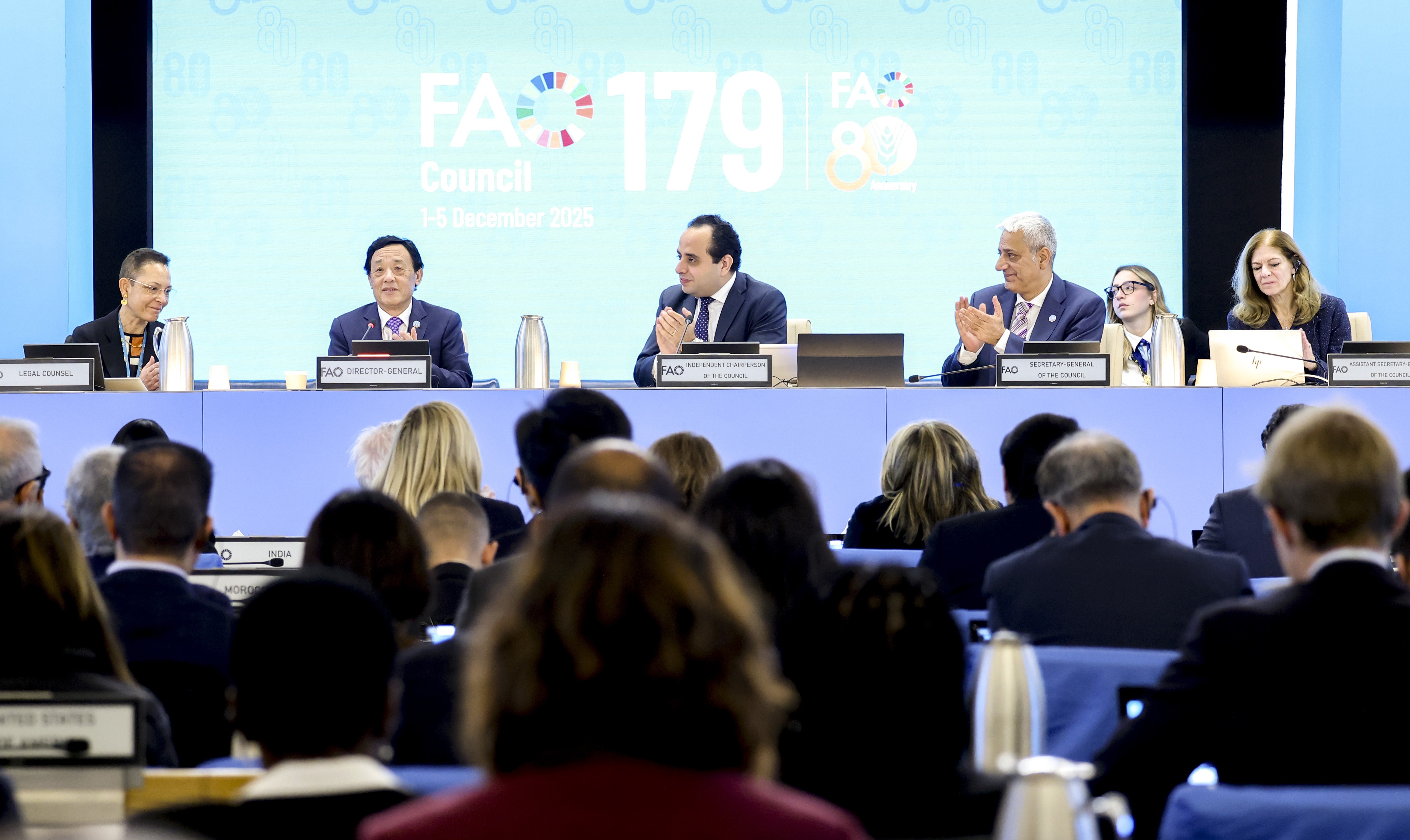
The FAO Strategy for Private Sector Engagement (2026-2030) was endorsed by the174th Session of the FAO Council. With its endorsement, the Council has marked a significant milestone in positioning FAO with a refreshed and constructive engagement model. This decision reflects FAO’s commitment to building stronger, more transparent, and action-oriented partnerships with the private sector in support of the FAO Four Betters.
A stronger vision for partnerships
Building on more than a decade of progress in private sector collaboration, the updated Strategy introduces renewed modalities to enhance efficiency, agility and accountability in private sector engagement. It emphasizes decentralization, ensuring regional and country-level priorities are fully integrated. Key updates include:
- Enhanced transparency and reporting through the expanded FAO CONNECT Portal and Customer Relationship Management (CRM) Salesforce system.
- Greater agility, accountability, and synergies to ensure private sector engagement contributes meaningfully to FAO’s field activities.
- Improved efficiencies through a streamlined FAO’s Due Diligence Framework for Risk Assessment and Management (FRAME) process.
- Sharper focus on priority areas:
1. Science, technology and innovation
2. Knowledge sharing and normative work
3. Environmental action
4. Emergency and climate crisis response
5. Resource mobilization and investments
-
Targeted engagement with priority partners:
1. Financial institutions
2. Philanthropic and corporate foundations
3. Associations of farmers' organizations, MSMEs, and umbrella organizations
4. Innovative multistakeholder networks and entities
5. Smallholder farmers
6. Strategic individual private sector partners
Collaborative engagements at the core
The Strategy includes innovative modalities designed to foster strategic and high-impact partnerships. FAO will step up engagement with the private sector through structured yet non-binding interactions that build mutual trust, co-creation, and shared accountability. These collaborations may include joint ideation, pilot initiatives, technical exchanges, and activities such as co-organized events, accelerators, incubators, innovation hubs, hackathons, knowledge sharing platforms, start-up promotion schemes, and brown bag lunches.
FAO to chair the UN Private Sector Engagement (PSE) Network in 2026
As FAO strengthens its engagement model, it continues to contribute to system-wide coherence through the UN Private Sector Engagement (PSE) Network. UN PSE is an inter-agency platform that facilitates coordination, knowledge-sharing, and alignment on approaches to private sector engagement across the United Nations system. Starting next year, FAO’s Private Sector Unit will assume the chairing of the Network.
Roll-out plan for 2026
The roll-out of the updated Strategy will focus on turning vision into action. Starting in 2026, it will include a full-fledged capacity development training programmes on the renewed modalities of collaborative engagements, risk assessment, partnership formulation, and engagement processes.
FAO will strengthen dialogue platforms, enhance systems and accountability, and build staff capacity through improved PSAG and PS‑IDWG engagement, CONNECT–CRM integration, streamlined due‑diligence processes, and targeted regional trainings supported by updated guidance and empowered focal points. Monitoring and coherence will be reinforced through continued inter‑agency coordination, annual reporting, and quarterly Strategy Taskforce reviews. This next phase goes beyond implementation; it is about embedding agility, accountability and transparency into every partnership to ensure that the private sector becomes a dynamic ally in advancing FAO’s mission worldwide.
Contact:
FAO Private Sector Unit