
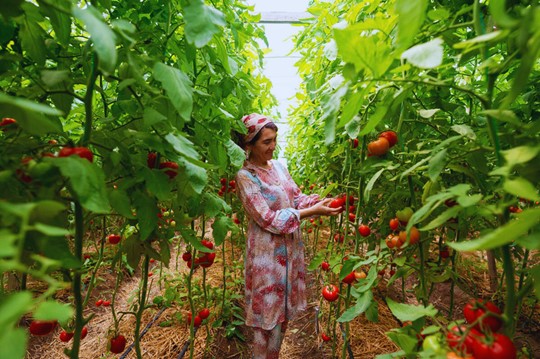
Mobilizing partnerships for gender equality in agrifood systems
29/04/2026 - 全球的
On 29 April 2026, the Private Sector Unit of FAO's Partnerships and UN Collaboration Division (PSU) convened the second session of its 2026 Private Sector Brown Bag Lunch series. The virtual discussion, "Investing in Women, Transforming Agrifood Systems: FAO and the Private Sector in the Commit to Grow Equality (CGE) Initiative", engaged over 50 participants from FAO headquarters, regional and country offices, alongside external stakeholders including private sector partners.
Opening the session, Lauren Phillips, Director of PSU, underscored the critical role of multi-stakeholder partnerships in advancing gender equality, bringing together diverse actors to shine a light on private sector efforts to enhance women’s empowerment across agricultural value chains. Moderated by Annamaria Pastore, Private Sector Unit Strategic Coordinator, the discussion brought together colleagues and partners to explore how commitments are being translated into concrete action on the ground.
At the center of the exchange was the FAO-led Commit to Grow Equality (CGE) initiative. Launched in 2024, CGE brings together governments, private companies, civil society and development partners to accelerate progress on women’s empowerment through practical, evidence-based action.
From commitments to results
Introducing the initiative, Clara Park, Senior Gender Officer in the Rural Transformation and Gender Equality Division (ESP) highlighted that CGE was born from evidence showing persistent gender inequalities in agrifood systems. The initiative responds by providing a platform where partners align their work across six priority areas—from women’s leadership to climate resilience—and commit to measurable progress.
Building on this, Francesca Distefano, CGE Coordinator, outlined how CGE translates commitments into action through peer learning, advocacy, matchmaking and accountability mechanisms. With 32 partners and 169 commitments, the initiative is rapidly expanding its global reach. Together, these elements position CGE as both a platform for collaboration and a mechanism for tracking real impact.
The role of the private sector
Providing a private sector perspective, Nicole Carta, CGE’s Private Sector Strategic Partnerships and Advocacy Lead, emphasized that companies are essential to driving change across agrifood value chains.
Through CGE, businesses can:
- Align sustainability efforts with global gender priorities
- Access FAO expertise and peer learning
- Demonstrate measurable impact
- Collaborate in a shared, multi-stakeholder platform
As noted during the session, the initiative encourages companies to move beyond broad statements and instead commit to specific, actionable targets that can be tracked over time.
From pledge to practice: ofi’s experience
Sharing a practical example, Tracey Duffey, Head of Partnerships at Olam Food Ingredients (ofi), highlighted how ofi is embedding gender equality within its Choices for Change sustainability strategy.
Operating across 50 countries, ofi has committed to:
- Supporting 250,000 women farmers with livelihood interventions
- Reaching 750,000 households with nutrition and health support
These commitments translate into concrete initiatives, including financial literacy training, access to agricultural tools, nutrition programmes and community health services. Tracey Duffey also highlighted Café Delas, a programme that sources coffee entirely from women farmers in Latin America. By ensuring traceability, direct payments and reinvestment in training, the initiative strengthens women’s economic participation and leadership.
Looking ahead
Participants noted that while progress is being made, challenges remain, particularly in addressing cultural and structural barriers that limit women’s participation in some contexts. Looking forward, speakers highlighted 2026, the International Year of the Woman Farmer, as a key opportunity to scale commitments and convert global momentum into measurable impact.
A collective effort
Closing the session, Annamaria Pastore emphasized that CGE represents a practical and results-oriented approach to advancing gender equality through partnerships. By combining FAO’s convening power with private sector innovation and investment, the initiative is helping to build more inclusive, resilient and sustainable agrifood systems.
The Private Sector Brown Bag Lunch series is organized by the Private Sector Unit of FAO's Partnerships and UN Collaboration Division (PSU).
The Commit to Grow Equality (CGE) initiative is a global initiative launched by FAO to accelerate gender equality and women’s empowerment in agrifood systems through financing partnerships and action.