

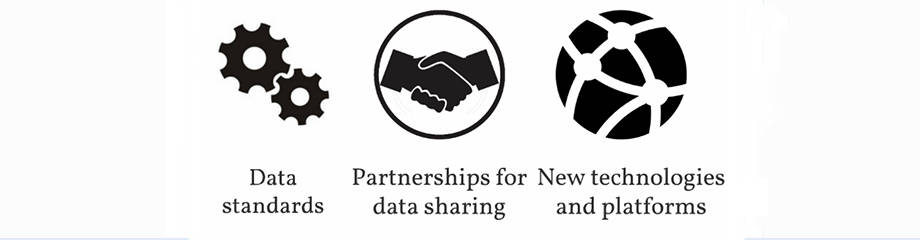




The CWP, supported by the participating organizations, serves as the premier international and interorganizational forum for agreeing common definitions, classifications and standards for the collection of fishery and aquaculture statistics. It has developed common procedures for statistics collation which have streamlined processes and reduced the burden on the statistical offices of national fisheries and aquaculture production, as well as providing technical advice to participating organizations on fishery-related and aquaculture-related statistical matters, and facilitating the publication of methodological and reference documents.
Highlights
- CWP expands its membership to 21 participating organizations
CWP continued to grow in 2026 with the accession of the South Pacific Regional Fisheries Management Organisation (SPRFMO) on 23 June and the Southern Indian Ocean Fisheries Agreement (SIOFA) on 17 July, bringing the total number of participating organizations to 21. These accessions further strengthen CWP's global reach and expertise, enhancing collaboration across regions and fisheries sectors. The expanded membership enriches CWP's technical knowledge base and reinforces its role as the leading international forum for cooperation and standards in fishery and aquaculture statistics, supporting the development and implementation of internationally harmonized statistical concepts, classifications, methodologies and practices. - CWP advances its programme of work through nine Task Groups
CWP is currently implementing the activities agreed at the Twenty-Eighth Session of the Coordinating Working Party on Fishery Statistics (CWP-28) and the Intersessional Meeting of the Aquaculture and Fishery Subject Groups (CWP-IS), held in Copenhagen, Denmark, and online from 2 to 4 July 2025. Work is being carried out through nine ad hoc Task Groups (TGs) focusing on: 1) catch concepts; 2) fishing effort concepts; 3) reference harmonization for capture fishery and aquaculture statistics; 4) geospatial matters; 5) best practices for managing confidential data; 6) characterization of small-scale fisheries; 7) further development of the aquaculture section of the CWP Handbook; 8) revision of the use of conversion factors; and 9) further development of the CWP website.
The CWP Handbook of Fishery Statistics
The CWP Handbook documents the core business of CWP including the statistical concepts, classifications, data exchange protocols and codes which are recommended by CWP for use in capture fishery and aquaculture statistics globally. There are also related pages on information sharing practices which outline approaches needed to establish harmonized statistics, and pages on regional references which set out CWP Members’ best practices in implementing CWP recommendations.
Click on the tabs above or the highlighted sections below to explore the Handbook and related pages.
Partners
 |
 |
 |
 |
 |
 |
 |
 |
 |
 |
 |
 |
 |
 |
 |
 |
 |
 |
 |
 |