


EFABIS Ireland
EFABIS Ireland is Ireland’s official information system on animal genetic resources. The National Animal Genetic Resources Information System is part of the global DAD-IS, the Domestic Animal Diversity Information System. It is used to inform on and monitor all agricultural livestock breeds held in Ireland. The Federal Office of Agriculture is responsible for the regular updating of the data.
Results
Breed Diversity in Ireland
Mammalian and avian livestock breeds are reported to occur either in only a single country (local breeds), in several countries in one region (regional transboundary) or in different regions of the world (international transboundary).
Risk Status in Ireland for cattle, sheep, goat, pig and chicken
Based on the population size reported by countries it is possible to assess the risk of extinction of domesticated animals.
The story of the Connemara Pony
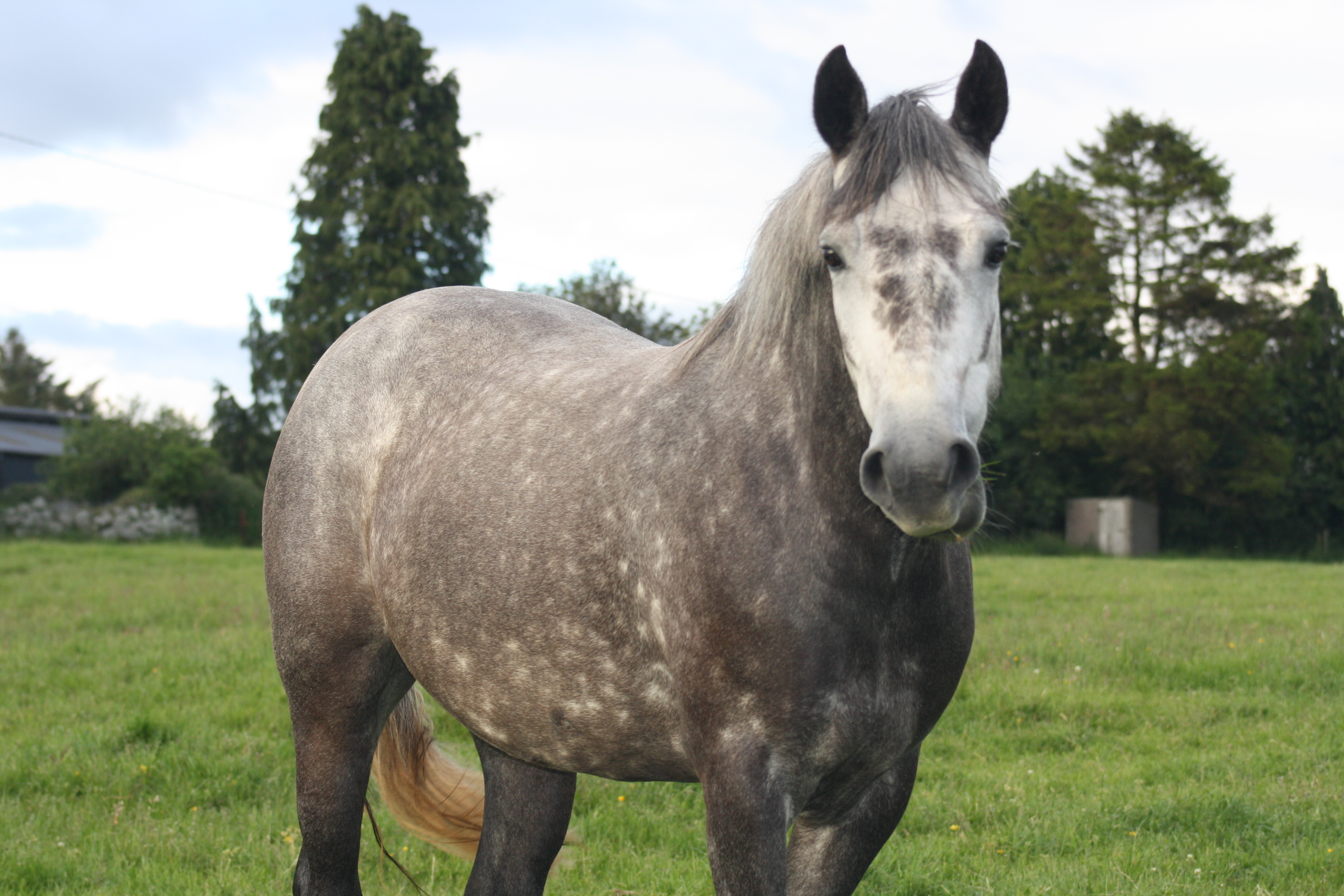
The Connemara Pony is famous for being hardy and sure-footed, and no surprise the breed evolved on the rocky coast of western Ireland, where it had to develop an ability to move quickly across rough terrain. The sometimes harsh Irish weather and unforgiving landscape helped develop a breed that is resilient and adaptable, and today’s Connemara is valued for all of these qualities.
Early Irish farmers often had large families to feed and could afford only one good pony, which often came from a wild herd and had to be caught and gentled. Most families owned a mare so they could sell her offspring for much-needed income, and even while pregnant she would be required to pull a plow or a cart filled with rock, turf, or people. Any animal that couldn’t perform these tasks on a daily basis was replaced. This difficult lifestyle helped the Connemara develop its trademark stamina and adaptability.
Despite this long and colorful history, the Connemara didn’t become an “official breed” until the Connemara Pony Stud Book was first published in 1926. The book was compiled by 30 “mostly local” Connemara gentlemen, who were concerned about the dwindling population of local mares. The group formed the Connemara Pony Breeders Society with the sole purpose of promoting the best of these mares. In an effort to improve and invigorate the breed, the Society selected the best stallions from the area and persuaded local farmers to only use the services of those stallions.
Today’s Connemara is gaining popularity throughout the world as both an adult and children’s pony. Its temperament and adaptability makes it well suited to a variety of disciplines, from jumping to dressage to endurance. Today, Connemara ponies are bred worldwide in Ireland and the United Kingdom, as well as on the European Continent, the United States, Canada, Australia, New Zealand and South Africa.
Related links
Documents

Publications
Global Plan of Action for Animal Genetic Resources and the Interlaken Declaration
2007
In recognition of the need to develop an effective framework for the management of these resources and to address the threat of genetic erosion, 109...
FAO’s work related to animal genetic resources
11/06/2023
FAO's Intergovernmental Technical Working Group for Animal Genetic Resources for Food and Agriculture was established in 1997, and it consists of 28 countries, with members elected at each of the Commission's regular sessions. The Working Group's role is to review issues related to animal genetic resources and their management.
Diversity of Animal Genetic Resources
03/05/2022
More than 2,400 livestock breeds are at risk of extinction, while 600 are already extinct, according to the Food and Agriculture Organization (FAO). If managed sustainably, this diversity can be used to increase production and allow livestock to adapt to challenges such as climate change.
Contact
Browse more data

Regional and National datasets
Explore regional and national data from the regional information systems (EFABIS: The European Farm Animal Biodiversity Information System).

Data export
Download, generate, analyse. Download datasets and generate custom tables, charts, and reports. Extract breed and bee data or build customized cross-tabulations for deeper analysis.

Bees
Explore specialized datasets on bee genetic resources, including breed sheets, diversity of metrics, population trends, and data export options. This section focuses exclusively on bee-related information.

Annual statistics
Review yearly summaries on data completeness, population reporting quality, and adaptedness coverage. These indicators offer a quick overview of how countries contribute and update their information.

Gene banks & cryoconservation
Access data on cryoconservation efforts, including stored genetic material and country-level collections. This section provides information on reporting quality and representation of local breeds in gene banks.

Sustainable Development Indicators
Consult SDG 2.5 indicators on the conservation of animal genetic resources. Users can explore national and species-level results on breed storage in gene banks and the risk of extinction.

Geographic & transboundary distribution
View spatial data showing where breeds are found and how they move across borders. Maps display national and transboundary distributions, summaries, and related collection of information.

Risk status & monitoring
Find data on breed risk categories, extinction risk trends, and tools for monitoring population stability. This section includes early warning indicators and assessments of population structure.

Population data
Access to population numbers, recent updates, reporting frequency, and long-term trends across countries and species. View population distributions, adaptedness classes, and overall data completeness.

Breed information
Explore information about individual breeds, including profiles, characteristics, diversity, and uses. This section also provides species-by-country listings and visual material through the image browser.