


EFABIS United Kingdom
EFABIS UK contains the official information on the United Kingdom’s farm animal genetic resources. EFABIS UK is part of the global DAD-IS, the Domestic Animal Diversity Information System. It is used to aid with information on and monitor all agricultural livestock breeds held in the United Kingdom. The website is available in English. The Department for Environment, Food and Rural Affairs (Defra) is responsible for regularly updating the data.
Results
Breed Diversity in UK
Mammalian and avian livestock breeds are reported to occur either in only a single country (local breeds), in several countries in one region (regional transboundary) or in different regions of the world (international transboundary).
Risk Status in UK for cattle, sheep, goat, pig and chicken
Based on the population size reported by countries it is possible to assess the risk of extinction of domesticated animals.
Proud of our Native Breeds
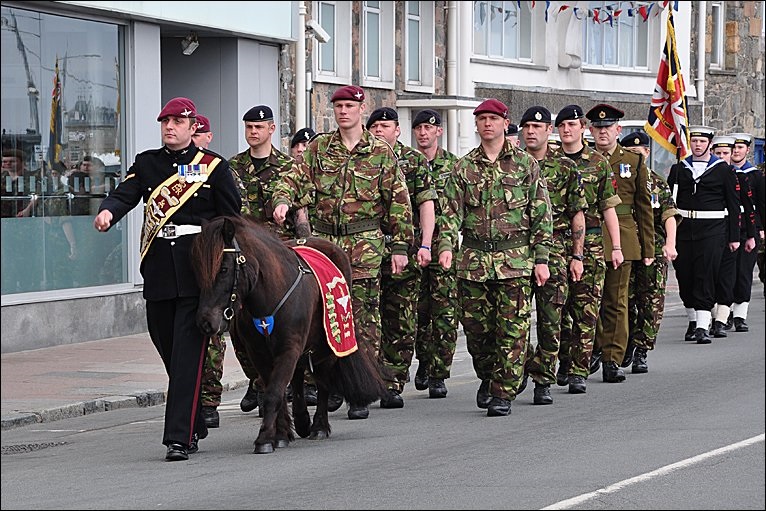
The UK has one of the richest native FAnGR populations in the world with over 200 breeds identified, they have shaped our land and traditions and have supported rural communities for hundreds of years. Some of our oldest breeds include:
The Exmoor Pony - first written records of ponies on Exmoor are within the Doomsday Book (11th century) when Exmoor was designated a Royal Forest. Exmoor Ponies have a distinct jaw structure, which offers the development of a 7th molar. No other living horse breed has this feature.
The Sussex Cow – originally a draught breed noted for their working abilities and hardy constitution, they were selectively bred from the late 18th century to form a modern beef breed.
The Berkshire Pig – one of the earliest records of this breed comes from the 17th century when troops stationed in Reading made reference to a locally bred pig renowned for its size and the quality of its bacon and ham.
The Bagot Goat - the first recorded account of the breed appears in historical documents from 1389, when Sir John Bagot was known to be the keeper of the original herd in Staffordshire.
The Dorking Chicken – thought to be descended from original birds brought to Britain by the Romans, the Dorking has always been prized for its flesh and eating qualities.
The Badger Face Welsh Mountain Sheep – believed to be one of the oldest British sheep breeds, with origins dating back to the 1st century. It was further developed in the Middle Ages, where the cloth trade called for more white fleece.
Our native breeds have contributed to our natural and cultural heritage. Indeed, some of our native breeds have a long and proud tradition of serving in Britain's Armed Forces as ceremonial mascots, for example;
- The Parachute Regiment – Shetland pony, currently Lance Corporal Pegasus V.
- 1st The Queen's Dragoon Guards – Welsh Mountain Pony, currently Trooper Emrys Forlan Jones.
- The Royal Regiment of Scotland - Shetland pony, currently Lance CorporalCruachan.
- The Mercian Regiment - A Swaledale Ram, currently Lance Corporal Derby.
Links
- The UK National Inventory and Interactive Data Explorer
- Defra Farm Animal Genetic Resources Committee - Publications
- Rare Breeds Survival Trust
- National Sheep Association
- British Pig Association
- Poultry Club of Great Britain
- National Beef Association
- British Goat Society
Documents

Publications
Global Plan of Action for Animal Genetic Resources and the Interlaken Declaration
2007
In recognition of the need to develop an effective framework for the management of these resources and to address the threat of genetic erosion, 109...
FAO’s work related to animal genetic resources
11/06/2023
FAO's Intergovernmental Technical Working Group for Animal Genetic Resources for Food and Agriculture was established in 1997, and it consists of 28 countries, with members elected at each of the Commission's regular sessions. The Working Group's role is to review issues related to animal genetic resources and their management.
Diversity of Animal Genetic Resources
03/05/2022
More than 2,400 livestock breeds are at risk of extinction, while 600 are already extinct, according to the Food and Agriculture Organization (FAO). If managed sustainably, this diversity can be used to increase production and allow livestock to adapt to challenges such as climate change.
Browse more data

Regional and National datasets
Explore regional and national data from the regional information systems (EFABIS: The European Farm Animal Biodiversity Information System).

Data export
Download, generate, analyse. Download datasets and generate custom tables, charts, and reports. Extract breed and bee data or build customized cross-tabulations for deeper analysis.

Bees
Explore specialized datasets on bee genetic resources, including breed sheets, diversity of metrics, population trends, and data export options. This section focuses exclusively on bee-related information.

Annual statistics
Review yearly summaries on data completeness, population reporting quality, and adaptedness coverage. These indicators offer a quick overview of how countries contribute and update their information.

Gene banks & cryoconservation
Access data on cryoconservation efforts, including stored genetic material and country-level collections. This section provides information on reporting quality and representation of local breeds in gene banks.

Sustainable Development Indicators
Consult SDG 2.5 indicators on the conservation of animal genetic resources. Users can explore national and species-level results on breed storage in gene banks and the risk of extinction.

Geographic & transboundary distribution
View spatial data showing where breeds are found and how they move across borders. Maps display national and transboundary distributions, summaries, and related collection of information.

Risk status & monitoring
Find data on breed risk categories, extinction risk trends, and tools for monitoring population stability. This section includes early warning indicators and assessments of population structure.

Population data
Access to population numbers, recent updates, reporting frequency, and long-term trends across countries and species. View population distributions, adaptedness classes, and overall data completeness.

Breed information
Explore information about individual breeds, including profiles, characteristics, diversity, and uses. This section also provides species-by-country listings and visual material through the image browser.