


News

FAO facilitates expert consultation for the review and revision of the National Action Plan on AMR 2.0
15/02/2024

FAO facilitates the organization of INFAAR meetings in Bhubaneswar
23/12/2023

Integrated approach essential to address Antimicrobial Resistance: FAO
25/11/2023

Training organized on FAO developed and validated protocol for antimicrobial usage at the farm level
27/10/2023
-in-india.tmb-th600x400.jpg?sfvrsn=19535b97_1 "Inception Meeting of the FAO-Government of India Project under Global Health Security Programme (GHSP) in India")
Inception Meeting of the FAO-Government of India Project under Global Health Security Programme (GHSP) in India
13/04/2023

The environmental threat of antimicrobial resistance in India (op-ed)
25 November 2024
Antimicrobial resistance (AMR) is a growing global health crisis, making common infections harder to treat and threatening lives. AMR occurs when microorganisms (like bacteria, virus, fungi and parasites) become resistant to medications – including antibiotics, antivirals, antifungals, and antiparasitic – that were once effective in treating infections.
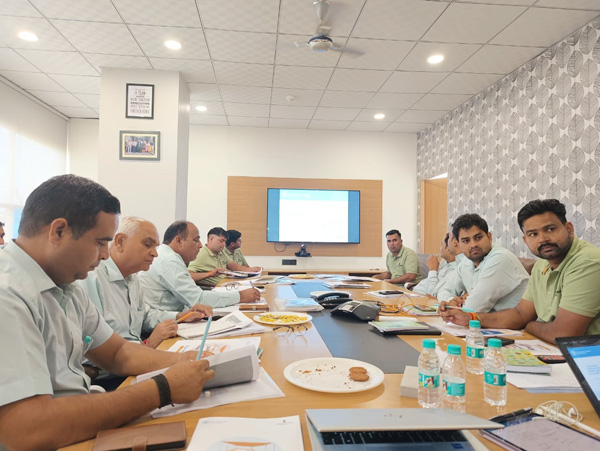
FAO enhances AMR surveillance with INFAAR: A network of laboratories for animals and fisheries in India
25 November 2024
In a significant stride towards tackling antimicrobial resistance (AMR) in India, the Food and Agriculture Organization of the United Nations (FAO), has been instrumental in establishing the India Network for Fisheries and Animal Antimicrobial Resistance (INFAAR). This initiative marks a pioneering effort to create a structured surveillance network aimed at addressing AMR in the country's fisheries and livestock sectors.

Pandemic preparedness: How FAO is strengthening India's response to zoonotic threats (op-ed)
6 July 2024
On July 6, 1885, French biologist Louis Pasteur administered the first rabies vaccine to a young boy bitten by a rabid dog, marking a pivotal moment in the understanding of zoonotic diseases — those transmitted from animals to humans. This historic event led to the establishment of the World Zoonoses Day, observed annually on July 6. The day aims to raise awareness about zoonotic diseases, emphasizing their profound impact on global health and highlighting the need for continuous research, attention, and collaboration to prevent outbreaks and safeguard public health.

The looming threat of antimicrobial resistance (op-ed)
6 December 2023
Antimicrobial resistance (AMR) is a growing threat to global public health as disease-causing germs (microorganisms) develop resistance to life-saving antibiotics. As per a Lancet study, in 2019, five million human deaths were associated with bacterial antimicrobial resistance worldwide, including nearly 1.3 million human deaths attributable to bacterial AMR.