


Soils4Nutrition project phase 2

Enhance capacities for soil health development and production of nutritious food
The second phase of this project aims to equip farmers and extension staff with the skills and knowledge to improve soil fertility and the nutritional value of food. Building on the success of its first phase in Bangladesh, Burkina Faso and Malawi, the second phase of the Soils4Nutrition project will now be implemented in Burkina Faso, Colombia and Mexico.
This second phase is structured around three components:
- Enhance technical capacities of smallholder farmers in the beneficiary countries. Farmers’ perception of the soil health–crop diversity–nutrition nexus will be improved through participatory training and exchanges within the Global Soil Doctors Programme national network.
- Manage soils sustainably through the implementation of the Soil4Nutrition recommendations. The farms where SSM practices are implemented will serve as a showcase for farmer training. At the same time, soil indicators will be measured to assess the impact of practices such as crop diversification and rotation, micronutrient application, integrated fertilizer programmes and the use of organic fertilizers and amendments.
- Improve global and regional awareness of the importance of soils for better nutrition. The Soils4Nutrition technical guidelines and project results will be disseminated to different audiences such as farmers, academia, NGOs and the private sector through using technical networks and regional and national institutions of the Global Soil Partnership. It will also be disseminated through FAO’s annual World Soil Day on 5 December.
Pilot countries
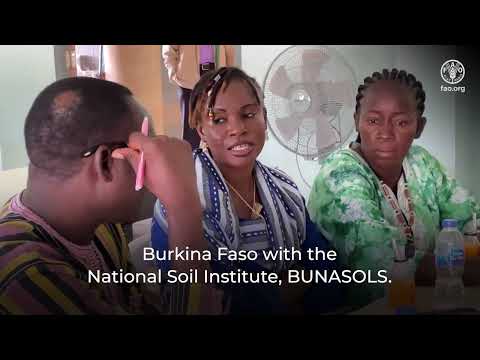
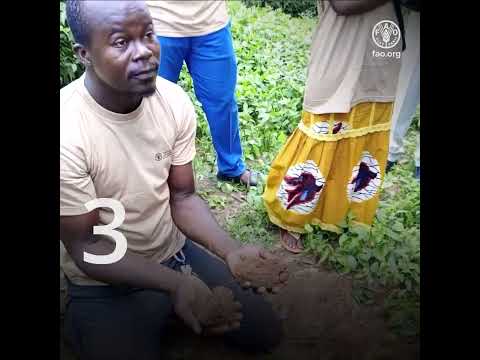
In Burkina Faso, the second phase of the Soils4Nutrition project is implemented in partnership with the National Soil Bureau of Burkina Faso (BUNASOLS), with technical support from Nazi Boni University. The aim is to increase uptake of Soils4Nutrition guidelines through the national Global Soil Doctors Programme. The project focuses on strengthening the capacities of farmers through inclusive, participatory training and cascade learning, involving 10 trainers and 35 soil doctors who will reach around 300 farmers in the Koubri, Manga and Ziniaré areas. Meanwhile, SSM practices will be demonstrated on 14 farms selected from existing agroecological initiatives. Soil indicators will be monitored on the selected farms to assess the effects of crop diversification, micronutrient management, integrated fertilization and organic amendments, thereby reinforcing the link between soil health and nutrition at a local level
 The second phase of the Soils for Nutrition project in Colombia is led by the Colombian Agricultural Research Corporation (AGROSAVIA), in close collaboration with FAO. It is implemented in collaboration with ongoing national projects to scale up Soils4Nutrition recommendations. The project will enhance the capacity of farmers through participatory training, field demonstrations and peer-to-peer exchanges within the Global Soil Doctors Programme. Ten trainers and 35 soil doctors will engage with approximately 500 farmers in targeted regions. In parallel, SSM practices will be implemented and showcased on 15 farms selected from FAO-supported initiatives. Soil and management indicators will be monitored on the selected farms to evaluate the impact of diversified cropping systems, micronutrient management, integrated fertilizer use and organic amendments on soil fertility and the nutritional quality of food.

The Soils4Nutrition project in Mexico is being implemented by the FAO national office in collaboration with the University Programme for Interdisciplinary Soil Studies (PUEIS–UNAM), with strong support from national and regional partners, including the Ministry of Agriculture and Rural Development (Agricultura), the University of Puebla (BUAP), the National Programme for Soil Conservation, Preservation and Protection (CORENADR), the Inter-American Institute for Cooperation on Agriculture (IICA) and the Sustainable Mixteca Project. The project focuses on enhancing the capabilities of 44 technicians and 96 soil doctors via a combination of theory and practical training as part of the Global Soil Doctors Programme. These individuals will then educate around 500 additional farmers across 17 agricultural sites in 6 states. These farms will demonstrate SSM practices, with key soil and plant indicators being monitored to assess the impact on soil fertility, crop productivity and nutrition. This will be complemented by a survey of farmers' perceptions of the soil health–crop diversity–nutrition nexus, to capture behavioural change and socio-nutritional outcomes.
Contact us
Publications

Soils for nutrition: state of the art
2022
Food starts with soils, and as the target date to accomplish the SDGs grows closer, it is more urgent than ever to reverse soil degradation and tackle...

Soils, where food begins. Outcome document of the Global Symposium on soils for nutrition, 26–29 July 2022
2023
The Global Symposium on Soils for Nutrition outcome document highlights the latest research findings and multisectoral insights which evidenced that...

Technical guidelines on soils for nutrition: Sustainable soil management for nutrition-sensitive agriculture
2023
These technical guidelines outline the role that soil health plays in the nutritional quality of food and provide soil management recommendations to...

Sustainable soil management as a keystone of nutrition-sensitive agriculture in Burkina Faso
2023
This country factsheet highlights the importance of the relationship between soil management with nutrition aspects in Burkina Faso..

Sustainable soil management as a keystone of nutrition sensitive agriculture in Bangladesh. Country factsheet
2023
This country factsheet highlights the importance of the relationship between soil management with nutrition aspects in Bangladesh..

Sustainable soil management as keystone of nutrition sensitive agriculture in Malawi. Country factsheet
2023
This country factsheet highlights the importance of the relationship between soil management with nutrition aspects in Malawi..
News

Farmers at the forefront: Global workshop in Thailand highlights the nexus soil health - nutritious food
14/02/2025
a27af3d7-c85b-4a6e-b624-4c74b1b46afd.tmb-th600x400.jpg?sfvrsn=dfbce125_1 "GSP_GS4N_Booklet_Highlight (1)")
Soils for Nutrition Project Phase 2 to promote soil health and nutrition
26/02/2025

Fostering resilient food systems through fertile and healthy soils
14/11/2024
Videos

Photos
.tmb-th600x400.jpg?sfvrsn=dc48affe_1 "55012092018_2075ddd290_h (1)")

Global Soil Doctors Programme (GSDP), Trinidad, 29 - 31 January 2025
05/02/2025
The Global Soil Doctors Programme is a farmer-to-farmer training initiative that aims to build the capacity of farmers on sustainable soil management...

Global Soil Doctors Programme (GSDP) | Sustainable soil management. Colombia, 2025-2026
29/07/2026
The Global Soil Doctors Programme is a farmer-to-farmer training initiative that aims to build the capacity of farmers on sustainable soil management...

Global Soil Doctors Programme (GSDP) | Banana and plantain soils. Colombia, 2024-2026
29/07/2026
The Global Soil Doctors Programme is a farmer-to-farmer training initiative that aims to build the capacity of farmers on sustainable soil management...

Global Soil Doctors Programme (GSDP) in Kyrgyzstan
27/03/2026
The Global Soil Doctors Programme is a farmer-to-farmer training initiative that aims to build the capacity of farmers on sustainable soil management...

Global Soil Doctors Programme (GSDP) in Belize
01/08/2025
Global Soil Doctors Programme (GSDP) | Belize, August 2025

Global Soil Doctor Programme implementation in Mauritania
17/12/2025
The Global Soil Doctors Programme is a farmer-to-farmer training initiative that aims to build the capacity of farmers on sustainable soil management...


Global soil partnership third Plenary Assembly
22/06/2015
The Plenary Assembly constitutes the decision making body of the Global Soil Partnership. It embraces all the GSP partners in a yearly meeting to...

Global Soil Partnership Fourteenth Plenary Assembly
19/06/2026
The Plenary Assembly constitutes the decision making body of the Global Soil Partnership. It embraces all the GSP partners in a yearly meeting to review...

Recarbonization of Agricultural Soils (RECSOIL) in Armenia
20/06/2025
The RECSOIL initiative seeks to protect and increase the treasure beneath our feet – soil organic carbon. As a key indicator of soil health, soil carbon...

RECSOIL training in Togo
23/07/2023
This training is part of RECSOIL initiative for the recarbonization of global agricultural soils, which is being implemented in Togo as a pilot country...

First RECSOIL training in Togo
04/03/2023
Training on soil organic carbon (SOC) baseline assessments and other technical tools to implement the Recarbonization of Global Soils (RECSOIL) project...


Global workshop in Thailand, Enhancing Capacities for Soil Health Development and Nutritious Food Production (Soils for Nutrition)
12/02/2025
The second phase of the Soils for Nutrition (S4N) Project, supported by the German government, officially started activities on 3 February 2025 through...


Soils4Nutrition - Malawi
31/08/2020
FAO’s Global Soil Partnership promotes sustainable soil management to improve the nutritional quality of food to address micronutrient deficiencies...


Sustainable soil management for nutrition-sensitive agriculture in Sub-Saharan Africa and South East Asia
09/06/2022
Burkina Faso, field mission
Events

Hybrid Event
Rome Nutrition Week 2025: Empowered farmers nourish their soils to nourish people
30/05/2025
Part of the ‘Rome Nutrition Week 2025’ ‘Coherent policies and measures for better nutrition’, this session will spotlight how practical...