


Ecuador 2026
Ecuador is poised to launch a transformative, integrated agrifood investment portfolio developed with technical assistance from the Hand in Hand Initiative of FAO. This strategic initiative aligns national production with climate resilience, biodiversity, food security, and inclusive rural development. By integrating agriculture, livestock and fisheries into a coherent portfolio of investment opportunities, Ecuador offers a scalable pathway to transform agrifood systems through climate-smart, nature-positive and market-driven investments. The new portfolio focuses on three high-impact frontiers: high-value cocoa for premium markets, regenerative livestock and blue transformation for the tuna value chain. These proposed models are designed to be competitive, bankable, and strictly deforestation-free, prioritizing dignified job creation, especially for women and youth.
Together, these three investment opportunities represent a national portfolio of USD 166.9 million capable of benefiting more than 2.1 million people while accelerating Ecuador's transition towards more competitive, inclusive and climate-resilient agrifood systems. The portfolio combines measurable economic returns with biodiversity conservation, climate mitigation, social inclusion and sustainable territorial development, positioning Ecuador as an attractive destination for responsible agrifood investment.
Ecuador is targeting opportunities that merge export-driven competitiveness with measurable sustainability, including full traceability, innovation, and climate risk management. This is a coherent, structured, and scalable country-level investment system where high-value returns meet verified environmental stewardship and social impact.
Geospatial Typologies
Agro-informatics connects information technology with the management, analysis and application of agricultural data to indentify territories with untapped agrifood potential and design more accurate and targeted agrifood interventions. The use of new technologies and techniques in agriculture, such as satellite imagery, remote sensing, and geographic information systems, enable the transformation of data into actionable information.
POVERTY
POTENTIAL
EFFICIENCY

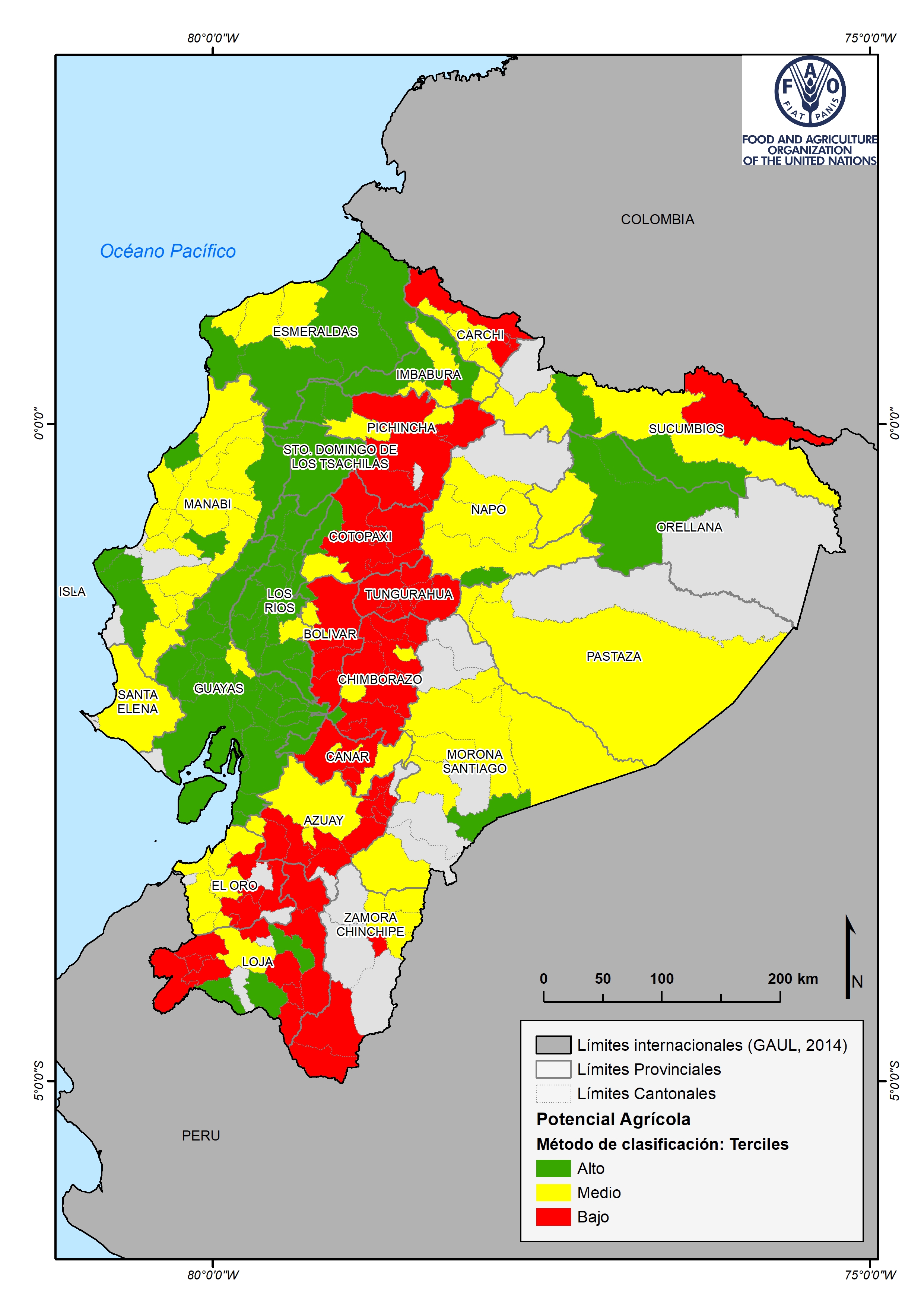

Click on individual maps to get a detailed view on FAO GIS platform
Invest in Ecuador
Investment Cases and Interventions

Specialty cocoa for premium markets
INVESTMENT
USD 83,222,433
INTERNAL RATE OF RETURN (%)
20.6%
NET PRESENT VALUE
USD 37,797,944
DIRECT BENEFICIARIES
351,960
INDIRECT BENEFICIARIES
1,150,732
INCOME INCREASE PER CAPITA
USD 2,060-2,855 person/ha
EMISSION REDUTION (EXACT)
229,736 tCO₂e per year
Ecuador’s specialty cacao investment case will strengthen the competitiveness, traceability and value addition of fine aroma and specialty cacao value chains for premium national and international markets. The intervention will prioritize high-potential cacao-producing territories determinate by Hand in Hand methodology, including in the selected provinces of Esmeraldas, Guayas, Los Ríos, Manabí, Chimborazo, Pastaza y Orellana.
Key investments will focus on improving post-harvest and collection infrastructure, including fermentation, drying, storage and quality control facilities; strengthening producer organizations; implementing digital traceability and georeferencing systems aligned with market and sustainability requirements; and promoting agroforestry and climate-resilient production models. The investment will also support market intelligence, investment promotion, quality differentiation and access to premium markets, requiring an investment of 83.22 million USD, with an IRR of 20.6% and benefiting more than 1.5 million people.
The expected impact includes increased producer incomes, improved product quality, enhanced market access, reduced information asymmetries and stronger positioning of Ecuadorian cacao in high-value markets while increasing producer income and compliance with international market requirements.

Regenerative livestock
INVESTMENT
USD 71,138,608
INTERNAL RATE OF RETURN (%)
20.4%
NET PRESENT VALUE
USD20,845,592
DIRECT BENEFICIARIES
115,138
INDIRECT BENEFICIARIES
384,485
INCOME INCREASE PER CAPITA
USD 362 /cow/year
EMISSION REDUTION (EXACT)
-761,550 tCO₂e per year
This investment case will accelerate the transition of Ecuador’s livestock sector toward regenerative, low-emission and market-oriented production systems. The intervention will target priority cattle-producing territories, based on productivity, environmental vulnerability, market potential and territorial prioritization carried out through the Hand-in-Hand methodology.
It includes investments in animal health and productivity improvements, and the strengthening of technical assistance services. The case will also promote private traceability systems, product differentiation, market intelligence for regenerative livestock products, and financial mechanisms such as differentiated credit and payments for results linked to sustainable production outcomes, requiring an investment of 71.13 million USD, with an IRR of 20.4% and benefiting around 500 thousand people.
The investment is expected to improve productivity, reduce environmental pressure, enhance climate resilience, create incentives for sustainable practices and support the development of differentiated markets for regenerative meat and dairy products.

Tuna value chain for blue transformation
INVESTMENT
USD 12,570,000
INTERNAL RATE OF RETURN (%)
14.4%
NET PRESENT VALUE
USD 1,629,805
DIRECT BENEFICIARIES
20,000
INDIRECT BENEFICIARIES
80,000
ROA INCREASE
+5.4pp
EMISSION REDUTION (EXACT)
-75,051 tCO₂e per year
Ecuador’s tuna investment case seeks to strengthen the competitiveness, sustainability and value addition of the tuna value chain under the Blue Transformation agenda. The intervention will prioritize strategic coastal territories linked to tuna landing, processing, logistics and commercialization.
Key investments will modernize port and processing infrastructure, strengthen fisheries governance and traceability systems, develop market intelligence and digital information platforms, establish innovation capacities for tuna by-products, promote circular economy solutions, and improve access to sustainable finance for the blue economy, requiring an investment of 12.57 million USD, with an IRR of 14.4% and benefiting around 100 thousand people.
The expected results include increased value addition, improved market access, reduced post-harvest and processing losses, stronger compliance with international sustainability requirements, and greater inclusion of coastal communities and value chain actors in higher-value market opportunities.
Resources
FAO's Hand-in-Hand Initiative
21/12/2023
The Hand-in-Hand (HIH) Initiative supports the implementation of nationally led, ambitious programmes to accelerate agrifood systems transformations...
In the Media
Contacts
For more information, please contact the Hand-in-Hand team