


MAFAP programme brings policy optimization to the forefront at key Kenya meetings
Policy Optimization Modelling Tool (PolOpT) generates strong interest among African stakeholders during regional livestock conference. MAFAP team set to support Kenya’s fertilizer subsidy evaluation and play a role in FAO-IFAD’s Food Systems Integrated Programme.

Group photo the sidelines of the Food Systems Integrated Programme (FSIP) meetings.
FAO’s Monitoring and Analysing Food and Agricultural Policies (MAFAP) programme capped a week of strategic meetings in Nairobi, where it engaged in dialogue on transforming livestock systems, optimizing agriculture budgets, and evaluating fertilizer subsidies.
A key focus of the mission was to introduce and discuss FAO’s Policy Optimization Modelling Tool (PolOpT) to Kenyan policymakers at the Ministry of Agriculture and Livestock Development (MoALD) as well as to colleagues at the FAO Representation in Kenya.
MAFAP programme Officer-in-Charge, Marco V. Sánchez, and the MAFAP programme’s Focal Point in Kenya, Anne Chele, met with MoALD officials to discuss an assessment of the National Fertilizer Subsidy Programme (NFSP), a new area of policy support the MAFAP programme is providing to MoALD, as well as to go over updates on other MAFAP programme activities in the country.

The MAFAP team meet with officials from the Ministry of Agriculture and Livestock Development in Nairobi
Ministry officials also expressed strong interest in using PolOpT to evaluate the effectiveness of fertilizer subsidies to support development objectives and compare it to the effectiveness of other policy support measures. A follow-up presentation of this tool is planned for September during a workshop in Nairobi in which indicators for public expenditure on food and agriculture and commodity price incentives will be validated with key stakeholders.
PolOpT, already tested in six African countries, is gaining momentum under the larger Food Systems Integrated Programme (FSIP) – a FAO and International Fund for Agricultural Development (IFAD) initiative funded by the Global Environment Facility (GEF), for which it will be used to support several country projects. PolOpT helps governments identify the most effective and balanced agricultural policy pathways to have the most optimal public spending on food and agriculture possible so as to achieve economic, social and environmental objectives.
Spotlight at the regional livestock conference
Marco V. Sánchez took the stage at the Regional Conference on the International Year of Camelids and Sustainable Livestock Transformation in Africa, co-hosted by FAO and the African Union Inter-African Bureau for Animal Resources (AU-BAR), as a moderator on national and regional policy sessions as well taking part as a panelist on the same topic. There, he shared initial policy analysis on the livestock sector, highlighting how coherent spending – guided by data – could better serve the livestock sector, which is often underfunded.
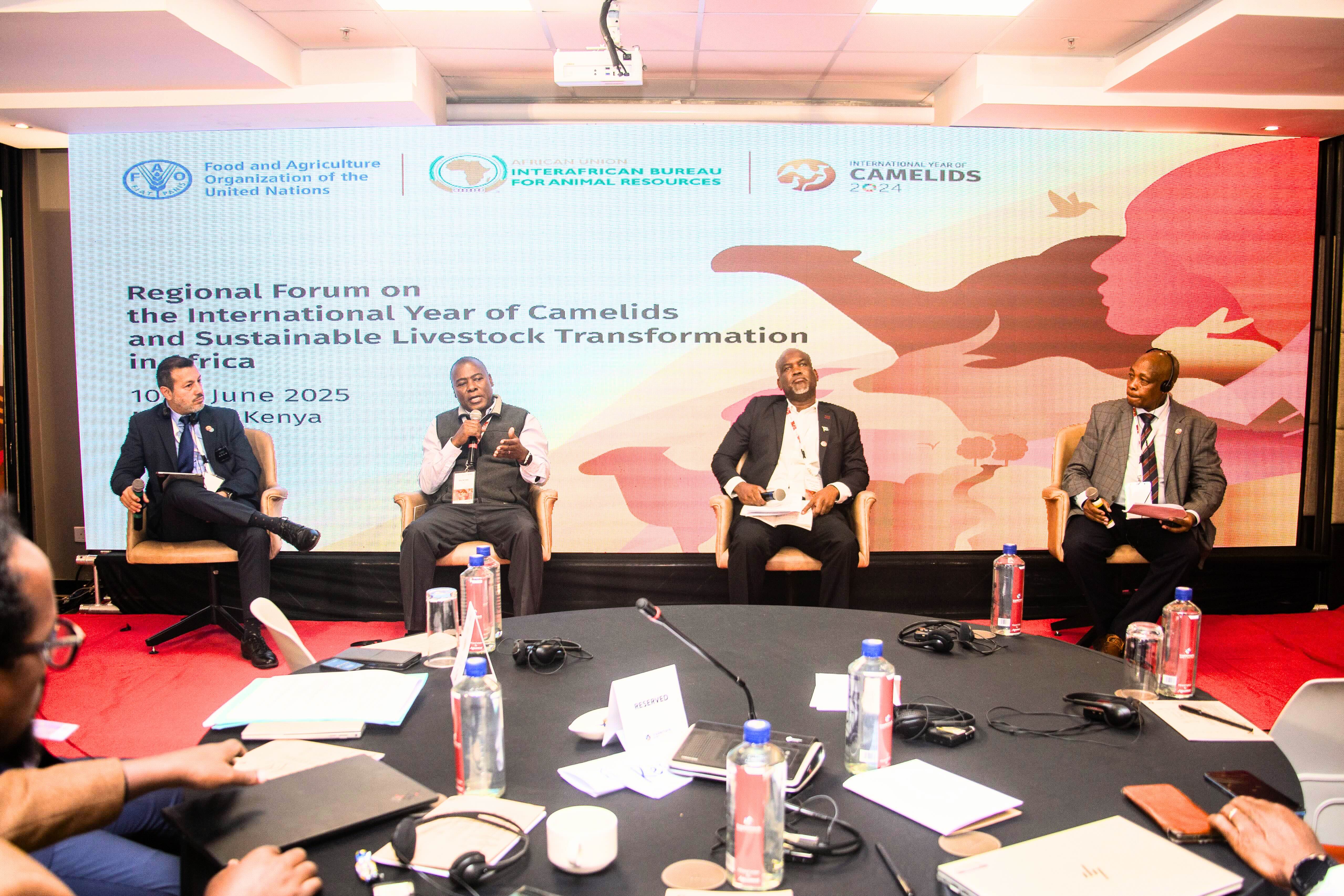
Marco V. Sánchez (left) during a session on national and regional policies at the livestock forum
Community of practice: building momentum
On the sidelines, Sánchez joined the first in-person meeting of FSIP’s Livestock Community of Practice (CoP), bringing together country teams from Eswatini, Kenya, Nigeria, and the United Republic of Tanzania. The demo of PolOpT sparked strong interest, with several teams keen to apply the tool to their national projects – especially to redesign policy support and phase out harmful subsidies.
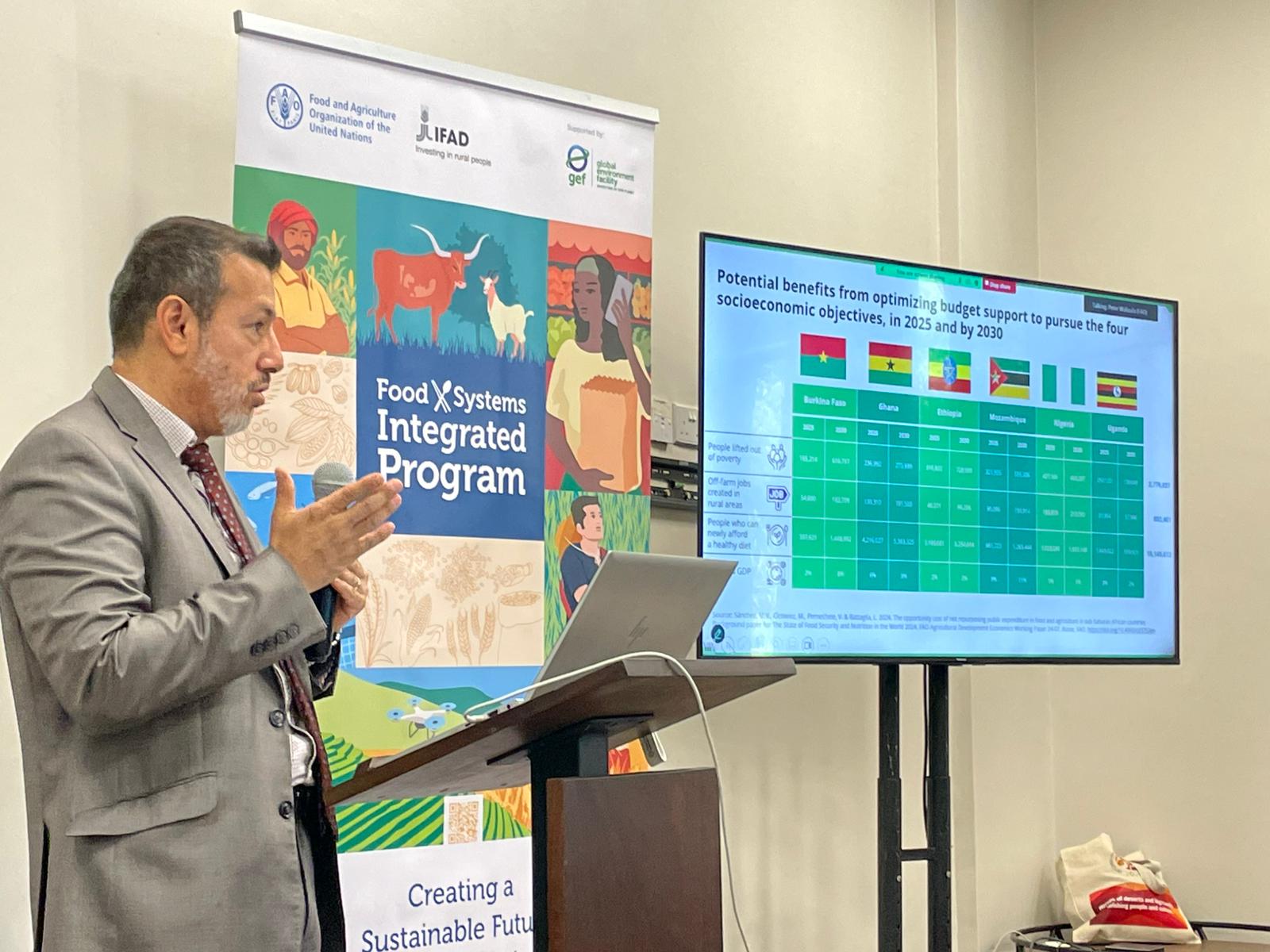
Marco V. Sánchez presenting to the FSIP's Community of Practice.
Contact
Marco V. Sánchez Deputy Director, Agrifood Economics and Policy, FAO [email protected]