


With the support of:

- Project title: Integrated Country Approach for boosting decent jobs for youth in the agrifood system – Phase IV (ICA-4)
- Project duration: March 2024 – February 2027 (36 months)
- Resource partners: Swedish International Development Cooperation Agency (Sida)
- Countries: Ecuador, Viet Nam, Zambia
- Total budget: USD 4.6 million
There are more young people on our planet today than ever before. Approximately 85 percent of youth live in Africa, Asia and Latin America and the Caribbean, primarily in rural areas. The working-age population is growing. This represents a challenge, but also a unique opportunity to benefit from a huge demographic dividend, leading to the rejuvenation of agrifood systems, economic growth, and inclusive rural transformations.
Why FAO
The ICA-4 project builds on FAO's longstanding experience in promoting decent rural employment and fostering the development of inclusive agrifood value chains. In particular, FAO has been implementing its Integrated Country Approach (ICA) for youth employment since 2011. As part of its ICA interventions, the Organization has developed a comprehensive set of practical tools, including case studies, guidance materials and knowledge products – such as the Youth-sensitive value chain analysis. Beyond ICA, FAO has generated lessons learned through youth employment projects in multiple countries and regions, developed technical expertise, and strengthened global and regional partnerships. Directly contributing to the FAO Rural Youth Action Plan 2021–2025, ICA is embedded in the FAO Strategic Framework, within the corporate cross-cutting theme on Youth and under the Better Life priority.
Interventions
By adopting a market-systems development approach in Ecuador, Viet Nam and Zambia, ICA-4 supports national stakeholders – including policymakers, market actors and youth organizations – in designing and implementing sustainable, inclusive and scalable solutions for generating decent employment and entrepreneurship opportunities for youth in agrifood value chains. At the same time, the project facilitates knowledge sharing and policy dialogue.
These efforts will translate into the adoption of youth-inclusive business practices, products and services by market players in selected agrifood value chains – thus contributing to the generation of sustainable agribusiness and job opportunities for rural youth. Special emphasis will be also placed on enhancing youth-inclusive norms and regulations as well as governance mechanisms.
As of today, the ICA has been implemented in three phases. Expand each tab below to find out more.


 Resources
Guidance materials for conducting assessments:
- (FAO. 2022) Assessing the state of youth financial inclusion in developing contexts – Methodological guidelines
- (FAO. 2022) Youth-sensitive value chain analysis and development – Guidelines for practitioners (also in French and Spanish)
- (FAO. 2024) Assessing the digital readiness and communication ecosystem of rural youth – Methodological guidelines
- (FAO. 2024) Gender equality and social inclusion for youth organizations – Methodological guidelines
Brochures, leaflets and reports:
- (FAO. 2021) Modèle d'insertion des jeunes agripreneurs dans les chaînes de valeur agro-sylvo-pastorales et halieutiques
- (FAO. 2022) Youth Inspiring Youth in Agriculture Initiative
- (FAO. 2024) Evaluation of the project "Integrated Country Approach for boosting decent jobs for youth in the agrifood system" Phase III (2019–2023) and related Management response
Lessons learned and case studies:
- (FAO. 2019) Nueva Generación Cafetalera – El café de especialidad: Una ventana de oportunidad para la población joven en el área rural (Guatemala)
- (FAO. 2021) Assessment of the 2017–2018 round of the Youth Inspiring Youth in Agriculture initiative (YIYA) in Uganda: 1) Youth-to-youth mentorship; 2) Solutions to youth agropreneurship challenges; and 3) Effectiveness and duplicability
- (FAO. 2022) ICA good practices – Item 1: Youth-inclusive policymaking: The National Strategy for Youth Employment in Agriculture (NSYEA) of Uganda
- (FAO. 2023) Integrated Country Approach (ICA) for boosting decent jobs for youth in the agrifood system: youth financial inclusion – Country experiences and lessons learned
- (FAO. 2024) Youth agripreneurship and pathways of change – Results and lessons learned from Guatemala and Uganda
Knowledge products:
- (FAO. 2018) Diagnóstico participativo de comunicación para el desarrollo con jóvenes rurales de Guatemala
- (FAO. 2020) Agricultural finance and the youth: Prospects for financial inclusion in Kenya
- (FAO. 2020) Agricultural finance and the youth: Prospects for financial inclusion in Uganda
- (FAO. 2020) Coffee value chain analysis: Opportunities for youth employment in Uganda
- (FAO. 2020) La inclusión financiera de los jóvenes rurales en Guatemala: Barreras, desafíos y oportunidades
- (FAO. 2022) Ready to go digital? Assessing the digital readiness of young agripreneurs in East Africa
- (FAO. 2022) Horticulture value chain analysis – Opportunities for youth employment in Rwanda
- (FAO. 2023) Youth centered value chain analysis – The cases of Siaya and Kakamega counties in Kenya
- (FAO. 2023) Integrated Country Approach (ICA) for boosting decent jobs for youth in the agrifood system. Baseline survey report
- (FAO. 2026) Youth-sensitive analysis and strategy design for the soybean value chain in Zambia
- (FAO. 2026) Análisis y diseño de estrategias sensibles a la juventud para la cadena de valor del cacao en Ecuador
Videos:
- Ventanilla Unica Municipal de Empleo (VUME) rural en Guatemala (2017)
- Promoting decent rural employment for youth in agriculture in Uganda (2018)
- Youth Inspiring Youth in Agriculture Initiative in Uganda: Promoting youth employment in agriculture (2022)
- Boosting decent jobs for youth in the agrifood system (2023)
- Creating jobs in agriculture for youth with disabilities in Kenya (2023)
Featured videos
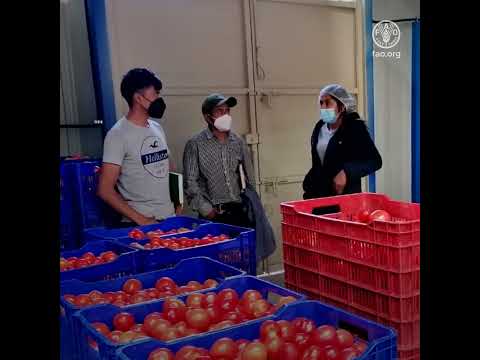
Boosting decent jobs for youth in the agrifood system
08/03/2024
Young people play a key role in accelerating the sustainable transformation of agrifood systems. Despite that, low pay, little access to land finance and knowledge often push youth to turn away from agriculture. To tackle these challenges, since 2011, FAO has been implementing the Integrated Country Approach (ICA) for boosting decent jobs for youth in the agrifood system in Africa, Latin America and the Caribbean.
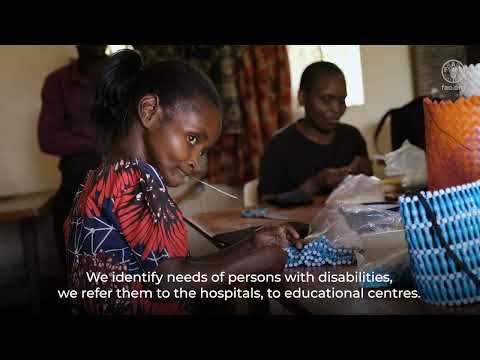
Creating jobs in agriculture for youth with disabilities in Kenya
03/12/2023
Many talented youth with disabilities face challenges in accessing decent jobs. Promoting quality work opportunities is essential to break the vicious cycle of poverty and exclusion.
Key publications

Integrated Country Approach (ICA) for boosting decent jobs for youth in the agrifood system – Fourth phase (2024–2027)
13/11/2024
Since 2011, FAO has been implementing the Integrated Country Approach (ICA) programme to assist countries in developing inclusive agrifood policies, strategies and programmes for the promotion of youth engagement and employment in agrifood system. This brief provides an overview of the fourth phase of ICA, which will be implemented in Ecuador, Viet Nam, and Zambia. The objective is to improve market functions to generate more and better jobs for the rural youth.

Integrated Country Approach (ICA) for boosting decent jobs for youth in the agrifood system: youth financial inclusion - Country experiences and lessons learned
25/07/2023
This brief presents the lessons learned in the domain of youth financial inclusion emerging from the implementation of the project “Integrated Country Approach (ICA) for boosting decent jobs for youth in the agrifood system”. The ICA project, funded primarily by the Swedish International Development Cooperation Agency (Sida), is currently being implemented (for the 2019-2023 period), by the Food and Agriculture Organization of the United Nations (FAO), in Guatemala, Kenya, Rwanda, Senegal, and Uganda. The brief illustrates a range of experiences and models proposed by the ICA project and its partners to facilitate youth access to formal financial services. It presents key lessons derived from the project’s experience, including the importance of enhancing youth financial literacy and their awareness of the available offer of financial services, as well as the need to introduce innovations aimed at adapting the offer of local financial services to youth’s specific needs.