


Innovation Policy Labs: Co-Creating Inclusive Policies for Agrifood Transformation

In today’s fast-changing world, making inclusive, evidence-based decisions in agrifood systems is more important—and more complex—than ever. The Innovation Policy Labs (IPLs) approach offers a transformative approach to tackling this challenge through co-creation, collaboration, and innovation. IPLs are currently implemented through the FAO project: Innovation policy labs (IPL) to promote evidence-based, inclusive and co-created decision-making (2024-2026) in four countries: Colombia, Ethiopia, Madagascar and Uzbekistan.
What Are Innovation Policy Labs?
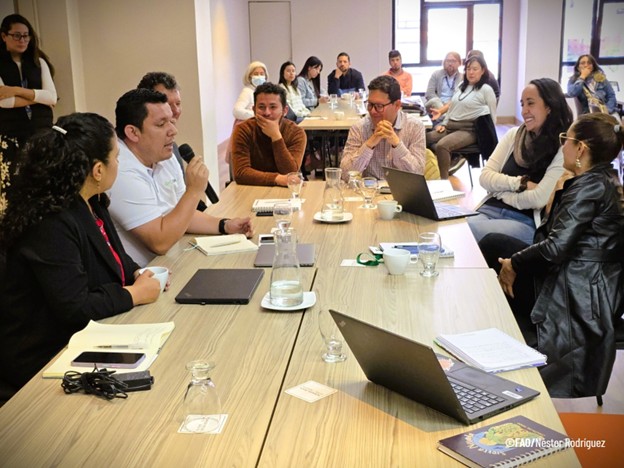
FAO’s IPLs are multistakeholder co-creation platforms that leverage UN 2.0 capabilities — centred on data, digital tools, innovation, foresight, and behavioral science—to make agrifood policymaking and governance more inclusive, evidence-based, and impactful. They bring together diverse stakeholders—governments, researchers, civil society, the private sector, farmers, women, youth, and indigenous communities—to jointly design solutions to the complex challenges facing agrifood systems.
Unlike traditional policymaking, which can be top-down and disconnected from those most affected, IPLs flip the script. They put local voices in the driver’s seat—from identifying barriers to co-developing and testing transformative policy and practical solutions.
Why IPLs Matter
Policymaking often fails when it excludes key voices, overlooks root causes, or reacts only to immediate crises. IPLs address these gaps by:
- Creating safe spaces for dialogue and consensus-building
- Generating win-win policy solutions through collective intelligence
- Building stakeholder capacity to engage in and lead decision-making processes
- Embedding Monitoring, Evaluation, and Learning (MEL) to ensure continuous improvement and accountability
They are particularly suited to complex, uncertain, or contested issues—where diverse perspectives and shared ownership are essential to achieving sustainable outcomes.
How the IPL Process Works
The IPL approach unfolds in three main steps, each carefully designed to ensure inclusivity, evidence use, and local relevance:
- Sensemaking – Stakeholders explore key issues, identify root causes, and analyze systemic barriers using tools like the Iceberg Model and PESTLE analysis.
- Ideation and Co-creation – Through foresight methods and participatory workshops, the group envisions desirable futures and develops at least three innovative, inclusive, and feasible solutions.
- Action Planning and Implementation – A shared roadmap is created using backcasting and other planning tools to translate solutions into concrete actions, partnerships, and pilot projects.
Throughout, IPLs integrate behavioral insights, digital tools, and local knowledge to foster ownership and maximize impact.
Putting Ideas into Action
IPL solutions don’t stay on paper. Once co-created, they are tested through real-life pilots, often in partnership with community actors, youth groups, and local institutions. These pilots stress-test ideas, build local capacity, and refine strategies before broader scaling. The process is continuously informed by MEL and youth-driven “reality checks” to ensure future relevance.
Fostering Youth Engagement
Youth participation is a key pillar of the IPL approach. In addition to being involved in field pilots, young people are also engaged through the Junior Innovation Policy Labs (J-IPLs) — a pilot initiative that empowers students to explore and co-create solutions for sustainable agrifood systems. Read more about this initiative and how it’s inspiring the next generation of changemakers here.
Building on Country Experiences
Before the current IPL project, Innovation Policy Labs were implemented in several countries, each focusing on context-specific priorities. In Liberia, they contributed to the revision of the extension and research policy, while in Tunisia, it facilitated the co-constructing a governance model for extension and advisory services. In Uzbekistan, efforts have been directed at strengthening the Agricultural Knowledge and Information System (AKIS) in the Fergana Valley, with a particular focus on women and digitalization.
Currently, in Colombia, the work centres on the formulation of a local seeds protection policy and the co-constructing a governance model to implement the International Treaty on Plant Genetic Resources for Food and Agriculture. In Ethiopia, the initiative supports the development of a start-ups policy. Madagascar is focusing on the implementation of its national rice strategy, while in Uzbekistan, attention has shifted to fostering the development of the local bee sector.

Transformative Impact
While it is too early to evaluate the impact of the solutions generated by the IPLs, the findings so far lead to important conclusions regarding the added value of the participatory approaches to policy making and how the IPLs maximize this value. However, any participatory process may face challenges: if not properly applied, it may be costly, time-consuming, misused by authorities and other powerful actors, diminishing the effect, slowing the transformative process and creating “participation fatigue” that discourage stakeholders from engaging.
By bridging silos and centering local knowledge, IPLs help governments craft policies that are more legitimate, effective, and resilient. They empower communities, strengthen trust, and foster solutions that are not only technically sound but socially owned and sustainable.
In the words of one IPL participant: “We didn’t just give input—we helped shape the future we want.”