


AI-Driven Transformation: Redirecting and Shaping Sustainable Investments in Agriculture
Deep Dive
Thursday,16 October
09.00 - 10.30
Iran Room (B116bis)
Artificial Intelligence (AI) is rapidly emerging as a catalyst for closing the agrifood innovation and investment gap. By improving efficiency, reducing risks, and strengthening accountability, AI is helping turn data into decisions and ambition into measurable impact.
This session builds on the outcomes of the 2025 Digital Agriculture and AI Innovation Dialogue, where global experts called for new tools to make agrifood investment more transparent, inclusive, and results-driven. It will showcase how FAO and partners are applying AI and Earth Observation to optimise irrigation, automate compliance through open data, and scale robotics for sustainable and inclusive farming.
Anchored in the evolving FAO Digital Agriculture & AI Innovation Roadmap, the discussion will highlight practical lessons, governance approaches, and partnerships that can accelerate responsible AI adoption and transform investment across agrifood systems.
Speakers
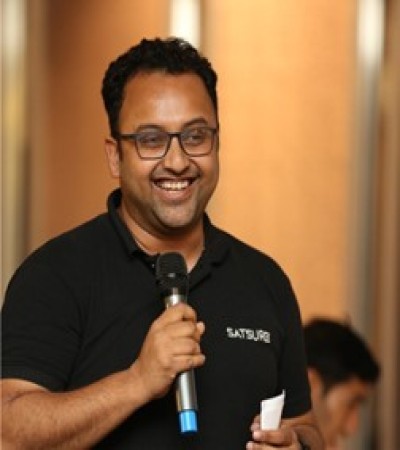
Chief Executive Officer at SatSure
Mr. Prateep Basu is the Founder and Chief Executive Officer at SatSure, a Deeptech company from India that builds new products and services at the convergence of space technology, AI, and spatial computing. SatSure is based out of Bengaluru was founded in 2017. Mr. Basu has led SatSure to a 200-member team across India, U.S., and EU, with enterprise customers in 12 countries and having raised $25 million in equity capital till date. He has 15 years of space industry experience across both the business and technology front. An aerospace engineer from the Indian Institute of Space Science and Technology, Trivandrum, he started his career as a propulsion systems engineer in SDSC SHAR, ISRO, and has worked as a global Earth observation industry consultant prior to starting SatSure.

Brenda Mulele Gunde leads IFAD’s global digitalisation agenda, championing the integration of emerging technologies, data, and digital public infrastructure to transform agriculture and empower smallholder farmers. She bridges technology, policy, and innovation to enable sustainable, inclusive rural economies. Passionate about digital ecosystems, AI for development, and youth innovation, Brenda is shaping how technology drives impact at scale.
Brenda’s career spans ICT leadership, digital transformation, and business strategy, with over two decades of experience shaping technology-driven solutions for development. Before joining IFAD, she served as Chief of ICT at UNICEF Bangladesh, Director of ICT at SOS Children’s Villages East and Southern Africa, and Regional IT Director at World Vision Southern Africa, among other leadership roles. She holds a Master of Science in Sustainable Development from the University of London (SOAS) and an MBA in ICT Management from the University of Leicester (UK).

Nosipho-Nausca-Jean Jezile is Ambassador of the Republic of South Africa to Italy, South Africa’s Permanent Representative to the United Nations Rome Based Agencies, Non-Resident Ambassador to Albania, Malta, and San Marino with responsibility to strengthen bilateral cooperation with South Africa.
Current Member of the FAO Council, Chairperson of the Committee on World Food Security, former Vice Chairperson to FAO.
Programme Committee member and former President of UNIDROIT General Assembly and serves as the representative to other international organisations in Italy.
A former Director General in South Africa, as Head of the Department of Environmental Affairs, upheld the SA Constitutional obligations for Human rights, with the responsibility for progressive environmental policy development to promote a just transition.
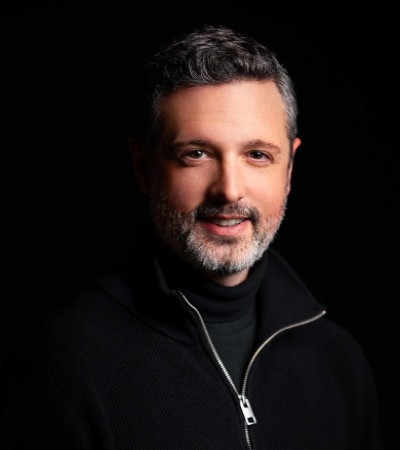
Kal leads Tandemic, a strategy and innovation firm based in the Philippines, Singapore, and Malaysia that helps organisations – especially multilateral organisations such as the UN and development banks – prepare for uncertain futures. He is an advisor on strategy and innovation to the Joint SDG Fund and UNDP. Kal helped launch UNDP’s global Accelerator Lab network, led a joint innovation lab with UNICEF, and previously taught design for internationally distributed teams at Stanford University’s d.school
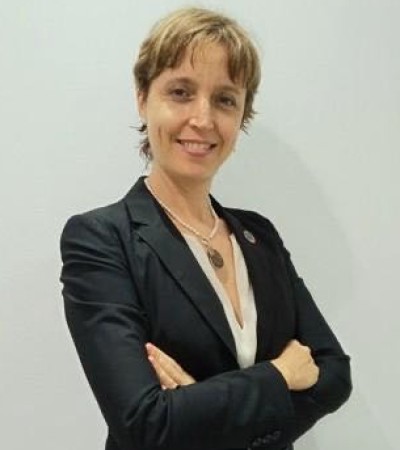
Deputy Director
Office of Climate Change, Biodiversity and Environment
Piedad Martin has worked in sustainable development and international cooperation for 20 years and has extensive experience in intergovernmental, policy and field work on the environmental agenda and the “Leaving No One Behind” Nexus. Before joining FAO, Piedad worked for the UN Environment Programme in Nairobi where she was the Head of the Strategic Planning Unit. Prior to that she served as deputy regional director at UNEP regional office for Latin America and the Caribbean. She was special advisor to the Resident Coordinator in Mexico. While in UNDP Colombia, she worked as climate change, biodiversity and disaster risk reduction officer in Bogota and directed an office for the Coffee Region based in Manizales. Piedad started her international career at the Spanish International Cooperation Agency, as regional advisor on environment and poverty in the Mediterranean region and was later transferred to the technical cooperation office for the Palestinian Territories, based in Jerusalem. She has a degree in Environmental Sciences and a master's degree in economic integration and development economics. She has completed her studies at the Autonomous University of Madrid, the University of Manchester, and the Tufts University and Fletcher School of Law and Diplomacy in Boston

Natural Resources Officer, FAO
Riccardo Soldan leads the development of AI-enabled, data-driven systems for environmental and social risk screening within FAO’s Environmental and Social Unit. His work focuses on integrating geospatial, climate, and socio-economic data to strengthen safeguards, inform investment decisions, and scale responsible innovation in agrifood systems.
His career spans research, consultancy, and international organisations, with experience designing open digital tools for climate services, coordinating cross-institutional research partnerships, and translating scientific insights into operational solutions for sustainability and resilience.
Before joining FAO, Riccardo worked across academia and applied research, contributing to projects in Europe and internationally. He holds a PhD from the University of Oxford, where he also served as a Visiting Academic, investigating the ecological drivers of microbial community assembly in crops through Machine Learning and Multivariate Statistics. Trained in Agronomy and Crop Science, he combines a foundation in quantitative and computational sciences with a passion for innovation at the intersection of science, policy, and technology.

Ethics Analyst, Human Technology Foundation
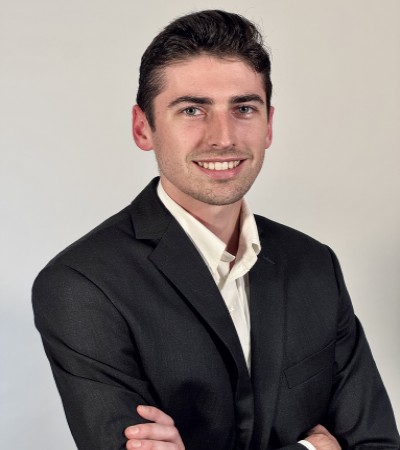
Aymeric is a Technology Ethics Analyst at the Human Technology Foundation, a human-centric think-and-do tank focused on digital technology ethics. He has worked on international, multidisciplinary projects addressing topics such as generative AI governance in the workplace, investor frameworks for assessing the social impact of digital technologies, and experimental ethical assistance tools for large language models. Beyond research, he provides practical support to companies, investors, and international organizations in their efforts to assess and govern AI and its social impacts within their organizations.
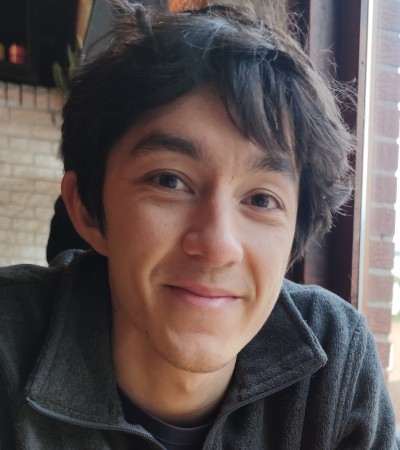
Gabriel Tseng is a Research Scientist at Ai2 on the Earth System Team. He is also finishing a PhD at McGill / Mila under the supervision of Professor David Rolnick, investigating ways in which machine learning can help mitigate and adapt to climate change. His work has focussed on pre-training machine learning models for remote sensing data, and deploying these pre-trained models at scale. He has worked closely with organizations including NASA Harvest and ESA’s WorldCereal, where the Presto pretrained model is the backbone for WorldCereal’s global agricultural land cover maps.