


Driving technologies and innovations towards equitable agrifood systems transformation: launching of ATIO Initiative
The Agrifood Systems Technologies and Innovations Outlook (ATIO) initiative is a FAO effort to accelerate sustainable agrifood systems transformation through inclusive, evidence-based innovation. This session marks the official launch of the initiative, introducing its two foundational components: the inaugural ATIO 2025 report and the ATIO Knowledge Base (KB).
The ATIO 2025 report, titled Driving Technologies and Innovations Towards Equitable Agrifood Systems Transformation, presents a global analysis of the challenges and opportunities in agrifood science, technology, and innovation (STI), with a particular focus on low- and middle-income countries. It highlights breakthrough technologies, institutional innovations, and policy solutions to guide smarter investments and inclusive decision-making.
Complementing the report, the ATIO KB, hosted on FAO’s STI portal, is a dynamic, neutral platform that curates agrifood technologies and innovations from around the world. It enables stakeholders to explore, compare, and contribute to a growing body of knowledge that supports equitable access and use of STI.
By harnessing the power of multistakeholder partnerships, the ATIO initiative aims to catalyze transformative change in agrifood systems, ensuring improved productivity, sustainability, resilience, and inclusion.
As part of this launch, the session will also serve as a platform to introduce and gather feedback from stakeholders on the ATIO 2025 report outline, key findings, and the ATIO KB structure and functionality. This input will help refine and strengthen both components ahead of the ATIO report final publication and broader rollout of the initiative.
Speakers
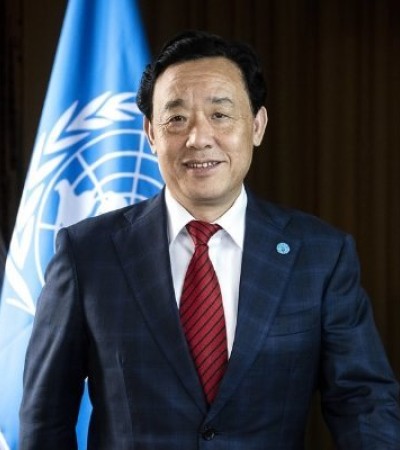
Dr. QU Dongyu assumed office as the Director-General of the Food and Agriculture Organization of the United Nations on August 1, 2019.
Born in 1963 to a rice-growing family in China’s Hunan Province, Dr. Qu studied horticultural science at Hunan Agricultural University and then plant breeding and genetics at the Chinese Academy of Agricultural Sciences. He later added environmental science to his knowledge portfolio while earning a PhD at Wageningen University, in the Netherlands.
Before coming to FAO, Dr. Qu served as China’s Vice Minister of Agriculture and Rural Affairs, where one of his achievements was to promote inclusive and innovative development and make sure information and communication technologies (ICT) were available in rural areas so that more than 400 million farmers could use their smartphones as a new farming tool.
Prior to his portfolio as Vice Minister, Dr. Qu served as Vice Governor for several years in China’s north-west, Ningxia, where he accomplished a number of significant projects aiming to lift millions of local residents out of poverty, and he was recognized as a big contributor to China’s anti-poverty project in that part of country.

Senior Counsellor, Traditional Knowledge Division, Global Challenges and Partnerships Sector, World Intellectual Property Organization (WIPO)
Begoña Venero Aguirre holds a Law degree from the Pontificia Universidad Católica del Perú and a diploma in international industrial property studies from Université Robert Schuman in Strasbourg. Before joining WIPO, she chaired the Intellectual Property Board of Appeals at Peru’s INDECOPI and headed the Peruvian Patent Office. Begoña has published widely on intellectual property, traditional knowledge protection, and access to genetic resources.
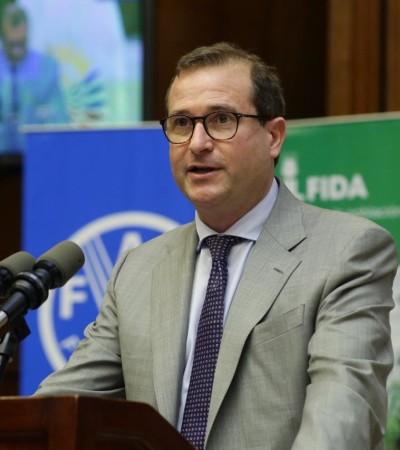
Fabrizio Bresciani is a Senior Technical Officer in the Office of Innovation (OIN) at the Food and Agriculture Organization of the United Nations (FAO). He rejoined FAO in May 2023, bringing over two decades of international experience in agricultural development, innovation, and economic policy. Prior to his return to FAO, Dr. Bresciani served at the International Fund for Agricultural Development (IFAD) as Lead Regional Economist for both the Asia-Pacific and Latin America and the Caribbean divisions (2014-2023). Between 2007 and 2011, he held senior positions at the World Bank, serving as Rural Development Economist in the Philippines and later as Senior Agricultural Economist in Indonesia. His earlier tenure at FAO (2001–2007) included work on the Roles of Agriculture Project under the Economic and Social Development Department (ESA). Dr. Bresciani holds a Ph.D. in Agricultural and Resource Economics from the University of Maryland, College Park; an M.Sc. in Agricultural and Environmental Economics from Universidad de los Andes, Bogotá; and a Bachelor’s degree in Economic and Social Disciplines from Bocconi University, Milan. At FAO, he currently leads key strategic initiatives, including the Agrifood Systems Technologies and Innovations Outlook, the FAO Global Innovation Model, and the Technology Accelerator.

Delgermaa Chuluunbaatar is an Agricultural Innovation Officer at the FAO’s Office of Innovation, she co-leads strategic initiatives - the Agrifood Systems Technologies and Innovations Outlook (ATIO). Her expertise spans integrated farming systems, conservation agriculture, rural development, institutional reforms, portfolio sense-making, innovation scaling and systems thinking. Delgermaa’s career journey—from a farm agronomist in Mongolia to technical roles at FAO, IFAD, CIDA, and World Vision International—reflects her deep commitment to empowering farmers and institutions through knowledge, innovation, and capacity development. She holds a PhD in Interdisciplinary Studies from the University of Saskatchewan, with research spanning crop and soil science, rural sociology, and adult education. Her nearly three decades of work bridges science and practice, with a focus on innovation processes, adoption behaviour, and systemic approaches to development. Delgermaa is passionate about co-creating solutions with farmers, researchers, and policymakers and recognizes importance of all voices for inclusive transformation of sustainable agrifood systems.

Chief Scientist ad interim
Ms Crawford, a national of the United States of America, holds a Master’s degree in Public Administration (MPA) from Robert F. Wagner Graduate School, New York University, New York, and a Bachelor of Science degree in Psychology from Santa Clara University, Santa Clara, California. She started her career in July 1984 as US Peace Corps volunteer in the Democratic Republic of Congo. She continued her career working as an advisor in the study abroad office at the University of Maryland, College Park, and as a programme associate in the philanthropy department of Chase Manhattan Bank in New York. She joined FAO in January 1997, working at Headquarters in positions from Programme and Budget Officer in the Office of Programme Budget and Evaluation (PBE) to Principal Officer in the Office of Strategy, Planning and Resources Management (OSP). In July 2013, she was appointed FAO Representative to Sri Lanka and the Maldives, based in Sri Lanka, and, in December 2015, she became Regional Programme Leader at FAO’s Regional Office for Africa in Ghana. In May 2017, Ms Crawford returned to FAO Headquarters as Deputy Director, Office of Strategy, Programme and Budget (OSP) and in January 2019 was appointed Director, OSP. The Director-General has promoted Ms Beth Crawford to Assistant Director-General level ad
personam with effect from 1 September 2023 and acts as Chief Scientist ad interim.

Laurens Klerkx is Full Professor of Agrifood Innovation and Transition at the University of Talca, Chile, and Visiting Professor at Wageningen University, The Netherlands. Trained in plant production systems, he now focuses on the social dimensions of innovation and transformation in agrifood systems. His expertise spans agricultural advisory services, innovation systems, digitalization, and agrifoodtech start-up ecosystems. Laurens has published extensively over the past 20 years and serves as editor of Agricultural Systems and former editor-in-chief of The Journal of Agricultural Education and Extension.
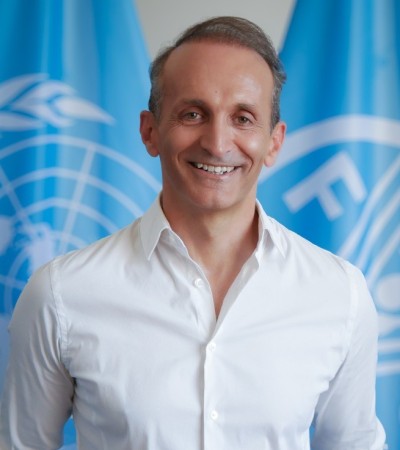
Dr. Vincent Martin is the Director of the FAO Office of Innovation, leading the Organization’s innovation agenda as part of the Science and Innovation Strategy. With more than 30 years of experience in science, research, and policy as they relate to food security and health, he has held several official positions in the French government, the FAO and the UN in Zimbabwe, China, DPR Korea, Senegal and Guinea. A veterinary epidemiologist by training, Dr. Martin is known for integrating innovation into development, humanitarian, and epidemic response strategies. He holds a Doctorate in Veterinary Medicine, a Ph.D. in Agronomic Sciences, and advanced degrees in epidemiology and statistics, and livestock production.

Silvia Massruhá is the President of Embrapa (Brazilian Agricultural Research Corporation) since May 2023 and has been part of the institution for over 35 years. She holds a degree in Systems Analysis (PUC-Campinas), a Master’s in Automation (UNICAMP), and a Ph.D. in Applied Computing (INPE).
She led Embrapa Agriculture Digital from 2015 to 2022, overseeing its strategic repositioning to address the digital transformation of agriculture. Her work focuses on emerging technologies such as Artificial Intelligence, blockchain, and the Internet of Things (IoT) applied to complex and interdisciplinary challenges.
Ms. Massruhá coordinates the Digital Agriculture Thematic Chamber of the ILPF Network and serves on advisory boards including the Eldorado Research Institute, Faesp/Senar-SP, and SBIAgro. She also leads the Center for Science for Development in Digital Agriculture (CCD-AD/SemeAr), supported by FAPESP, which aims to promote digital inclusion and innovation in agriculture.
She is also President of FORAGRO (Forum of the Americas for Agricultural Research and Technology Development) and PROCISUR (Cooperative Program for Agricultural Research and Technology for the Southern Cone), regional platforms that foster cooperation and innovation in agricultural science and technology across Latin America and the Caribbean.
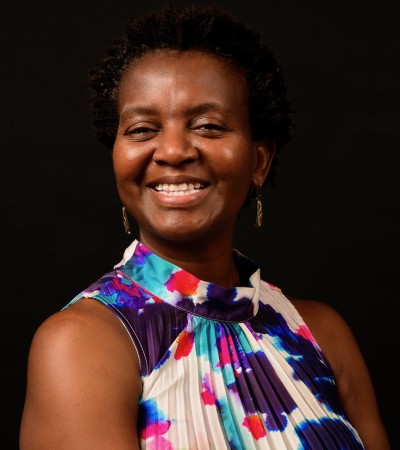
Dr. Hlamalani Ngwenya (well known as Dr. Hlami) is a South African-born Global Citizen, facilitator, and social entrepreneur with over 33 years of experience in 55+ countries. Proudly Tsonga, a mother of three, a poet, she is Associate Professor and Head of the Research Chair in Communication for Innovation at the University of the Free State.
She held senior positions in Government, International NGOs and Private Sector and she internationally recognized for her expertise in facilitation of systemic change. She designed and led over 500 high-level policy dialogues, workshops, and multi-stakeholder engagements, including a series of global events for FAO as well as other global, regional and national organisations.

Bayer Crop Science’s Senior Vice President, Head of Enterprise Corn Product
Elzandi Oosthuizen is part of the global strategy leadership team at Bayer Crop Science, where she leads the enterprise corn product team. She has held senior roles across Seeds & Traits, Crop Protection, and Vegetables, following earlier work in R&D on corn, soy, and cotton. A passionate advocate for STEM education, diversity, and women’s empowerment, she has supported numerous initiatives worldwide. Elzandi is an Eisenhower Fellow and recipient of the 2024 Women in Agribusiness Demeter Award of Excellence. She holds advanced degrees in genetics, plant breeding, and business administration from universities in South Africa.
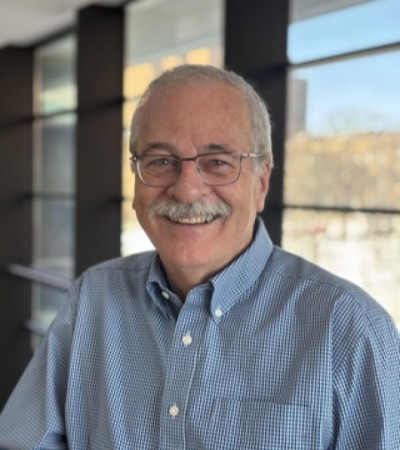
Philip Pardey is Professor of Science and Technology Policy at the University of Minnesota and Director of the GEMS Informatics Center. His work focuses on data-driven innovation and agricultural R&D policies that promote sustainable productivity growth in global food systems. Previously, he held senior research positions at IFPRI in Washington, D.C., and ISNAR in The Hague. A Fellow of AAAS and multiple professional associations, Philip has authored more than 430 publications and received the Siehl Prize for Excellence in Agriculture.
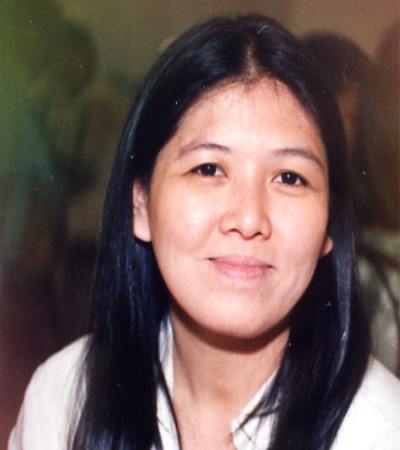
Maria Elena V. Rebagay (Lany) is the Deputy Secretary General of the Asian Farmers’ Association for Sustainable Rural Development (AFA). She also manages the Asia-Pacific Farmers Program and Farmers Organization for Asia, which engage 54 federated organizations across 22 countries representing 25 million small-scale farmers. With expertise in building social infrastructure for innovation and rural development, Lany strengthens farmer-led solutions in Asia-Pacific. She holds master’s degrees in Development Economics and Business Administration.


Alpha Sennon is the Founder and Executive Director of WHYFARM, a social enterprise inspiring youth in food security through creativity and agripreneurship. He created the world’s first food superheroes, “AGRIman” and “Photosynthesista,” and launched the AGRIMAN AGventures comic series to transform agricultural education. Alpha is Trinidad and Tobago’s first Ashoka Fellow and a member of the 50 NEXT class, recognized globally as a thought leader in Agricultural Educational Entertainment. He is currently pursuing a Ph.D. in Agricultural Education at Auburn University.