


Ethical co-creation of knowledge: bringing Indigenous Peoples’ voices at the center
JOINT SIF-INDIGENOUS PEOPLEs SESSION
Wednesday 15 October
16.00 - 18.00
Indigenous Peoples Tent
A discussion on forthcoming guidelines addressed to international audiences and designed to facilitate the appropriate respectful recognition of Indigenous Peoples as knowledge and rights holders in the co-creation of knowledge with other actors, including universities, research centers, governments, UN Agencies, among others. The joint session between the FAO Science and Innovation Forum and the Global-Hub on Indigenous Peoples’ Food Systems will engage in a constructive dialogue on barriers and success stories shared by the panellists. The session will be dedicated to the launch of those guidelines.
Speakers

Dr. QU Dongyu assumed office as the Director-General of the Food and Agriculture Organization of the United Nations on August 1, 2019.
Born in 1963 to a rice-growing family in China’s Hunan Province, Dr. Qu studied horticultural science at Hunan Agricultural University and then plant breeding and genetics at the Chinese Academy of Agricultural Sciences. He later added environmental science to his knowledge portfolio while earning a PhD at Wageningen University, in the Netherlands.
Before coming to FAO, Dr. Qu served as China’s Vice Minister of Agriculture and Rural Affairs, where one of his achievements was to promote inclusive and innovative development and make sure information and communication technologies (ICT) were available in rural areas so that more than 400 million farmers could use their smartphones as a new farming tool.
Prior to his portfolio as Vice Minister, Dr. Qu served as Vice Governor for several years in China’s north-west, Ningxia, where he accomplished a number of significant projects aiming to lift millions of local residents out of poverty, and he was recognized as a big contributor to China’s anti-poverty project in that part of country.
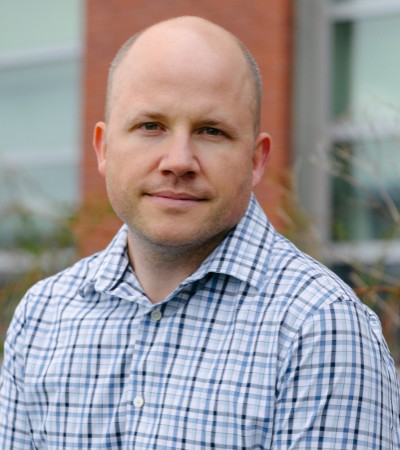
Colin Anderson is Co-Director of the UVM Institute for Agroecology, where his work centers on community- and people-led processes of transformation that advance equitable resilience, social justice, and well-being. His research and teaching draw on transdisciplinary, participatory approaches that integrate research, learning, and action. A core commitment to knowledge mobilization underpins his work—co-producing and sharing knowledge in ways that foster food system transformation. A central focus of his scholarship is critically examining institutions, scientific practices, and research paradigms to envision how they can better align with cognitive justice and nurture dialogues of knowledges in support of just societal transformation.
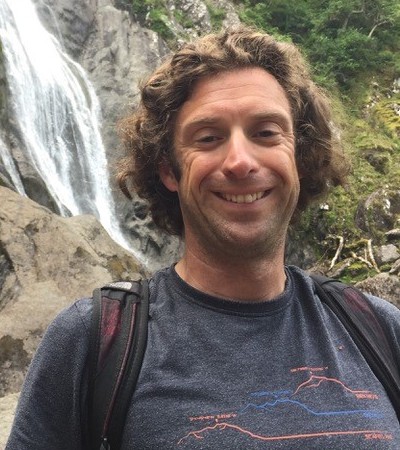
James Ford is a Professor and Priestley Chair in Climate Adaptation at the Priestley Centre for Climate Futures. His research focuses on climate change impacts, adaptation, and vulnerability, and he works closely with Indigenous communities in the Arctic and globally with a major focus on health and well-being, food security, wildfires, and resource management. His work in the Arctic is funded through an ERC Advanced Grant which is weaving together science and Indigenous Knowledge to create an ethnoclimatology of climate risk. He also Co-Chairs the NFRF funded Indigenous Peoples Observatory Network (IPON) which is working with Indigenous communities across the Global South and North to understand the climate-food-health nexus. At a global to regional scale, he is active in research tracking climate adaptation progress, including using big data and machine learning.
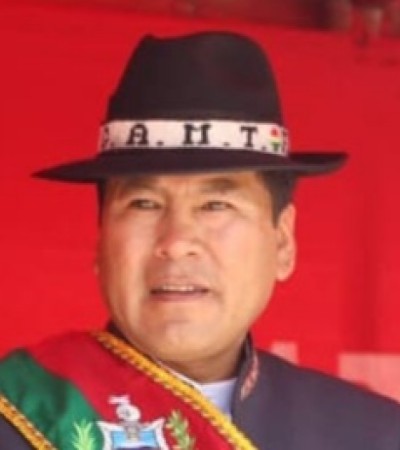
Flavio Eudaldo Merlo Maydana was born in Kutimarka, Guaraya community, Tiahuanacu Municipality, La Paz Department, Bolivia.
He is currently the Honorable Mayor of the Municipality of Tiahuanacu (2021-2026) and a Zootechnical Engineer by profession. He holds a PhD in Science, Technology, and Humanities from the Public University of El Alto. He also holds a Master of Science in Tropical Animal Production with a specialization in Animal Nutrition from the Autonomous University of Yucatán, Mexico (2006-2008); a Master of Scientific Research (2022) and a Specialist in Scientific Research (2018) from the Public University of El Alto, and a Diploma in Higher Education from the Universidad Mayor de San Andrés.
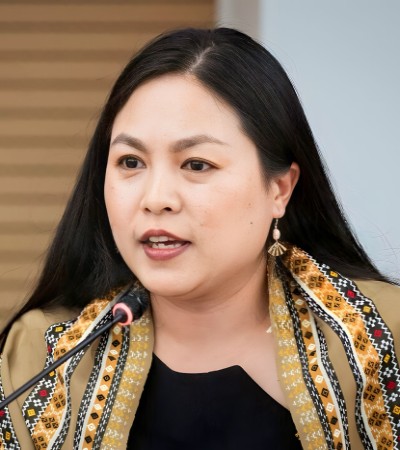
Chin Indigenous woman and human rights and climate activist from Myanmar. She is currently serving as an Advocacy lead at Nature and Sustainability Initiative for Indigenous Peoples(NASIIP) which she founded. Her work mainly focuses on climate justice, environmental justice, food security and sovereignty of Indigenous Peoples.

Arramat Project
Herb Nakimayak was elected as the Vice-President (International) for ICC Canada at the 14th General Assembly held in Kuujjuaq, Canada in July 2022. He is committed to continuing traditional ways of life through stories of Elders and hunters and trappers including carrying out “On the Land” programs for Elders and Youth.

Universidad Intercultural Maya de Quintana Roo, Mexico
Francisco Rosado-May is the Founding President of the Universidad Intercultural Maya de Quintana Roo, where an intercultural educational model was successfully developed for Yucatec Maya students and applied to several scientific areas. His research explores the epistemological foundations upon which intercultural awareness and knowledge are constructed. This understanding allows for the creation of an institutional structure that provides not only a safe space in which scientific methods can respect, and coexist with Indigenous Peoples’ knowledge, but in addition it encourages synergy between these types of knowledge.
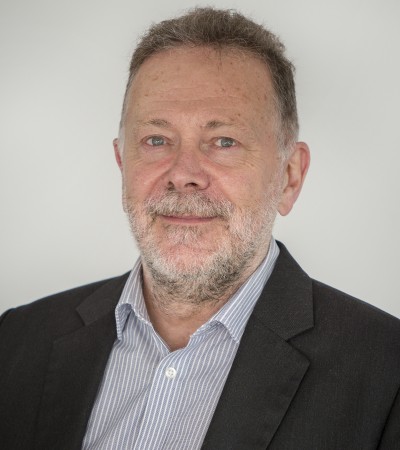
Peter Taylor is Professorial Fellow and Director of the Institute of Development Studies, UK. Previously he was Director, Strategic Development at the International Development Research Centre (IDRC), Canada, and led the Think Tank Initiative. He has worked at IDS as Head of Graduate Studies, and Leader of the Participation Team; as Education Technical Advisor with the Swiss NGO Helvetas in Vietnam; as Lecturer in Agricultural Education at the University of Reading, UK; and as an agriculture teacher in Botswana. He has research and teaching interests in global development cooperation, organizational development, knowledge and learning systems, and facilitation of participatory and social change processes.
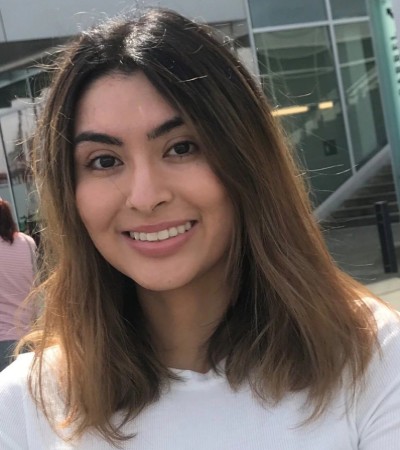
Medical Student, Faculty of Medicine, The University of British Columbia
Yazmeen was born in Edmonton, Alberta and raised in Vancouver, British Columbia. She is Cree and Saulteaux and a member of the Key First Nations located in Saskatchewan. She is currently Medical student at the faculty of medicine of the University of British Columbia.
Yazmeen is member of the Indigenous Youth taskforce of the technical paper on the impacts of ultra-processed foods on Indigenous Peoples.

Carol Zavaleta-Cortijo an Indigenous academic and scientist dedicated to researching the effects of climate change on health and food systems. Her recent research shows how Indigenous communities have protected their health and food security in the face of COVID-19 and climatic events, and the role of food biodiversity in their adaptation to climate change. Carol is currently Co-Chair of Indigenous Peoples Observatory Network (IPON).