


From silos to cooperation: shifting Science Technology & Innovation paradigms for sustainability transitions
Deep Dive
STI holds immense promise for sustainable agrifood transitions, yet its potential is hindered by fragmented collaboration and outdated models. A FAO & CIRAD report identifies crucial Research and Innovation Paradigm Shifts (RIPS) like biomimicry and technology convergence, but highlights a critical gap: highly impactful, collaborative approaches such as open innovation and citizen science are less likely to emerge without deliberate action. Addressing this requires moving beyond siloed efforts towards multi-level cooperation, embracing concepts like a collective economy and social missions. Framing STI as a "commons" is vital for fostering international collaboration, ensuring equitable benefit distribution, and driving intergenerational justice in knowledge. This session aims to bridge the gap between aspiration and reality, charting a roadmap for transformative, collaborative STI.
Speakers
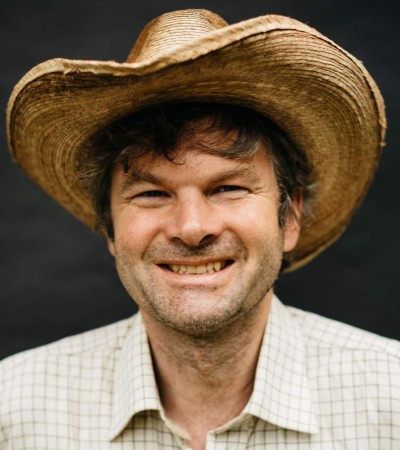
Dr. Dorn Cox is farmer, researcher, founder and director of OpenTEAM (Open Technology Ecosystem for Agricultural Management). Dorn is also a co-founder of the FarmOS software platform, the GOAT (Gathering for Open Ag Tech) and Farm Hack community, and is active in the soil health movement. He is passionate about sharing open source agricultural tools, ideas information and inspiration to accelerate innovation and quantify environmental services from regenerative agriculture. He lives and works on his family farm in New Hampshire and has a PhD from the University of New Hampshire in Natural Resources and Earth Systems Science.

Chief Scientist ad interim
Ms Crawford, a national of the United States of America, holds a Master’s degree in Public Administration (MPA) from Robert F. Wagner Graduate School, New York University, New York, and a Bachelor of Science degree in Psychology from Santa Clara University, Santa Clara, California. She started her career in July 1984 as US Peace Corps volunteer in the Democratic Republic of Congo. She continued her career working as an advisor in the study abroad office at the University of Maryland, College Park, and as a programme associate in the philanthropy department of Chase Manhattan Bank in New York. She joined FAO in January 1997, working at Headquarters in positions from Programme and Budget Officer in the Office of Programme Budget and Evaluation (PBE) to Principal Officer in the Office of Strategy, Planning and Resources Management (OSP). In July 2013, she was appointed FAO Representative to Sri Lanka and the Maldives, based in Sri Lanka, and, in December 2015, she became Regional Programme Leader at FAO’s Regional Office for Africa in Ghana. In May 2017, Ms Crawford returned to FAO Headquarters as Deputy Director, Office of Strategy, Programme and Budget (OSP) and in January 2019 was appointed Director, OSP. The Director-General has promoted Ms Beth Crawford to Assistant Director-General level ad
personam with effect from 1 September 2023 and acts as Chief Scientist ad interim.
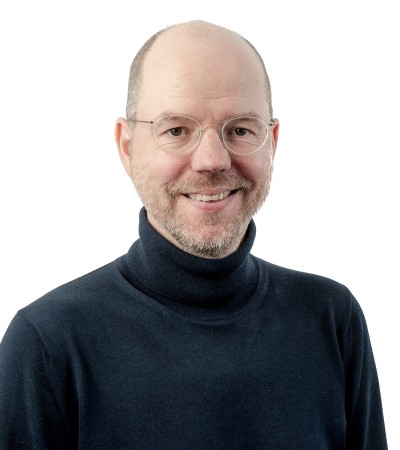
Rainer Kattel is Professor and Deputy Director at UCL’s Institute for Innovation and Public Purpose. He publishes widely on innovation policy, governance, and management, with research spanning public sector capabilities, digital transformation, and urban governance. His recent books include The Elgar Handbook of Alternative Theories of Economic Development (edited with Erik Reinert and Jayati Ghosh, 2016) and How to Make an Entrepreneurial State: Why Innovation Needs Bureaucracy (with Wolfgang Drechsler and Erkki Karo, 2022). The latter won the 2023 George R. Terry Book Award of the Academy of Management.

Stéphanie Leyronas joined AFD in 2000. For nine years, she was responsible for appraising and monitoring water and sanitation programs financed in a number of countries in Africa, Asia and the Middle East, and was subsequently appointed Deputy Director of AFD’s Water and Sanitation Division in 2010. She joined the Research Department in September 2014.
She studied at the Mines ParisTech school and holds a Master’s Degree in Environmental Science (with a major in developing countries) from the National Institute of Agronomy of Paris-Grignon (INA-PG / AgroParisTech).
Her research focuses on the way in which the commons approach calls development assistance into question.
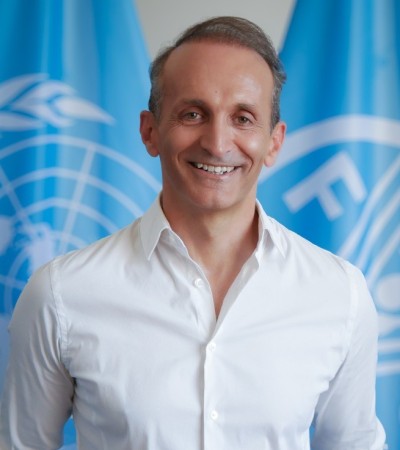
Dr. Vincent Martin is the Director of the FAO Office of Innovation, leading the Organization’s innovation agenda as part of the Science and Innovation Strategy. With more than 30 years of experience in science, research, and policy as they relate to food security and health, he has held several official positions in the French government, the FAO and the UN in Zimbabwe, China, DPR Korea, Senegal and Guinea. A veterinary epidemiologist by training, Dr. Martin is known for integrating innovation into development, humanitarian, and epidemic response strategies. He holds a Doctorate in Veterinary Medicine, a Ph.D. in Agronomic Sciences, and advanced degrees in epidemiology and statistics, and livestock production.

Julia Ninahuamán is a community leader and president of the Pachacámac Network of Community Kitchens (REDOPA) that supports more than 1,800 vulnerable families. Born in Cusco and living in Manchay, Lima, she founded the Villa Jesús community kitchen during the pandemic. She has led the recovery of food from markets and agricultural fields for the community kitchens, promoting sustainable agri-food systems. Her community space includes a garden, bakery, and communal kitchen. Alongside other female leaders, she advocates for urban policies to strengthen food security at the local level. Her work reflects social innovation, resilience, and a commitment to sustainable solutions in the face of food insecurity.
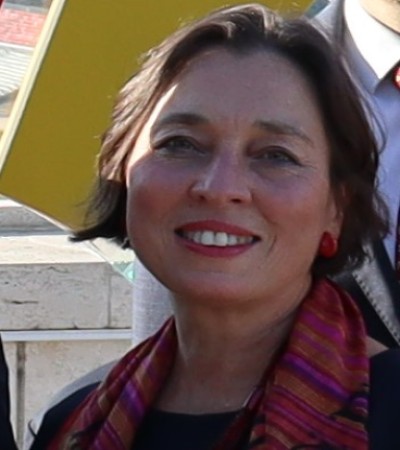
Deputy Permanent Representative of the EU to the UN Organisations
Annette Schneegans is Deputy Permanent Representative of the EU Delegation in Rome. Before coming to Rome she was based in Brussels working for more than 20 years in the areas of European research policy, programming and funding, notably in the areas of crop production, crop breeding and natural resources management. She had a key role in developing and launching the Horizon Europe mission “A Soil Deal for Europe” and in building cross-sectoral and global partnerships to promote innovations for soil health. Annette has an academic and research background in agricultural sciences and international agricultural development.
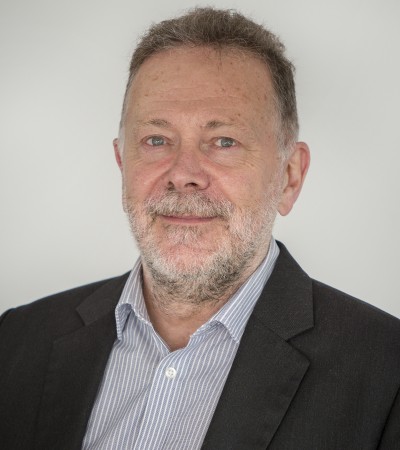
Peter Taylor is Professorial Fellow and Director of the Institute of Development Studies, UK. Previously he was Director, Strategic Development at the International Development Research Centre (IDRC), Canada, and led the Think Tank Initiative. He has worked at IDS as Head of Graduate Studies, and Leader of the Participation Team; as Education Technical Advisor with the Swiss NGO Helvetas in Vietnam; as Lecturer in Agricultural Education at the University of Reading, UK; and as an agriculture teacher in Botswana. He has research and teaching interests in global development cooperation, organizational development, knowledge and learning systems, and facilitation of participatory and social change processes.
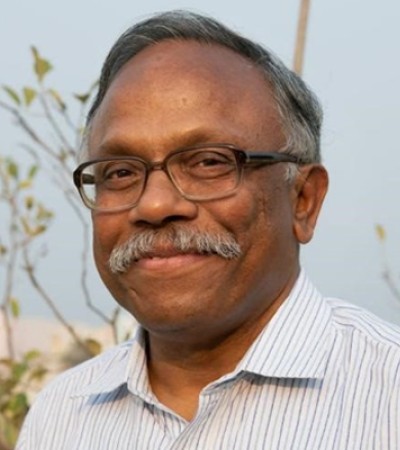
Vijay Kumar Thallam is Executive Vice Chairman of the Indian non-profit Rythu Sadhikara Samstha (RySS) and an Advisor on Agriculture to the Government of Andhra Pradesh. In his 42 years of Government Service, he has spent more than 30 years in leading large scale community mobilization and promotion of livelihoods of rural women, tribal communities and farmers. Since 2015, he has been leading the climate resilient, A.P Community managed Natural Farming (APCNF) programme. The APCNF programme had in 2025 enrolled 1.2 million farmers in the State to transit to natural farming. He was the Vice Chair (Productions) of the Champions Network for the UN Food Systems Summit in September 2021. The APCNF Programme was a joint winner of the Euros 1 million, Gulbenkian Prize for Humanity, 2024.