


The Future of Science, technology and Innovation in agrifood systems
This session will deliberate on the trajectory of Science, Technology, and Innovation (STI) within global agrifood systems that are contained by grand challenges, including climate change, resource depletion, and food insecurity. Consequently, STI represents a critical leverage point for systemic transformation.
Recent foresight analyses by FAO&CIRAD have explored emerging technologies and innovations, yielding diverse future scenarios and identifying pivotal paradigm shifts. These investigations underscore that the future of agrifood systems remains indeterminate, being contingent upon proactive interventions and the successful instantiation of paradigm shifts. It is imperative to recognize that this future may manifest differentially across diverse stakeholder constituencies, necessitating consideration for potential disproportionate impacts on vulnerable populations. Addressing contemporary challenges, while ensuring equitable outcomes, fundamentally requires robust international cooperation in STI. Distinguished speakers have been invited to articulate their conceptualizations of the future and the strategic pathways for its realization.
Speakers

Bella Akinyi is the founder of Bolena Tilapia and graduated as a mentee of the FAO IAFN Accelerator Mentorship Programme for Women-led SMEs in Africa. She has a deep belief in Africa’s #FoodSystem future, she’s committed to make an impact in her community. Bolena is a vertically integrated fish farm which ensures traceability and quality of the fish from the water to your plate.
Bolena’s vertically integrated model system social impact business model as the nucleus farm to engage over 2,000 youth and women farmers as out-growers to increase production with an effort to address the 400,000-ton deficit in Kenya. Bolena is remotely located and off-grid using solar and wind energy with zero waste on the final fish product.
Bolena’s is to make the final fish product while at the same time providing financial freedom for women and youth in the aquaculture industry and eliminating sex-trade for fish as a thing of the past.
Bella is passionate about keeping Lake Victoria and the ecosystem surrounding it clean for sustainable and responsible production of fish years to come. As an entrepreneur, Bella also has a strong leadership and academic background both in the Kenya and US.

Permanent Representation to the UN in Rome
Ambassador Andreas von Brandt started his tenure with the three Rome-based agencies in August 2024. Before, he was in charge of implementing the Humanitarian, Development and Peace (HDP) Nexus within the German Foreign Office.
From 2020-22 he worked as EU Ambassador to Afghanistan and oversaw the evacuation of all expats in May and all Afghan staff in August 2021. Before joining the European External Action Service (EEAS), von Brandt worked as Deputy Director in the Private Office of NATO Secretary General, Jens Stoltenberg, from 2018-20. From 2017-18 he was Deputy Ambassador at the German Embassy in Kabul and from 214-17 Deputy Head of Division for the Southern Caucasus and Central Asia at the Federal Foreign Office and as Chargé d’Affaires a.i. at the Embassy in Bishkek.
Mr von Brandt headed the Pakistan Group in the Special Task Force on Afghanistan and Pakistan from 2011-2014. From 2009 to 2011, he was Spokesperson at the Embassy in Rome, Italy. Prior to this, on a three-year leave from the Foreign Service, Mr von Brandt worked as Project Manager for two policy assistance projects with the United Nations Food and Agriculture Organization (FAO). Developing sound food security and bioenergy policies, Mr von Brandt managed multi-disciplinary teams in Cambodia, Peru, Tanzania and Thailand.
Before joining the Foreign Service, Mr von Brandt worked for two years at the World Bank in Washington, DC, and at the Inter-American Development Bank, focussing on security sector reform, good governance, public sector and justice reform, as well as human rights. vMr von Brandt holds two 5-year Masters degrees, one in Political Science / International Relations and one in Law, as well as a Masters of Law (LLM) in International Law. He was a Fulbright scholar at the Washington College. He is fluent in 7 languages.

Angie Burnett is a Programme Director at the Advanced Research + Invention Agency (ARIA). Angie is a plant biologist and has spent the last decade focusing on understanding the power of plants to solve some of our most pressing challenges such as food insecurity, climate change and environmental degradation. Before joining ARIA, Angie worked at the University of Cambridge, Brookhaven National Laboratory and the Food and Agriculture Organization of the United Nations. Angie has a PhD in Plant Physiology from the University of Sheffield and a BA in Natural Sciences from the University of Cambridge

Chief Scientist ad interim
Ms Crawford, a national of the United States of America, holds a Master’s degree in Public Administration (MPA) from Robert F. Wagner Graduate School, New York University, New York, and a Bachelor of Science degree in Psychology from Santa Clara University, Santa Clara, California. She started her career in July 1984 as US Peace Corps volunteer in the Democratic Republic of Congo. She continued her career working as an advisor in the study abroad office at the University of Maryland, College Park, and as a programme associate in the philanthropy department of Chase Manhattan Bank in New York. She joined FAO in January 1997, working at Headquarters in positions from Programme and Budget Officer in the Office of Programme Budget and Evaluation (PBE) to Principal Officer in the Office of Strategy, Planning and Resources Management (OSP). In July 2013, she was appointed FAO Representative to Sri Lanka and the Maldives, based in Sri Lanka, and, in December 2015, she became Regional Programme Leader at FAO’s Regional Office for Africa in Ghana. In May 2017, Ms Crawford returned to FAO Headquarters as Deputy Director, Office of Strategy, Programme and Budget (OSP) and in January 2019 was appointed Director, OSP. The Director-General has promoted Ms Beth Crawford to Assistant Director-General level ad
personam with effect from 1 September 2023 and acts as Chief Scientist ad interim.
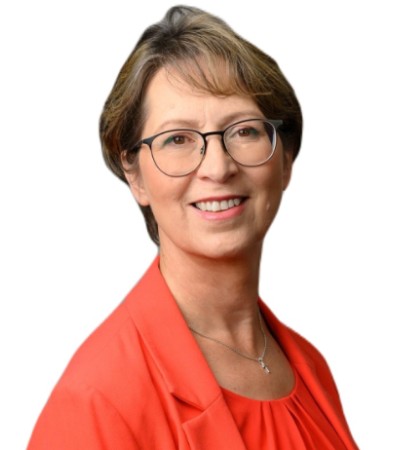
Chair of the Christian Democrats party since 2015, Member of the Finnish Parliament 2003-2007, 2015-, Member of the European Parliament 2009-2014, Member of the International Olympic Committee since 2016, World Champion in race walking 1993, Master’s Degree in Economics and Business Administration
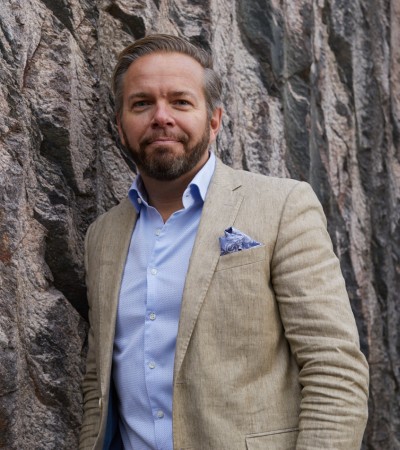
Senior Vice President, Space & Defence, Solar Foods Oyj
Arttu Luukanen holds a Ph.D. in Applied Physics. Arttu did his post-doctoral research at the National Institute of Standards and Technology in Boulder, Colorado, U.S.A. In 2005, he was appointed as the director of MilliLab – the Millimetre-wave Laboratory of Finland - an ESA External Laboratory, and in 2009 as the Research Professor at VTT. In 2013, he co- founded Asqella Ltd to commercialize passive multi-band submillimetre-camera technology, a long-time subject of his research. In 2022, he joined Solar Foods as their Senior Vice President of Space & Defence. He is an elected Fellow of the Finnish Academy of Technology.
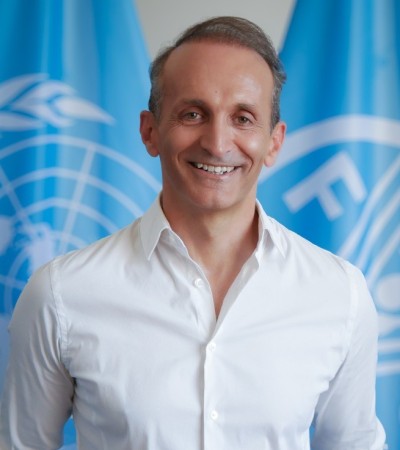
Dr. Vincent Martin is the Director of the FAO Office of Innovation, leading the Organization’s innovation agenda as part of the Science and Innovation Strategy. With more than 30 years of experience in science, research, and policy as they relate to food security and health, he has held several official positions in the French government, the FAO and the UN in Zimbabwe, China, DPR Korea, Senegal and Guinea. A veterinary epidemiologist by training, Dr. Martin is known for integrating innovation into development, humanitarian, and epidemic response strategies. He holds a Doctorate in Veterinary Medicine, a Ph.D. in Agronomic Sciences, and advanced degrees in epidemiology and statistics, and livestock production.

Universidad Intercultural Maya de Quintana Roo, Mexico
Francisco Rosado-May is the Founding President of the Universidad Intercultural Maya de Quintana Roo, where an intercultural educational model was successfully developed for Yucatec Maya students and applied to several scientific areas. His research explores the epistemological foundations upon which intercultural awareness and knowledge are constructed. This understanding allows for the creation of an institutional structure that provides not only a safe space in which scientific methods can respect, and coexist with Indigenous Peoples’ knowledge, but in addition it encourages synergy between these types of knowledge.