


Indicator 2.1.2 Prevalence of moderate or severe food insecurity in the population, based on the Food Insecurity Experience Scale
This indicator provides internationally-comparable estimates of the proportion of the population facing moderate or severe difficulties in accessing food. The Food Insecurity Experience Scale (FIES) produces a measure of the severity of food insecurity experienced by individuals or households, based on direct interviews. The indicator will measure progress towards SDG Target 2.1.
Target 2.1
By 2030, end hunger and ensure access by all people, in particular the poor and people in vulnerable situations, including infants, to safe, nutritious and sufficient food all year round.
Indicator 2.1.2: Progress Assessment
Impact
The Food Insecurity Experience Scale (FIES) provides actionable information that policy makers can use to identify vulnerable population groups and guide policy interventions to ensure no one is left behind. As a direct measure of people’s access to adequate food, it complements the information provided by the SDG Indicator 2.1.1.Key results
Global food insecurity has declined gradually since 2021, but remains far above 2015 levels. About 28 percent of the global population – nearly 2.3 billion people – were moderately or severely food-insecure in 2024, compared to 21.4 percent (1.6 billion) in 2015.
More than two-thirds the population of sub-Saharan Africa was moderately or severely food insecure in 2024, up sharply from just under 50 percent in 2015. The prevalence has also been increasing since 2015, albeit much more gradually, in Oceania excluding Australia and New Zealand, where more than half the population was food-insecure in 2024. In Central and Southern Asia, and in Western Asia and Northern Africa, over one-third of the population was moderately or severely food insecure in 2024 (37.5 and 36.5 percent, respectively). The prevalence is far above 2015 levels in both regions but lower compared to 2021, and in Western Asia and Northern Africa, it has been on the rise since 2022.
Notable improvement occurred in Latin America and the Caribbean, where steady progress has been made since 2021. The number of people affected by moderate or severe food insecurity fell by 50 million between 2021 and 2024, with a decrease in the prevalence from 33.4 to 25.2 percent (equivalent to about 217 million and 167 million people, respectively), driven mainly by progress in South America.
In 2024, the prevalence of moderate or severe food insecurity in Eastern and South-eastern Asia (8.5 percent) was just slightly higher compared to Northern America and Europe (8.1 percent), and in Australia and New Zealand, the prevalence was 15 percent.
Highlights


Elearning

SDG Indicator 2.1.2 - Using the Food Insecurity Experience Scale (FIES)
02/06/2023
In the context of reporting on the SDG Indicator 2.1.2, this course introduces the Food Insecurity Experience Scale (FIES) and explains how it can be...

Multimedia
SDG 2 – Indicators of hunger and severity of food insecurity
01/01/2019
An overview of SDG indicators 2.1.1 and 2.1.2, measuring hunger and severity of food insecurity.
Tracking progress on food and agriculture-related SDG indicators (2022)
01/09/2022
Tracking progress on food and agriculture-related SDG indicators offers detailed analyses and trends on selected indicators for which...
Capacity development
-jpg2.jpg?sfvrsn=e2ee17ca_1 "IMG_5876 (002).jpg2")
National workshop on SDG indicators 2.1.1 and 2.1.2 in Bamako (Mali)
26/02/2024 - 01/03/2024
Strengthening capacity of country institutions to monitor and report on SDG indicators 2.1.1 and 2.1.2

National workshop on SDG indicators 2.1.1 and 2.1.2 in Maputo (Mozambique)
11/12/2023 - 15/12/2023
Strengthening capacity of country institutions to monitor and report on SDG indicators 2.1.1 and 2.1.2

National workshop on SDG indicators 2.1.1 and 2.1.2 in Lusaka (Zambia)
27/11/2023 - 30/11/2023
Strengthening capacity of country institutions to monitor and report on SDG indicators 2.1.1 and 2.1.2

National workshop on SDG indicators 2.1.1 and 2.1.2 in Islamabad (Pakistan)
20/11/2023 - 24/11/2023
Strengthening capacity of country institutions to monitor and report on SDG indicators 2.1.1 and 2.1.2

National workshop on SDG indicators 2.1.1 and 2.1.2 in Amman (Jordan)
19/11/2023 - 23/11/2023
Strengthening capacity of country institutions to monitor and report on SDG indicators 2.1.1 and 2.1.2

National workshop on SDG indicators 2.1.1 and 2.1.2 in Dodoma (United Republic of Tanzania)
06/11/2023 - 11/11/2023
Strengthening capacity of country institutions to monitor and report on SDG indicators 2.1.1 and 2.1.2

National workshop on SDG indicators 2.1.1 and 2.1.2 in Dili (Timor-Leste)
06/11/2023 - 10/11/2023
Strengthening capacity of country institutions to monitor and report on SDG indicators 2.1.1 and 2.1.2

National workshop on SDG indicators 2.1.1 and 2.1.2 in Astana (Kazakhstan)
28/09/2023 - 22/09/2023
Strengthening capacity of country institutions to monitor and report on SDG indicators 2.1.1 and 2.1.2
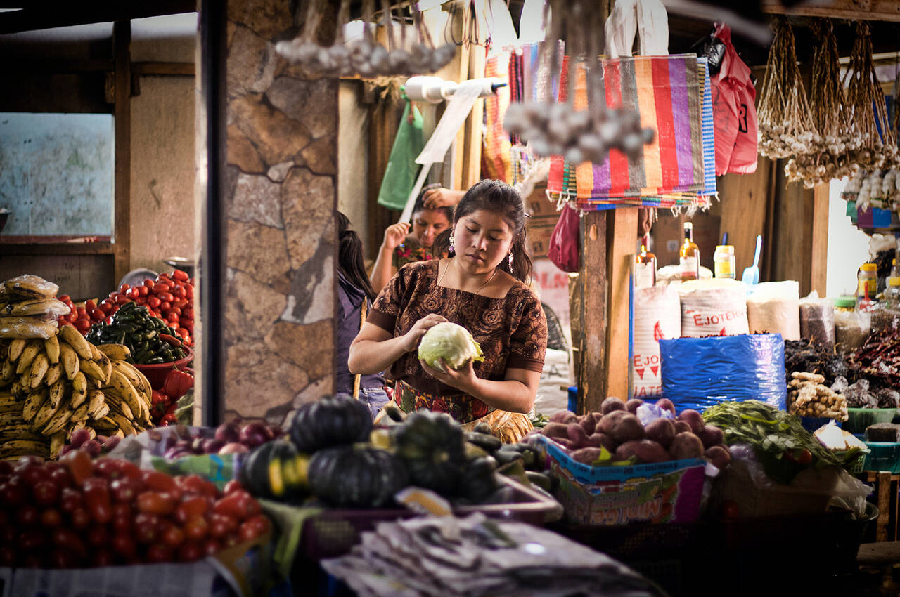
National workshop on Food Insecurity Experience Scale (FIES) data analysis in Bogotá (Colombia)
25/09/2023 - 30/09/2023
FAO is conducting a workshop from September 25 to 30, 2023 in Bogotá, Colombia to strengthen the technical capabilities of professionals and other...

National workshop on SDG indicators 2.1.1 and 2.1.2 in Blantyre (Malawi)
18/09/2023 - 22/09/2023
Strengthening capacity of country institutions to monitor and report on SDG indicators 2.1.1 and 2.1.2

National workshop on Food Insecurity Experience Scale (FIES) data analysis in Maseru (Lesotho)
19/06/2023 - 21/06/2023
Strengthening capacity of country institutions to monitor and report on SDG Indicator 2.1.2

National workshop on SDG indicators 2.1.1 and 2.1.2 in Dar Es Salaam (United Republic of Tanzania)
04/06/2023 - 10/06/2023
Strengthening capacity of country institutions to monitor and report on SDG indicators 2.1.1 and 2.1.2

National workshop on Food Insecurity Experience Scale (FIES) data analysis in Cotonou (Benin)
27/05/2023 - 02/06/2023
Strengthening capacity of country institutions to monitor and report on SDG Indicator 2.1.2

Virtual Event

Virtual Event
Remote workshop on SDG indicators 2.1.1 and 2.1.2
01/03/2023 - 30/03/2023
FAO is conducting a remote workshop on SDG indicators 2.1.1 Prevalence of Undernourishment and 2.1.2 Prevalence of moderate or severe food insecurity,...

National workshop on SDG indicators 2.1.1 and 2.1.2 in Chisinau (Moldova)
28/02/2023 - 09/12/2023
Strengthening capacity of country institutions to monitor and report on SDG indicators 2.1.1 and 2.1.2

Virtual Event
Virtual Training on Data Disaggregation and Small Area Estimation for SDG Indicators (22-25 November 2022)
22/11/2022 - 25/11/2022
Organized by FAO's Office of Chief Statistician, the Virtual Training on Data Disaggregation and Small Area Estimation for SDG Indicators provided...

Virtual Event
Virtual Training on Data Disaggregation and Small Area Estimation for the SDGs (20-28 September 2022)
20/09/2022 - 28/09/2022
From 20 to 28 September 2022, the FAO Regional Office for Asia and the Pacific and the Office of Chief Statistician organized a virtual training...

Virtual Event
Capacitación virtual en la medición y reporte del indicador 2.1.2 de los ODS
03/03/2021 - 04/03/2021
El objetivo general de esta formación virtual es proveer a los funcionarios gubernamentales responsables del monitoreo Indicador 2.1.2 de los ODS...

Virtual Event
CFS Side Event: Data for Food Security: Taking forward the CFS data workstream
10/02/2021
Despite the world's commitment to end hunger by 2030, recent findings show that the world is not on track to achieve this crucial target. Furthermore,...

Methodology
Tier: I
Data
- SDG Indicators Global Database
- FAOSTAT - Suite of Food Security Indicators
- FAOSTAT - SDG Indicators
- Food and Agriculture Microdata (FAM) catalogue