
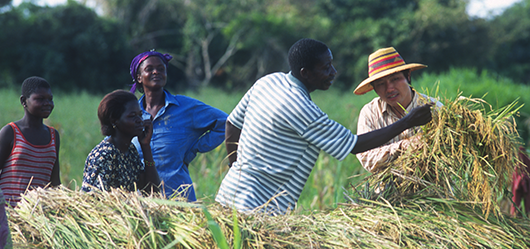





Capacity development in action

Empowering youth and their organizations in agriculture via targeted capacity development initiatives is essential to driving sustainable change, transforming agrifood systems and achieving the Sustainable Development Goals (SDGs).
Following this objective, [...]

Twenty-one youth and individuals from organizations supporting youth initiatives/programmes in agriculture and rural development in Ethiopia, Kenya, Namibia, Rwanda, South Africa, Tanzania, Uganda, Zambia, and Zimbabwe have been participating in [...]

The transformation towards sustainable and resilient agrifood systems in Africa requires integrated solutions and competent professionals that possess technical and functional capacities, as well as multi-disciplinary and transdisciplinary competencies, and [...]
Youths, especially young farmers and their organizations, are vital to transforming agrifood systems and making them MORE efficient, inclusive, resilient, and sustainable. Young farmers organizations are well-positioned to mobilize and [...]

NFMS assessment tool
Transparent and accessible forest-related data play a crucial role in facilitating improved forest monitoring activities, increasing knowledge sharing and, ultimately, strengthening sustainability in the forestry sector.
In line with the enhanced [...]

Bringing together about thirty participants[1] from different Ministries, research institutions, civil society organizations, the kick-off workshop held in Dakar on 28-29th of May 2019, opened up discussions on the obstacles [...]
Improving the land management practices of the Agricultural Land Agency in Tunisia
FAO is supporting the implementation of the Voluntary Guidelines on the Responsible Governance of Tenure of Land, Fisheries and [...]
“When we talk about responsible investment, responsibility has to do with sustainability, and investment relates to budget. Today, the Dominican Republic is investing only 0.4% of its GDP in agriculture, [...]
To feed a growing population and tackle the challenge of climate change, agricultural production must intensify in a sustainable way, and innovation is key to make that happen. Therefore, it [...]

We can end poverty and hunger! We only need to mobilize a higher level of resources, and use them responsibly. They should be channeled towards hunger eradication, combine investment in [...]