
Highlighting China’s Contribution to AGRIS: A Spotlight on Leading Agricultural Research Institutions
15/07/2025

A general view during FAO Director General QU Dongyu's visit at the National Crop Genebank at the Chinese Academy of Agricultural Sciences (CAAS).
© FAO / Dan Sandoval
The International System for Agricultural Science and Technology (AGRIS), managed by the Food and Agriculture Organization of the United Nations (FAO), has seen remarkable growth in the past year, welcoming over one thousand new data providers and now totaling more than 1,500. This expansion reinforces AGRIS as one of the world's most comprehensive and up-to-date agricultural databases.
To showcase the rich diversity and valuable contributions within the AGRIS Network, this edition focuses on China, which currently provides access to more than 93,600 records covering a wide range of topics. The institutions featured here offer critical data and expertise that significantly strengthen the global agricultural knowledge ecosystem. By showcasing these Chinese data providers, we celebrate the depth and breadth of research driving the sustainable transformation of agrifood systems worldwide.

Beijing Climate Centre (BCC)
Established in 2003 by the China Meteorological Administration, BCC serves as a World Meteorological Organization (WMO) Regional Climate Centre for Asia. It provides climate services for disaster prevention and socio-economic development across China and neighboring countries. BCC also hosts the WMO East Asian Monsoon Activity Centre and the Centre for Extreme Events Monitoring in Asia, supporting climate research, monitoring, forecasting, and data management.
China Agricultural University (CAU)
China Agricultural University (CAU) in Beijing is a multidisciplinary institution specializing in agriculture, biology, engineering, veterinary medicine, economics, management, humanities, and social sciences. It contributes 2,931 records to AGRIS, covering key thematic areas such as maize, rice, gene expression, wheat, and more.

China Association of Agricultural Science Societies (CAASS)
CAASS is a national academic organization of professionals and institutions in agricultural science and technology. It is registered with the Ministry of Civil Affairs of the People's Republic of China and jointly overseen by the Ministry of Agriculture and Rural Affairs and the Chinese Association of Science and Technology. CAASS plays a vital role in advancing agricultural science and technology as well as supporting the growth of China's agricultural and rural economy.
Chinese Academy of Fishery Sciences
The Chinese Academy of Fishery Sciences is the country's leading institution for fishery scientific research, tasked with innovation, basic and applied research, and overcoming major scientific challenges in fisheries. It serves as a national strategic scientific and technological force, focusing on rural revitalization and high-quality fisheries development.
Crop Science Society of China (CSSC)
Founded in 1961 and affiliated with the Institute of Crop Sciences, CSSC is a nationwide academic society composed of scientists and institutions in crop sciences. It operates under the China Association for Science and Technology and promotes progress in agricultural science and rural economy development.
Higher Education Press (HEP)
The HEP, founded in 1954 and affiliated with China's Ministry of Education, is a leading comprehensive publisher with a global reach. Collaborating with over 200 partners and publishing in 32 languages, HEP ranks among China's top copyright exporters. It maintains high ethical standards and publishes the respected Frontiers Journals series, indexed by major international databases, covering a broad spectrum of environmental and agricultural sciences. It contributes 1,172 records on microplastics, climate change, heavy metals, landscape architecture, ecosystem services, and more.
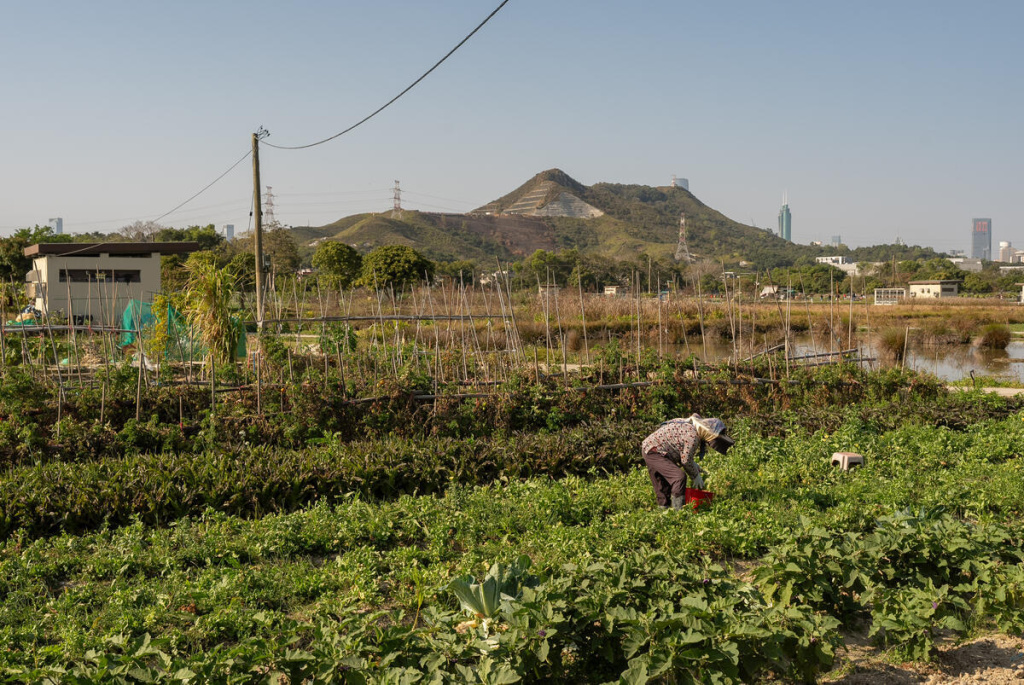
Institute of Agricultural Information, Chinese Academy of Agricultural Sciences (CAAS)
The Chinese Academy of Agricultural Sciences (CAAS) is a leading national research institution dedicated to applied agricultural science, with a strong emphasis on sustainable agriculture and rural development. CAAS actively fosters international collaboration and facilitates the exchange of agricultural technologies. It contributes 89,008 records to AGRIS, covering key thematic areas such as Oryza sativa, crop yield, growth, varieties, among others.
Institute of Cotton Research of CAAS (ICR)
The ICR under the Chinese Academy of Agricultural Sciences (CAAS) is an institution dedicated to professional cotton research. Specializing in applied studies, ICR leads major national projects tackling key scientific and technological challenges in cotton production. The institute fosters international collaboration in cotton research, develops top-tier talent to advance cotton technologies, and supports the transfer of innovations to cotton-growing areas. Additionally, ICR manages the publication and editorial work for the journals Cotton Science and China Cotton.
Institute of Food Physical Processing (FPP)
Established by Jiangsu University in 2018, FPP specializes in modern physical technologies for food and biological manufacturing, and agro-product processing. It also develops functional foods and intelligent control systems for food manufacturing.
.jpg)
International Academy of Ecology and Environmental Sciences (IAEES)
The IAEES advances global ecology and environmental sciences by publishing research, organizing environmental programs, disseminating knowledge, and hosting conferences. It contributes 399 records to AGRIS, with key thematic areas including biodiversity, heavy metals, population dynamics, ecosystem stability, gene flow, remote sensing, climate change, groundwater, and Arabidopsis thaliana, among others.
KeAi Communications Co., Ltd. (KeAi)
KeAi, a joint venture between China Science Publishing & Media and Elsevier, publishes over 160 scholarly journals across all disciplines, with many titles indexed in Web of Science and Scopus. Its portfolio includes top-ranked journals and partnerships with more than 90 research institutions. KeAi leverages advanced publishing technologies and global teams to support authors, editors, and researchers, fostering open science and international collaboration.
National Marine Data and Information Service (NMDIS)
The NMDIS is a government-funded public institution under China's State Oceanic Administration (SOA). It manages national marine data and information resources, coordinates the digitalization of marine data, and provides technical support for marine economy development, management, public services, and maritime security. NMDIS contributes 91 records to AGRIS, covering topics such as data buoys, tidal currents, Holocene studies, and energy.

Oil Crops Research Institute, Chinese Academy of Agricultural Sciences (OCRI-CAAS)
Founded in 1960, OCRI-CAAS focuses on key oil crops such as rapeseed, peanut, soybean, and sesame. Its research spans crop germplasm, genetics, physiology, soil, plant protection, genetic engineering, nutrition, processing, and industry strategies. The institute leads major national and international research collaborations and has received numerous awards for its scientific innovations, supporting significant growth in China's oil crop production.
Scholar Community Center Press (SCC PRESS)
Scholar Community Center uses its international academic journal, Agricultural & Rural Studies, as a platform focused on agriculture, rural areas, and farmers. Leveraging the unique advantages of the Yangtze River Delta and the Guangdong-Hong Kong-Macao Greater Bay Area, the SCC PRESS aims to become a systematic, sustainable, and innovative support system for rural talent revitalization globally. Its mission is to empower agriculture, rural development, and farmers through academic journals, technology promotion, innovative models, and the sustainable development of rural areas.
As AGRIS marks its 50th anniversary, we honor the vital contributions of these institutions, whose dedication and expertise have been instrumental in building a comprehensive and dynamic global agricultural knowledge network with over 1,500 data providers. Their continued partnerships reflect AGRIS's commitment to providing free access to high-quality research on agriculture, innovation, and sustainable development.
注册
接收FAO AGRIS简讯以及粮农组织其他知识管理活动的信息
FAO AGRIS 数据积极提供者认可印章
如果您在 2025 年 7 月至 2026 年 6 月期间提交了数据,您就有资格获得 2026 年的认可印章,并将其展示在您的网站上。在 2026 年继续提交数据的数据提供者也有资格获得该印章。

