
From Brussels to İzmir: private sector dialogues inform FAO Regional Conference for Europe and Central Asia
29/04/2026 - Global
Ahead of the 35th Session of the FAO Regional Conference for Europe and Central Asia (ERC35), the Food and Agriculture Organization of the United Nations (FAO) convened two private sector consultations in Brussels, Belgium, and İzmir, Türkiye. Bringing together agribusinesses, financial institutions, industry associations and small and medium-sized enterprises (SMEs), the dialogues ensured that private sector perspectives contributed to shaping regional priorities for agrifood systems transformation.
Held on 22 and 29 April 2026, respectively, the consultations aimed to gather inputs to inform ERC35 discussions, strengthen collaboration and present the FAO Strategy for Private Sector Engagement 2026–2030.
Strengthening partnerships across Europe and Central Asia
The Brussels consultation, hosted by the European Dairy Association (EDA), brought together European Union (EU) stakeholders in a forward-looking dialogue on agrifood systems transformation. Opening the meeting, Raschad Al-Khafaji, Director of the FAO Liaison Office in Brussels (LOB), and Alexander Anton, EDA Secretary-General, underscored the importance of sustained engagement between FAO and the private sector ahead of the ERC35 and beyond.
The importance of continued dialogue with the private sector was further emphasized during the consultation. “Transforming agrifood systems requires stronger collaboration. FAO values the private sector’s innovation capacity, knowledge and skills, and relies on dialogue to shape evidence-based action and impact on the ground,” said Lauren Phillips, Director of FAO’s Partnerships and UN Collaboration Division (PSU).
Participants highlighted the need for closer public–private cooperation to address interconnected challenges such as climate change, supply chain disruptions, and rising production costs. They stressed that effective solutions must be grounded in market realities and investment dynamics.
The consultation also showcased concrete examples of FAO collaboration with the private sector, illustrating how such partnerships can support large-scale, transformative change.
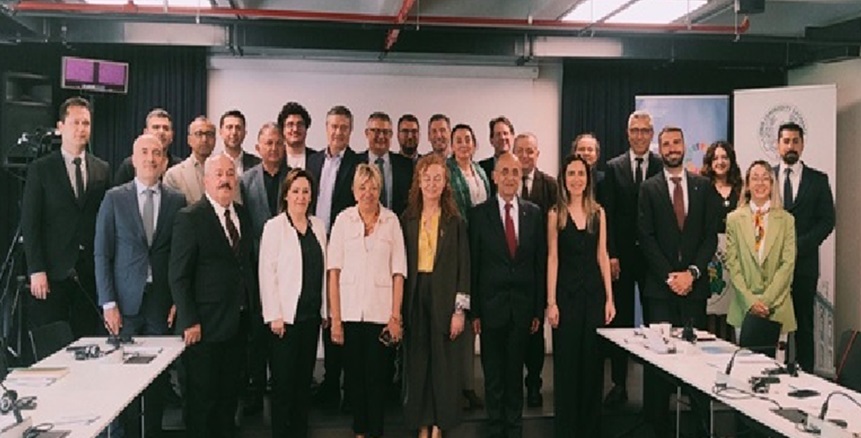
In İzmir, FAO partnered with the İzmir Commodity Exchange (ICE) to convene a broader regional dialogue. The consultation was opened by Işınsu Kestelli, ICE Chairperson, and Raimund Jehle, Deputy Regional Representative, FAO Regional Office for Europe and Central Asia (REU).
A key outcome of both consultations was the agreement on priority messages and the selection of private sector spokespersons during ERC35. This process ensures that business perspectives are directly reflected in intergovernmental discussions and helps shape regional policy directions.
The spokespersons selected to participate in ERC35 included Tobias Gras of the Danish Food and Agriculture Council (DAFC), Erçin Güdücü of the İzmir Commodity Exchange (ICE), Hanae Idrissi Ouedrhiri of DANONE, Lorette du Preez of European Bioplastics, and Sanovbar Ayubova, Founder and CEO of Lean Solutions LLC in Tajikistan.
Across both meetings, FAO reaffirmed its role as a neutral convener, facilitating dialogue, aligning stakeholders and supporting partnerships that deliver practical, scalable solutions for more efficient, inclusive, resilient and sustainable agrifood systems.
A renewed approach to private sector engagement
A central feature of the consultations was the presentation of the FAO Strategy for Private Sector Engagement 2026–2030 by Carlos Watson, Chief of the FAO Private Sector Unit, who highlighted its more action-oriented, evidence-based and impact-driven approach to collaboration.
The Strategy reflects a shift towards more flexible and dynamic partnership models, including innovation platforms, technical dialogues and collaborative mechanisms that support co-creation and the scaling of solutions. It also places stronger emphasis on decentralized engagement, empowering FAO regional and country offices to build partnerships tailored to local contexts.
Key messages: resilience, sustainability and investment
Discussions during the consultations focused on the main thematic areas of ERC35, including sustainability, resilience and financing agrifood systems. Participants highlighted the need for enabling policy environments that support responsible investment, improve access to finance for farmers and SMEs, and accelerate the uptake of innovation and digital solutions.
Stakeholders stressed the importance of integrating climate action, biodiversity conservation and land restoration into agrifood systems, while strengthening resilience through improved data systems, early warning mechanisms and regenerative practices.
They also emphasized that farmers and producers should play a central role in data generation and decision-making, supported by incentive-based approaches that encourage participation and innovation.
Looking ahead
Taking place from 11 to 15 May 2026 in Dushanbe, Tajikistan, ERC35 will bring together FAO Members from across Europe and Central Asia to define regional priorities and guide FAO’s work in the coming years.
The consultations in Brussels and İzmir underscore a clear message: transforming agrifood systems requires coordinated action across sectors. By fostering structured and inclusive engagement with the private sector, FAO is helping to ensure that innovation, investment and practical experience contribute to more sustainable and resilient agrifood systems across the region.