
A targeted approach to sustainability: the GFCM priority species explained

The concept of “priority species” is essential for fisheries management and conservation efforts in the Mediterranean and the Black Sea.
The General Fisheries Commission for the Mediterranean (GFCM) of the Food and Agriculture Organization of the United Nations (FAO) plays a critical role in fisheries governance, by adopting decisions for the conservation and sustainable use of marine living resources in the Mediterranean and the Black Sea. These decisions are informed by the best available scientific advice.
The GFCM applies a subregional approach, dividing its area of application into five subregions. This framework enables activities and interventions to be tailored to the specific characteristics, priorities and needs of each subregion.
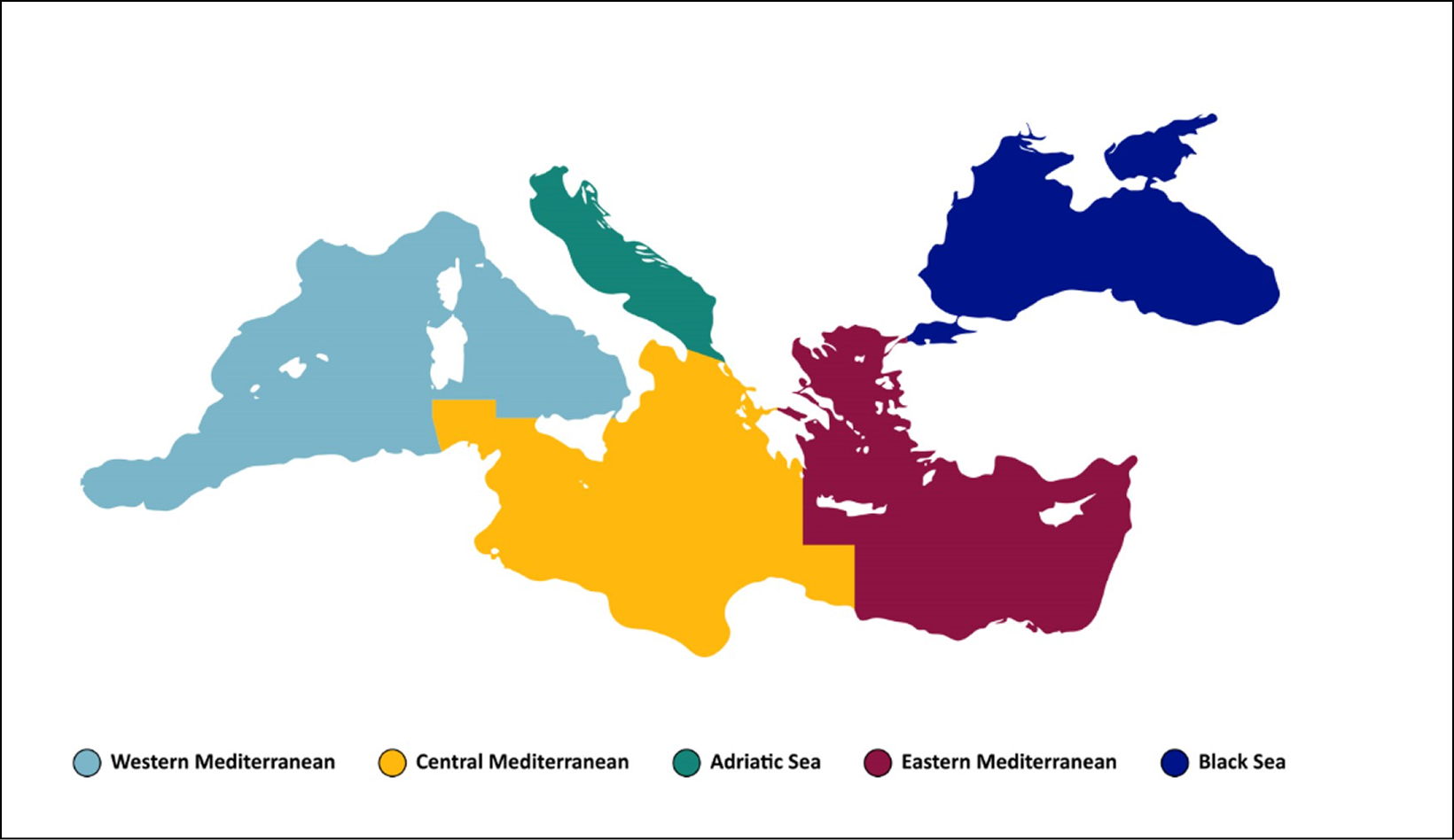
GFCM subregions
Source: Base map redrawn from United Nations. 2024. United Nations Geospatial Clear Map
Within this framework, fisheries management efforts focus on a relatively limited number of exploited stocks and marine ecosystems, seeking to address common priorities across the region, while progressively strengthening the scientific basis for advice. Priority species represent a key part of these efforts.
Priority species at the centre of scientific advice
Priority species are designated by subregion through a science-based, consultative process targeting species that are critical for commercial exploitation, vulnerable to overfishing, or of high conservation importance. Several factors come into play when designating priority species, including abundance, landings, market value, demand, and the species' role in the ecosystem. This helps ensure that species that are less common but highly valuable are not overlooked.
Priority stocks are regularly assessed to measure progress towards sustainable fisheries and to monitor important indicators, including the proportion of stocks that are overexploited.
This directly addresses the requirements of GFCM decisions and broadly contributes to informing regional analyses, such as those provided by The State of Mediterranean and Black Sea Fisheries and The State of World Fisheries and Aquaculture.
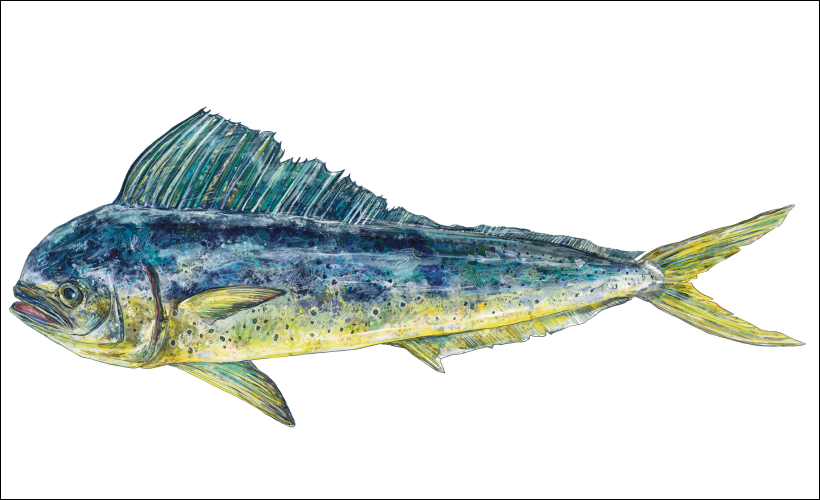
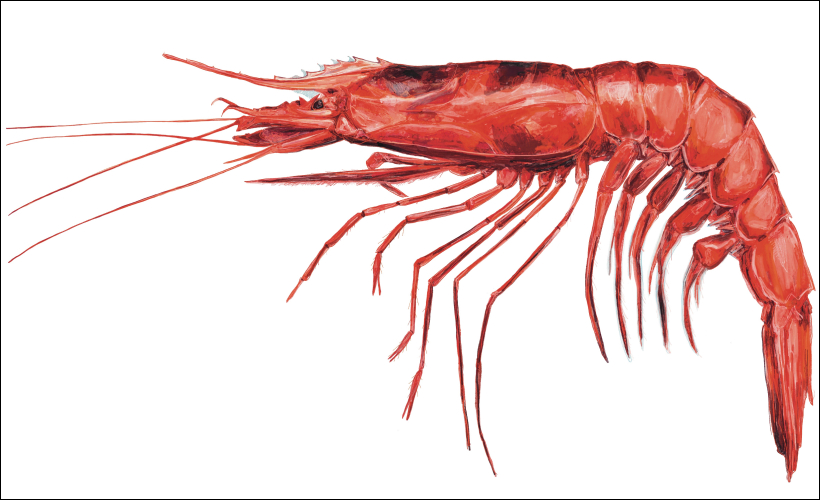
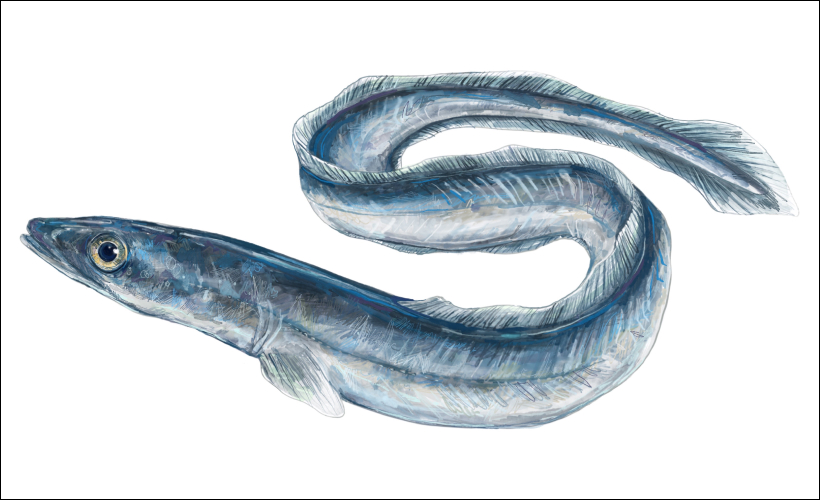
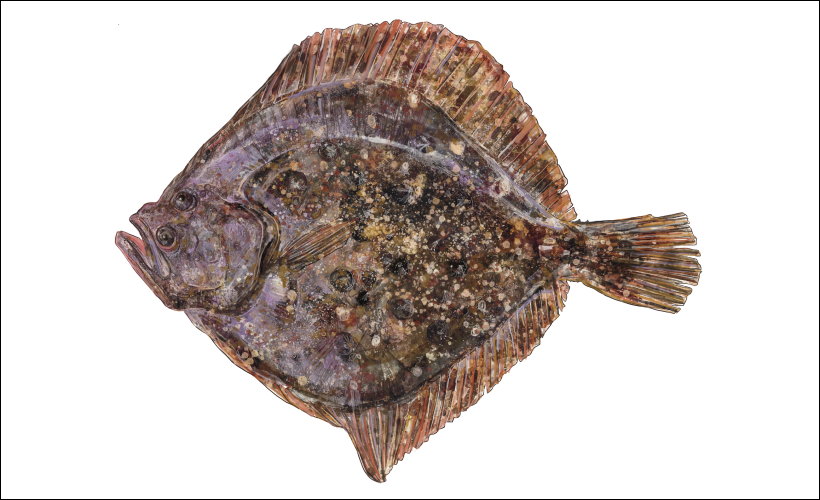
Common dolphinfish, giant red shrimp, European eel and turbot are some of the priority species annually assessed ©FAO-GFCM/Ali Elly
Priorities can evolve over time in response to environmental and economic changes, such as shifts in species abundance linked to climate change or fishing pressure.
The selection of priority species is currently guided by the GFCM 2030 Strategy, which addresses sustainable exploitation, the reduction of discards and the protection of vulnerable species. Priority species are therefore aligned with broader management and conservation objectives.
“The priority species framework is a key component of GFCM fisheries management,” said Elisabetta Betulla Morello, Senior Fishery Officer, GFCM. “It enables a targeted, flexible, and science-based approach to stock assessment and scientific advice, helping to improve management decisions and support the sustainable use of marine resources in the region”.
By focusing on priority species, the GFCM produces robust, science-based stock assessments covering species that contribute to more than 50 percent of total fisheries landings, as reflected in the FAO State of Stocks Index and The State of World Fisheries and Aquaculture.
More than 20 priority species are assessed annually across the Mediterranean and the Black Sea. European anchovy (Engraulis encrasicolus) is the only species designated as a priority species throughout the entire region. Other priority species assessed in Mediterranean subregions include European hake (Merluccius merluccius), Norway lobster (Nephrops norvegicus), European eel (Anguilla anguilla), common sole (Solea solea), giant red shrimp (Aristaeomorpha foliacea), and blue and red shrimp (Aristeus antennatus). In the Black Sea, priority species include European sprat (Sprattus sprattus), turbot (Scophthalmus maximus), piked dogfish (Squalus acanthias) and rapa whelk (Rapana venosa).
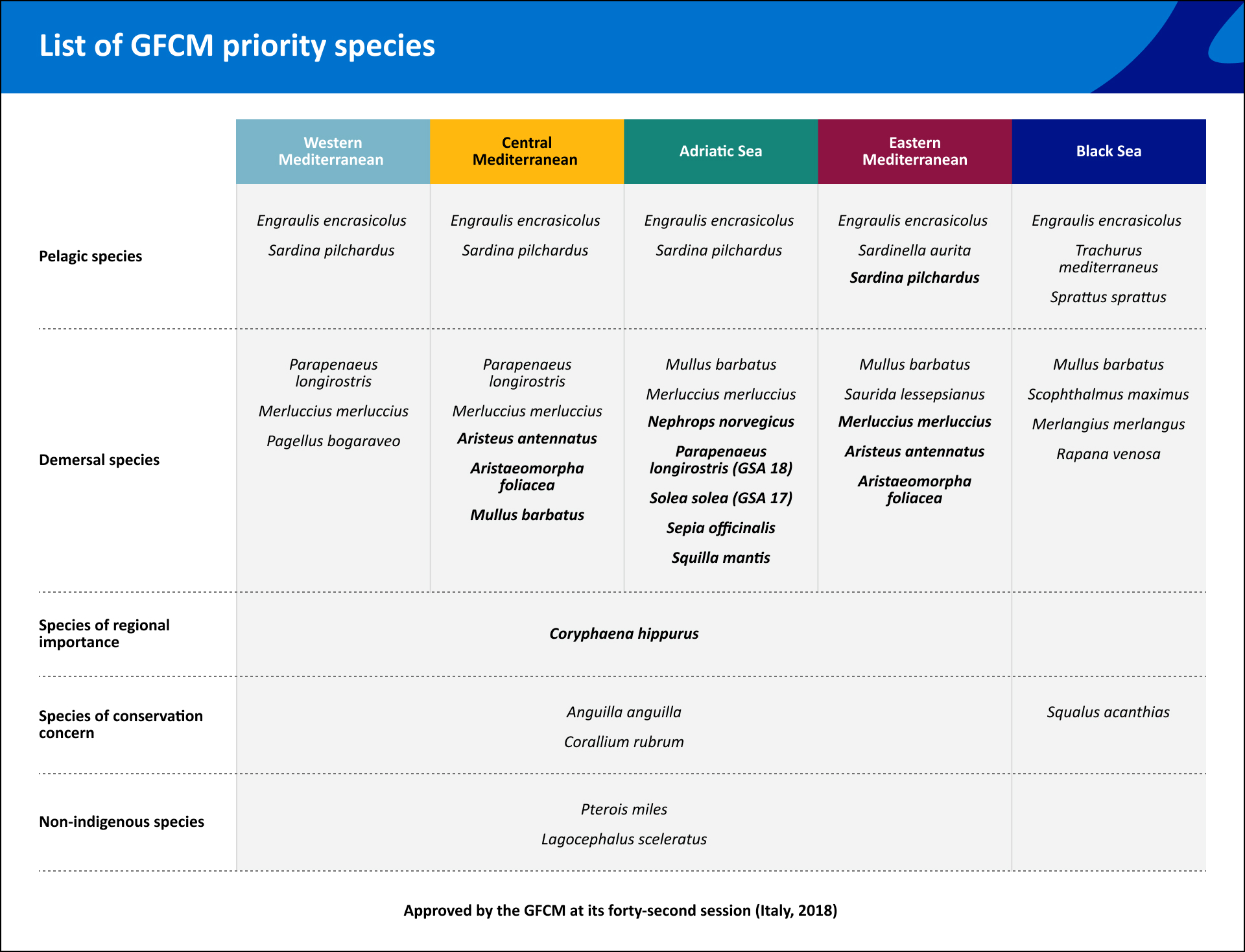
Source: GFCM Data Collection Reference Framework, Version 26.1, March 2026
“Prioritizing these selected species has multiple benefits. First, it provides a framework for concentrating scientific resources on the most important shared fisheries, whose exploitation supports livelihoods across multiple countries and communities,” said Ali Cemal Gücü, Senior Scientist and Professor of marine biology and fisheries at the Middle East Technical University Institute of Marine Sciences of Türkiye and chair of the GFCM Subregional Group on Stock Assessment for the Black Sea. “In addition, this often contributes not only to the sustainable management of the target stocks but also to the conservation of associated species and habitats”.
For example, the management of deep-sea fisheries targeting giant red shrimp and blue and red shrimp also contributes to the conservation of vulnerable deep-sea ecosystems, including sensitive cold-water coral habitats. Similarly, the management of European eel fisheries supports both the recovery of a species of conservation concern and the sustainable management of lagoon ecosystems, with positive spillover effects for other commercially important lagoon resources.
Key developments
The identification of priority species was first addressed in 2014, when the Data Collection Reference Framework (DCRF) was established, detailing the species for which the collection of data was important.
 |
The Data Collection Reference Framework (DCRF) The DCRF provides a harmonized approach to fisheries data collection across GFCM contracting parties and cooperating non-contracting parties. Under the DCRF, species are assigned to three groups. Group 1: species that drive fisheries and are regularly assessed Group 2: species of economic importance that are not regularly assessed Group 3: species under conservation or recovery plans, as well as non-indigenous species with significant ecological impact |
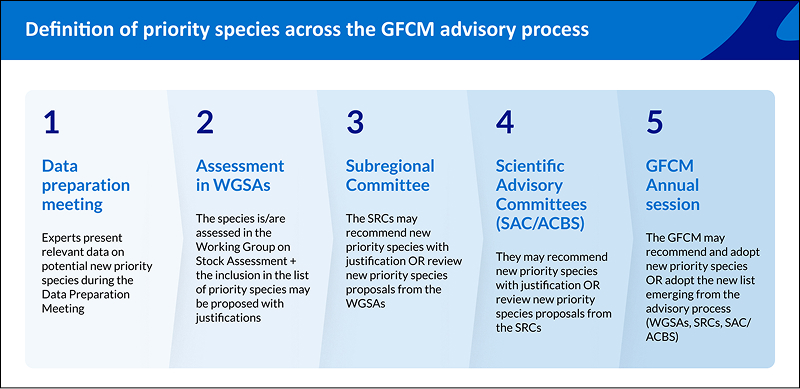
In 2016, under the GFCM mid-term strategy, a complementary list of species identified as priority for scientific advice and management was adopted. The list included a subset of Group 1 species under the DCRF, for which the provision of advice was considered mandatory, as well as species of conservation concern and non-indigenous species classified under Group 3. In 2018, the list was expanded to include additional species of importance for management at the subregional and geographical subarea (GSA) levels, such as for example common sole in GSA 17 and giant red shrimp and blue and red shrimp in the central and eastern Mediterranean. Since then, the list has served as the foundation for regional stock assessment and management advice.
Mandatory requirements
For priority species, data collection and the provision of management advice are mandatory. Countries are required to submit data in support of stock assessment or in response to relevant GFCM decisions. Fishery-dependent data, such as catch and fishing effort, constitute the core data requirements. Where available, these are complemented by additional biological and technical information, such as growth, maturity, fleet characteristics, historical trends and biomass at sea.
Ongoing process
The identification and revision of priority species is a continuous process involving multiple actors and combining expert knowledge (bottom-up approach) and national priorities (top-down approach). National authorities of GFCM contracting parties and cooperating non-contracting parties, together with GFCM scientific advisory committees and working groups, review scientific, socioeconomic and fisheries information in order to determine if additions or revisions to the list are needed.
Cover photo: Shoal of anchovy and sardine ©FAO-GFCM/Franco Tulli