


Latest news

ScaleWat presented at Global Forum for Food and Agriculture
16/01/2025
This year’s Global Forum for Food and Agriculture (GFFA) took place from 15 to 18 January in Berlin, Germany. The forum brought together Ministers and Practitioners from public and private sectors and civil society to develop solutions for future food security under this year’s motto “Farming ...

New water tenure publication presented during First Regional Consultation for Asia-Pacific in Bangkok
10/12/2024
In the context of the International Soil and Water Forum 2024, the first Regional Consultation on Responsible Water Tenure Governance was held on Monday, 9 December 2...

Visit to the ScaleWat project evaluation site
28/11/2024

Launch of the ScaleWat project: scaling capacities for responsible governance of water tenure
27/11/2024

The publication Water Tenure Perspectives - Proceedings of the Water Tenure Mondays Webinar Series is out!
12/11/2024
The Water Tenure Mondays webinar series was held between 2021 and 2022 as a forum for building a stronger water tenure concept and pursuing FAO's efforts to broaden the knowledge base on its application to achieve more equitable and secure access to water, even under condition...
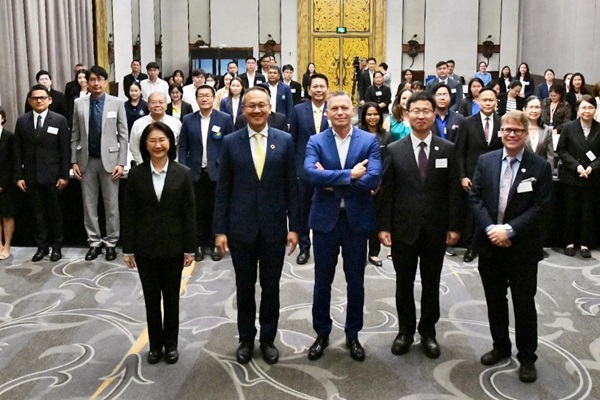
FAO and ONWR launch the ScaleWat project in Thailand
30/10/2024
On Tuesday, 29 October, the Food and Agriculture Organization of the United Nations (FAO) and the Office of the National Water Resources (ONWR) of Thailand signed the official agreement to start implementing the pr...

FAO's water tenure work and its application in Rwanda presented at the Rome Water Dialogue 2024
18/10/2024
The third edition of the Rome Water Dialogue was held at FAO headquarters in Rome, Italy from 14 to 18 October 2024, as part of the annual World Food For...

40 Participants from the Sierra and Ciénaga Grande de Santa Maria trained in water governance
16/10/2024
With the aim of training 40 leaders from the Sierra Nevada - Ciénaga Grande de Santa Marta corridor, the official launch of the Diploma Course in "Environmental Leadership for Water Governance: Systemic and Participatory Action" took place.&nb...

Water tenure methodology presented at COAG 29 Side-Event: "A Global Dialogue on Water Tenure for Agrifood Systems and Food Security: Progress since COAG 28"
02/10/2024
In 2022, the Committee on Agriculture (COAG) at its 28th session recommended FAO to undertake an assessment of existing water tenure arrangements and initiate a Global Dialogue on Water Tenure. Two years later, FAO and partners discussed the progress made sinc...

Global Water Tenure Dialogue showcased during the World Water Week session “Building bridges between communities and states through water tenure”
29/08/2024

Identification of ScaleWat project pilot area in Colombia
07/08/2024
The Food and Agriculture Organization of the United Nations (FAO), together with Colombia's Ministry of Environment and Sustainable Development, defined criteria for selecting the pilot area where the ScaleWat project will be implemented in the country.
FAO in Colombia, in colla...

Awareness raising on the global project ScaleWat: scaling up capacities for responsible governance of water tenure
20/06/2024

The Global Dialogue on Water Tenure will be presented during the World Bank Land Conference 2024
10/05/2024
FAO will present the session "Protecting tenure rights: lessons from land, forest and fisheries to reconcile legal and customary laws in the water sector and call for collective action through the Global Dialogue on Water Tenure" during the next World Bank Land Conference 2024.
This sess...

COAG endorsed FAO to initiate a “Global Dialogue on Water Tenure"
21/07/2022
The Committee on Agriculture’s (COAG) 28th session started on Monday 18 July 2022, and the event will take place until 22 July. As one of FAO’s Governing Bodies, COAG provides overall policy and regulatory guidance on issues relating to agriculture, livestock, food safety, nutrition, rural dev...

Global Water Tenure Dialogue discussed at CFS50 side event on Collective rights to natural resources for indigenous food systems
13/10/2021
For the global community, insecure rights of Indigenous Peoples on their lands, waters and territories represents an immeasurable cost in form of lost opportunities for climate mitigation, conservation, ecological restoration and sustainable food systems. Due to the increasing water demand, co...