


New publication out! Simplified version of the Rupununi freshwater turtle management plan
25/07/2025

New Poster Out! Arboreal camera traps assess habitat suitability for lemur species in Makira Natural Park, Madagascar
21/07/2025

SWM Programme's participation to the ICCB 2025
19/06/2025
On the occasion of the International Conference for Conservation Biology (ICCB 2025), the SWM Programme and the International Livestock Research Institute (ILRI) co-organized the Symposium: ‘’From Forest to Fork: the impacts of wild meat value chains on biodiversity, food security and health’’.

SWM Programme Executive Summary (2018-2024) is out!
22/05/2025
To celebrate the International Day for Biological Diversity, we are thrilled to announce the official release of the SWM Programme Executive Summary: Progress and impact 2018–2024.
This publication highlights the progress made across our 15 implementation s...

New video release: Papua New Guinea Voices - Community Films for Culture and Conservation
08/05/2025

New publication out! A guide to in situ and ex situ freshwater turtle nest monitoring for local monitoring teams
05/05/2025
The purpose of this document is to help Indigenous community, NGO or government agency monitoring teams to use the best practices available when carrying out in situ nest protection, nest relocation and head-starting, to ensure the highest possible survival rates of turtle hatchlings in the Ru...

SWM Community Conservancy (CC) Project Newsletter, issue 6 is officially out!
07/04/2025
We are pleased to announce the release of the sixth issue of the Sustainable Wildlife Management (SWM) Community Conservancy (CC) Project newsletter covering the perio...

Legal Hub launch in Botswana
12/03/2025
FAO Botswana in collaboration with the national Government successfully launched the SWM Programme Legal Hub for Botswana. The SWM Programme Legal Hub was officially launched by the Minister of Environment & Tourism, Hon. Winter B. Mmolotsi.
Read the articles below to ...
.tmb-th600x400.jpg?sfvrsn=653483d9_1 "FAO.David Mansell Moullin (2)")
World Wildlife Day 2025: SWM Programme newest products released!
03/03/2025
On World Wildlife Day 2025, the SWM Programme released three new products to celebrate its efforts in improving the conservation and sustainable use of wildlife and, on the other hand, the living conditions of Indigenous Peoples and local communities who directly depend on wildlife.
You can...

FAO Launches Sustainable Wildlife Management Programme in Lao PDR
10/02/2025
FAO Launches Sustainable Wildlife Management Programme in Lao People’s Democratic Republic to Address Biodiversity, Food Security, and Zoonotic Risks.
The Food and Agriculture Organization of the United Nations (FAO), in collaboration with the Ministry of Agriculture and Forestry (MAF) o...

Community-based monitoring in the context of sustainable wildlife management & biodiversity conservation in tropical countries
17/01/2025
A new publication from the Sustainable Wildlife Management (SWM) Programme sets out guiding principles for ensuring communities around the world can monitor wild animal populations in their territories as part of conservation efforts.

New video out! Reducing human-wildlife-conflict with a community mapping game
19/12/2024

New video out!Five benefits of farming insects in Madagascar
10/12/2024

Wildlife, zoonoses and community: How local knowledge is shaping Zambia’s fight against disease
15/11/2024
Zambia's Nyawa Chiefdom harnesses local knowledge to combat zoonotic diseases and foster healthier ecosystems.
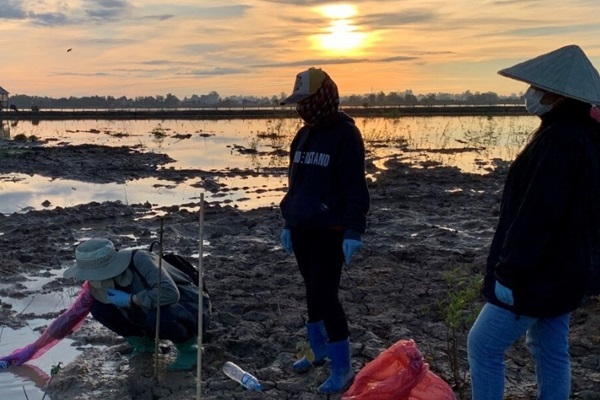
Sustainable Wildlife Management Programme expands in Asia-Pacific - New regional project starting in Lao PDR will help boost zoonotic disease prevention
11/11/2024

Sustainable wildlife: Championing gender equality through fish farming
11/11/2024
Empowering women through sustainable fish farming, a Zambian community is transforming traditional roles while protecting wildlife.

New video out! Rupununi communities lead the way in monitoring wildlife
06/11/2024

New publication out: The legal game meat sector in Zambia
04/10/2024
This Brochure gives an overview of Zambia’s legal game meat sector.

Innovative study unveils simple indicators to measure wildlife degradation in African tropical forests
18/07/2024
A groundbreaking study has revealed practical and effective methods for assessing the impact of hunting on wildlife in African tropical forests. Conducted by an international team of researchers, the study focuses on understanding how overhunting affects animal populations and forest ecosystems and proposes straightforward indicators that communities can collect to monitor and manage wildlife sustainably.

Sustainable Wildlife Management Programme - Phase II
10/07/2024
After five years of activity, the SWM Programme is pursuing its implementation with a second phase, in order to continue its commitment to the African, Caribbean and Pacific states (ACP), by working to protect their natural heritage and to improve their livelihoods and food security.