


OUR WORK
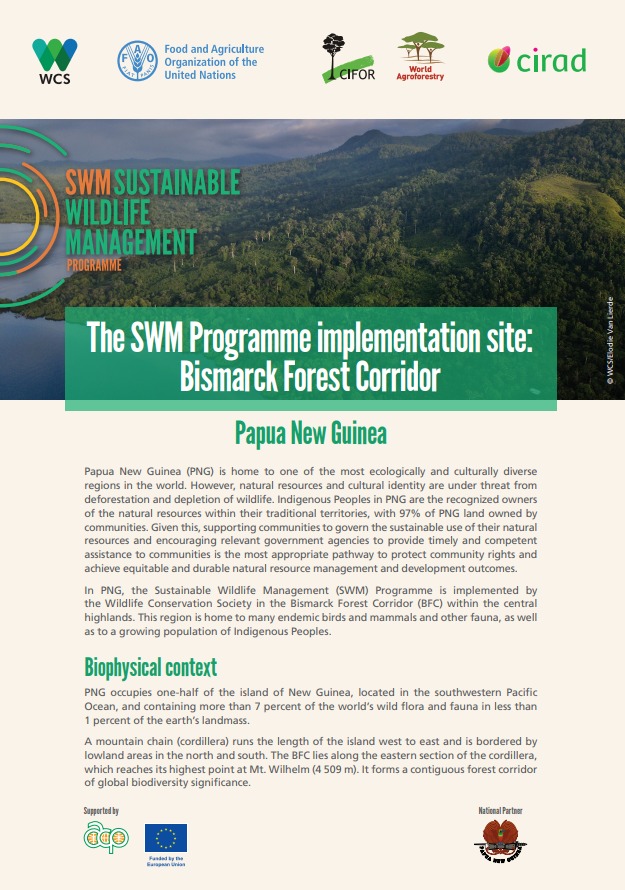
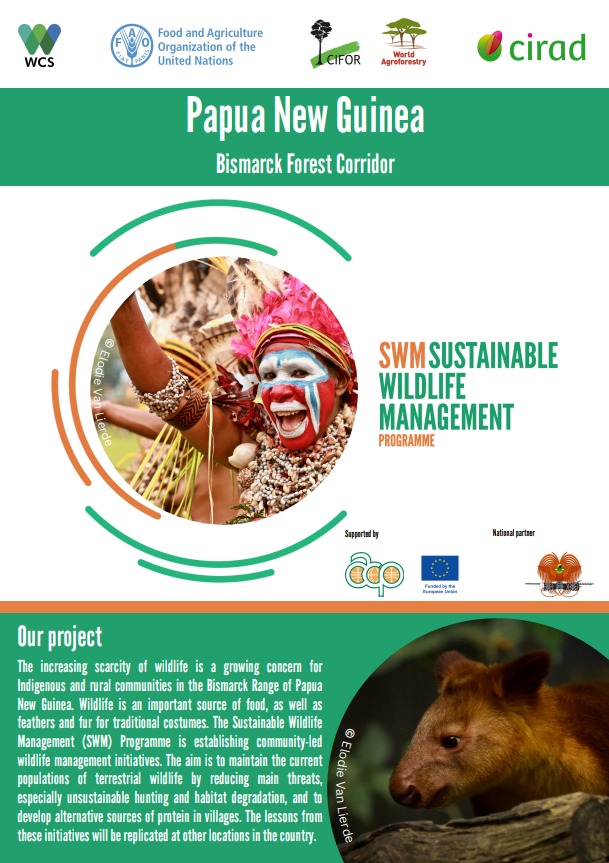
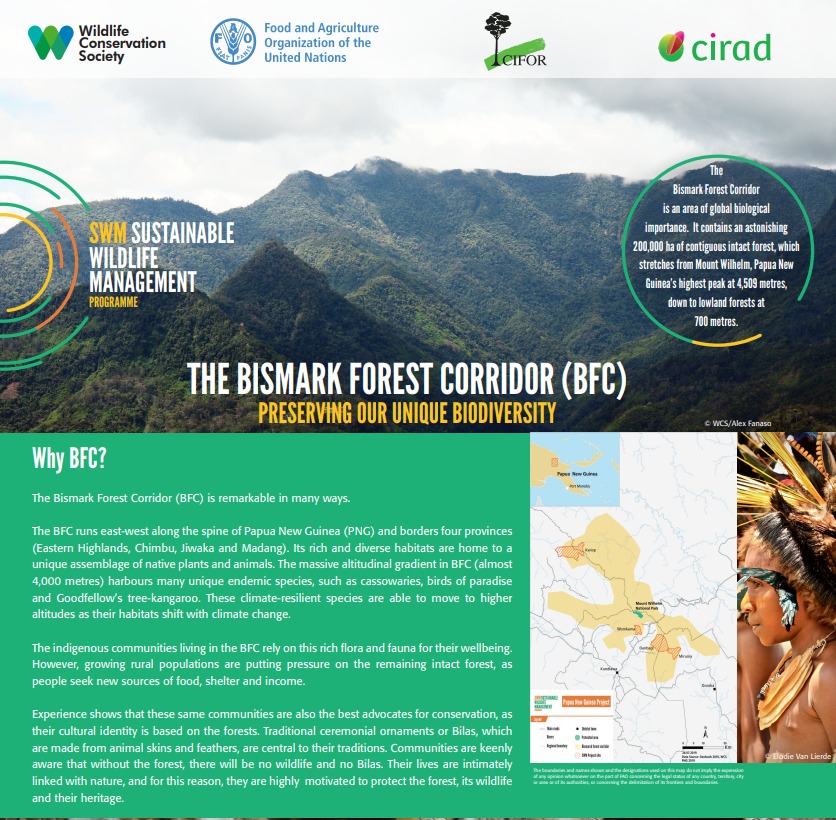
The Bismarck Forest Corridor is one of the most biodiverse regions in the world, home to many endemic species. With 97 percent of the land in Papua New Guinea under customary tenure, Indigenous communities, as customary landowners, rely on the forest’s wildlife for their food and customary needs. The SWM Programme in Papua New Guinea is piloting a sustainable wildlife consumption model across four provinces in the Highlands to ensure the availability of cultural materials and wild protein, weaving biodiversity conservation in with the preservation of cultures deeply rooted in and dependent on nature. The SWM Programme establishes community conservation areas and utilizes existing customary regulations to develop community-based natural resource management rules that regulate hunting and deforestation and are governed and managed by the community.
Who we work with
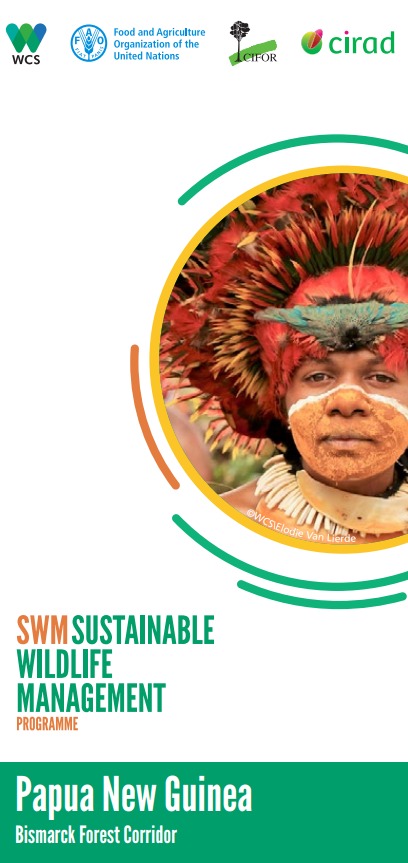
The SWM Programme in Papua New Guinea works with four Indigenous communities in the Bismarck Forest Corridor. Field activities are coordinated by the Wildlife Conservation Society in collaboration with the national Conservation and Environment Protection Authority (CEPA).


Community rights and governance
The SWM Programme facilitated four voluntary legal agreements called conservation deeds, covering 19 clans and creating four community conservation areas covering 209 km². These deeds allow Indigenous communities in Papua New Guinea to operationalize their constitutionally recognized land tenure, which is founded on custom, and collectively decide on the sustainable use of wildlife and natural resources within their lands.

Adaptive wildlife management
The operational capacity of the community-based organizations to manage the deed areas has been strengthened through training and meetings. About 30 individuals were trained in patrolling these areas, with 14 becoming community rangers across three sites. Ranger training in the fourth site is underway. Given the linkages between hunting for wild meat and food security, significant emphasis has been placed on nature-positive livelihoods. Successful harvests after training on mushroom cultivation have improved incomes. Other trained community members have set up beehives to produce honey and improve pollinator densities in the conservation areas. Collaborations with private commodity buyers will improve revenues from key Highlands cash crops such as coffee.

Healthy and sustainable supply chains and consumption
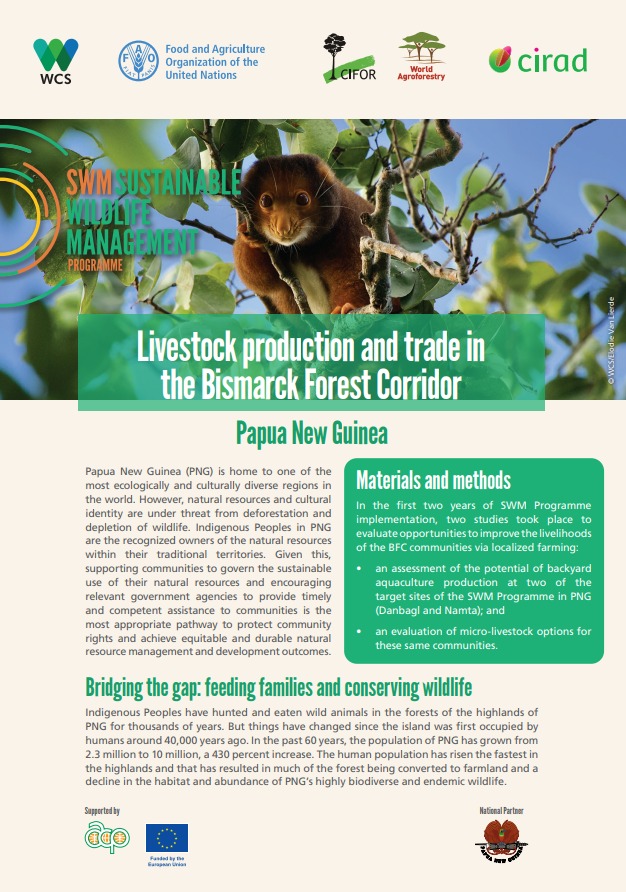
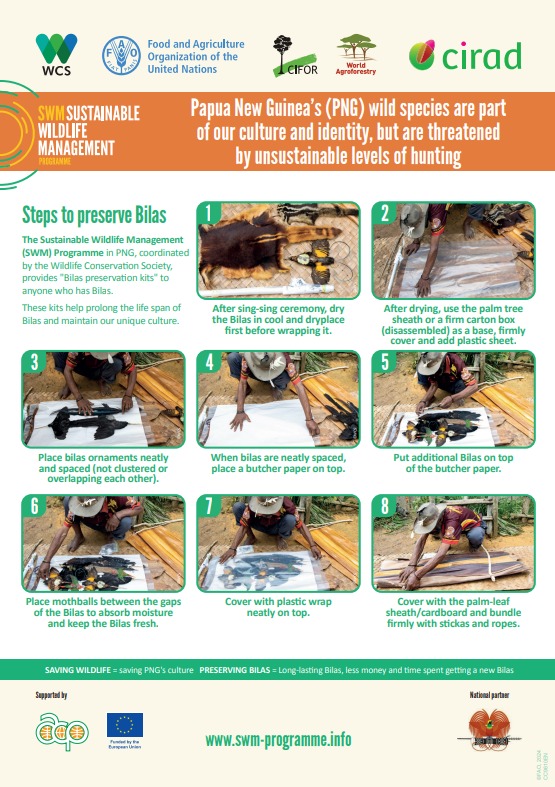
After extensive participatory community consultations, poultry was introduced as a possible alternative to wild meat. Community members received comprehensive training and mentorship on animal care, poultry production and biosecurity. The SWM Programme also supports community tree nurseries, planting over 58 000 native trees to reforest cleared areas. To reduce hunting for cultural practices, more than 2 000 bilas preservation kits were produced and distributed, extending the life of cultural adornments and reducing hunting pressure on wildlife.

Zoonotic risk prevention and management
Awareness programmes on zoonotic diseases and other economically important diseases, such as African swine fever, have been conducted across three project sites. Zoonotic and other disease indicators have been added to the community ranger patrolling form to flag early signs of outbreaks. A comprehensive zoonotic disease awareness strategy is in progress.
Publications

Supported by


Consortium partners


©2025 FAO, CIRAD, CIFOR-ICRAF and WCS. The views expressed herein can in no way be taken to reflect the official opinion of the European Union. The information on this portal is provided for the convenience of users. Hence, FAO, CIRAD, CIFOR and WCS are not responsible for its accuracy, nor for any use of such information by users. See full disclaimer.