


Low-cost internet of things sensors for greenhouse monitoring
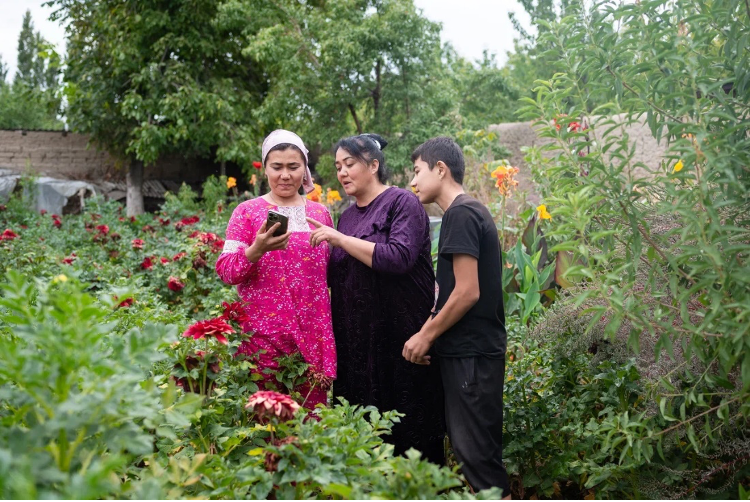
The use of technology in agriculture is encouraging active youth participation in learning and transforming traditional agricultural practices
©FAO/Daniil Dolidze
| Introduction | As part of the Digital Villages Initiative in Uzbekistan, working in collaboration with IT-Park and the FAO Smart Farming for the Future Generation project, FAO has supported the installation of smart sensors in ten greenhouses owned by smallholder farmers in the villages of Novkent, Yukhsalish and Dustlik in the Fergana valley. |
|---|---|
| Country | Uzbekistan |
| Start date | 01/01/2024 |
| Status | Ongoing |
| Objective / Goal | The villages of Novkent and Yuksalish in Uzbekistan often experience unpredictable weather patterns, including unexpected rainfall or prolonged dry periods. In addition, water scarcity and a lack of knowledge of the proper use of fertilizers and pesticides have negatively affected the agricultural productivity in the villages. |
| Activities |
As part of the Digital Villages Initiative in Uzbekistan, working in collaboration with IT-Park and the FAO Smart Farming for the Future Generation project, FAO has supported the installation of smart sensors in ten greenhouses owned by smallholder farmers in the villages of Novkent, Yukhsalish and Dustlik in the Fergana valley. The sensors were assembled at low cost (less than USD 100) by using open-source solutions and good-quality sensors and by mobilizing young people in the local community as part of the Digital Villages Camp. Farmers equipped with the sensors can monitor temperature, humidity, soil moisture and light in their greenhouses and can control their drip irrigation systems. The devices transmit data to the farmers via a Telegram bot, providing them with real-time updates and alerts about greenhouse conditions through a familiar interface |
| Impact |
Among the benefits of the programme to the farmers were the facilitation of precision farming through real-time monitoring, resource efficiency through controlled irrigation, improved crop health management and increased productivity, all provided by cost-effective solutions making use of accessible technologies. The user-friendly Telegram bot interface ensured easy operation by the smallholders, even those with limited technical expertise. |
|
Low-cost IoT sensors for greenhouse monitoring Embracing change with the Digital Villages Initiative in Uzbekistan |
|
| Tags | climate smart agriculture Digital Agriculture Digital Villages IOTs Sensors |