



Standards
Popular Latest
CXS 193-1995
General Standard for Contaminants and Toxins in Food and Feed
CXC 1-1969
General Principles of Food Hygiene
CXS 1-1985
General Standard for the Labelling of Pre-packaged Foods
CXG 2-1985
Guidelines on Nutrition Labelling
CXM 2
Maximum Residue Limits (MRLs) and Risk Management Recommendations (RMRs) for Residues of Veterinary Drugs in Foods
CXS 192-1995
General Standard for Food Additives
CXA 6-2025
List of Codex Specifications for Food Additives
CXS 362R-2025
Regional standard for Castilla lulo (naranjilla) – Latin America and the Caribbean
CXS 363-2025
Standard for fresh dates
CXG 106-2025
Guidelines for monitoring the stability and purity of reference materials and related stock solutions of pesticides during prolonged storage
CXS 359-2024
Standard for dried or dehydrated roots, rhizomes and bulbs – Turmeric
CXS 358-2024
Standard for spices derived from dried or dehydrated fruits and berries - Allspice, juniper berry and star anise
CXS 357-2024
Standard for spices derived from dried or dehydrated fruits and berries – Small cardamom
CXG 104-2024
Guidelines on the provision of food information for pre-packaged foods to be offered via e-commerce
CXG 105-2024
Guidelines on the use of technology to provide food information in food labelling
CXS 356R-2023
Regional Standard for Fermented Noni Fruit Juice (North America and South West Pacific)
CXC 82-2023
Code of Practice for the Prevention and Reduction of Mycotoxins Contamination in Cassava and Cassava-Based Products
CXG 101-2023
Guidelines on Recognition and Maintenance of Equivalence of National Food Control Systems (NFCS)
CXG 102-2023
Principles and Guidelines on the Use of Remote Audit and Inspection in Regulatory Frameworks
CXS 354R-2023
Regional Standard for Soybean Products Fermented with Bacillus Species (Asia)
CXS 355R-2023
Regional Standard for Cooked Rice Wrapped in Plant Leaves (Asia)
CXG 99-2023
Guidelines for the Control of Shiga Toxin-Producing E. coli (STEC) in Raw Beef, Fresh Leafy Vegetables, Raw Milk and Raw Milk Cheeses, and Sprouts
CXG 100-2023
Guidelines for the Safe Use and Reuse of Water in Food Production and Processing
CXS 351-2022
Standard for dried floral parts –saffron
CXG 93-2021
Principles and Guidelines for the assessment and use of voluntary third-party assurance programmes
CXS 342-2021
Standard for Dried Oregano
CXS 343-2021
Standard for dried roots, rhizomes and bulbs: Dried or dehydrated ginger
CXS 344-2021
Standard for dried floral parts: Cloves
What is the Codex Alimentarius?
The Codex Alimentarius, or "Food Code" is a collection of standards, guidelines and codes of practice adopted by the Codex Alimentarius Commission. The Commission, also known as CAC, is the central part of the Joint FAO/WHO Food Standards Programme and was established by FAO and WHO to protect consumer health and promote fair practices in food trade. It held its first meeting in 1963. [... more]
Why do we need Codex standards?
Codex standards ensure that food is safe and can be traded. The 188 Codex members have negotiated science based recommendations in all areas related to food safety and quality. Codex food safety texts are a reference in WTO trade disputes. [... more]
Codex and...

Good animal feeding plays a vital role in animal health & welfare and in the production of safe and quality products of animal origin.
 Antimicrobial resistance
Antimicrobial resistance (AMR) is a major global threat of increasing concern to human and animal health. It also has implications for both food safety and food security and the economic well being of millions of farming households.
 Biotechnology
While there is little controversy about many aspects of biotechnology and its application, genetically modified organisms (GMOs) are often the target of very intensive debate.

Contaminants are chemical substances that have not been intentionally added to food or feed and may pose a risk to animal and human health.
 Nutrition & Labelling
The food label is one of the most important tools consumers can use to make informed choices about healthy and safe foods.
 Pesticides
Pesticides with public health uses are intended to limit the potential for disease. By their nature, many pesticides may pose some risk to humans, animals, or the environment.
Scientific Approach
Codex committees, when developing standards, need to analyze risk. Independent scientific advice is provided to Codex by expert bodies organized by FAO/WHO. These bodies also give direct advice to Member Governments. [... more]
Sound Science
Upcoming Meetings
| CCPR57 Codex Committee on Pesticide Residues | Beijing China | 07/09/2026 | 12/09/2026 |
| CCEURO34 FAO/WHO Coordinating Committee for Europe | Berlin Germany | 21/09/2026 | 25/09/2026 |
| CCMMP11 Codex Committee on Milk and Milk Products | by correspondence | 29/09/2026 | 29/10/2026 |
| CCFICS28 Codex Committee on Food Import and Export Inspection and Certification Systems | Perth Australia | 12/10/2026 | 17/10/2026 |
| CCCF19 Codex Committee on Contaminants in Foods | Cairo Egypt | 19/10/2026 | 23/10/2026 |
| CCNFSDU45 Codex Committee on Nutrition and Foods for Special Dietary Uses | Nuremberg Germany | 02/11/2026 | 06/11/2026 |
| CCFH56 Codex Committee on Food Hygiene | Scottsdale, Arizona United States of America | 16/11/2026 | 20/11/2026 |
| CCLAC24 FAO/WHO Coordinating Committee for Latin America and the Caribbean | Montevideo Uruguay | 23/11/2026 | 27/11/2026 |
Publications
 The procedural manual of the Codex Alimentarius Commission helps national delegations and international organizations participate effectively in the work of the Joint FAO/WHO Food Standards Programme. The manual sets out the basic rules of procedure, procedures for the elaboration of Codex standards and related texts, and basic definitions and guidelines for the operation of Codex committees. It also lists the subsidiary bodies to the Codex Alimentarius Commission, along with their current status. Regular amendments to the Codex Alimentarius Commission Procedural Manual enhance clarity, strengthen procedural guidance and harmonize language.
In the thirty-first edition, following adoption at the Forty-eighth Session of the Codex Alimentarius Commission, updates were made to the "Procedures for the elaboration of Codex standards and related texts" to reflect revised definitions and delineate procedure; the "Guidelines for subsidiary bodies" were updated based on a review of procedures; modifications to the language in the "Criteria and procedural guidelines for Codex committees and ad hoc intergovernmental task forces working by correspondence" clarified meaning and procedures; the "Risk analysis principles applied by the Codex Committee on Pesticide Residues" were updated to clarify language, ensure consistency, and to address superseded content; the "Table of committees, document references and terms of reference" was updated to reflect the reactivation of the Codex Committee on Milk and Milk Products (CCMMP) and the handover of host country responsibility from the United States of America to the Republic of Korea of the Codex Committee for Processed Fruits and Vegetables (CCPFV); a new heading was added to "Principles concerning the participation of international non-governmental organizations in the work of the Codex Alimentarius Commission" to clarify that the clause in paragraph 24 applies to all INGOs with observer status with Codex, irrespective of their status with FAO or WHO; several sections were to correct superseded text throughout the manual; and finally, editorial corrections and refinements were made, such as to further harmonize terminology, to improve readability.
An important step forward and a great gift for the 60th anniversary of the Codex Alimentarius Commission!
Jean-Luc Angot, France
Chairperson Codex Committee on General Principles
Latest video
Codex and SDGs
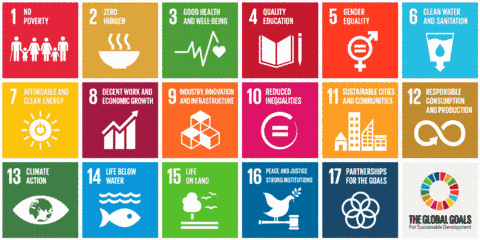
On September 25th 2015, countries adopted a set of goals to end poverty, protect the planet, and ensure prosperity for all. How is Codex working to achieve these goals? [... more]