
Publications
Publications récentes

Emerging evidence on socioeconomic outcomes
Livre/chapitre d’un livre, 2026
Social protection systems are increasingly recognized as pivotal tools for building resilience and reducing vulnerability to climate-related shocks, especially among populations in low- and middle-income countries.This literature review synthesizes recent empirical evidence on the socioeconomic...
Disponible sur:English
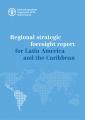
Livre/chapitre d’un livre, 2026
This report applies FAO’s strategic foresight framework to examine the long-term transformation pathways of agrifood systems in Latin America and the Caribbean. The analysis is conducted in a context marked by structural economic fragilities, persistent...
Disponible sur:English
A review of available evidence
Livre/chapitre d’un livre, 2026
This report reviews how fiscal policy repurposing – through taxes and subsidies – can be used as a lever to promote healthier diets and advance global nutrition and non-communicable diseases targets. It first maps the...
Disponible sur:English
Monitoring and Analysing Food and Agricultural Policies (MAFAP) programme
Livre/chapitre d’un livre, 2026
Sorghum is a key crop for food security, nutrition, and climate resilience in Ethiopia, yet its development potential remains largely untapped. Despite being cultivated by nearly five million farmers, positioning Ethiopia as the world’s sixth-largest...
Disponible sur:English
Application of the Environmental eXternalities ACcounting Tool (EX-ACT)
Livre/chapitre d’un livre, 2026
Assessing additionality is a critical element of project-level greenhouse gas (GHG) accounting to ensure that reported mitigation outcomes genuinely result from an intervention and would not have occurred in its absence. However, additionality in agrifood...
Disponible sur:English

An analysis using large language models
Livre/chapitre d’un livre, 2025
Since 2019, acute food insecurity has steadily increased due to climate shocks, economic disruptions, biological threats, and conflict, with fragile and crisis-affected settings most at risk. In this context, FAO has elevated resilience as a...
Disponible sur:English
Evidence from Afghanistan, Nigeria and South Sudan
Livre/chapitre d’un livre, 2025
With declining resources for humanitarian and development efforts, resilience has emerged as a priority in development programming, as it offers cost-effective means to address both immediate and long-term needs. Evidence shows that resilience frameworks are...
Disponible sur:English
Literature review
Livre/chapitre d’un livre, 2025
Representative data collection is fundamental to social science research and evidence-based policy development, yet standard survey methodologies struggle to adequately capture hard-to-reach (HTR) populations essential to understanding social inequality and economic vulnerability. This literature review...
Disponible sur:English
An overview of key commodities under the Global Environment Facility’s Food Systems, Land Use and Restoration Impact Program
Livre/chapitre d’un livre, 2025
Agrifood systems impose significant environmental, social, and health-related externalities that are not reflected in market prices, contributing to unsustainable development and threatening planetary boundaries. True Cost Accounting (TCA) is an emerging tool for quantifying these...
Disponible sur:English
FAO Monitoring and Analysing Food and Agricultural Policies (MAFAP) programme
Livre/chapitre d’un livre, 2025
This agricultural policy monitoring review for Nigeria covers the period from 2015 to 2021, analysing public expenditure on food and agriculture, and price incentives for the key food-security commodities: maize, rice and sorghum, and the...
Disponible sur:English