


Coffee from around the world
Coffee is one of the world’s most widely consumed beverages and among the most traded commodities globally, supporting millions of livelihoods, generating employment throughout the global value chain and providing an important source of revenue for many producing countries. Its significance extends beyond the daily ritual enjoyed by millions of consumers. Coffee production and trade contribute to poverty reduction, food security, women’s empowerment and economic growth in both exporting and importing countries.
Events

FAO Liaison Office with the European Union and Belgium joins partners to mark International Coffee Day in Brussels
28/09/2026
On 28 September, the UN House in Brussels brought together coffee-producing and consuming countries, EU institutions, international organizations and...

FAO headquarters hosts the inaugural celebration of International Coffee Day
01/10/2026
The event will be inaugurated by FAO Director-General QU Dongyu in the Sheikh Zayed Centre. The ceremony will bring together FAO Members and partners...
.jpg?sfvrsn=5e7b596e_2 "ICD_2026_Event Card_Geneva (1)")
FAO Liaison Office in Geneva joins Indonesia, Rwanda and Türkiye to celebrate International Coffee Day
01/10/2026
The FAO Liaison Office in Geneva, together with the Permanent Missions of the Republic of Indonesia, the Republic of Rwanda and the Republic of Türkiye...
Why International Coffee Day?
Coffee supports millions of livelihoods worldwide and plays an important economic, social and cultural role across producing and consuming countries. International Coffee Day recognizes this contribution while drawing attention to the need for a more sustainable, resilient and inclusive coffee sector, particularly for smallholder farmers.
FAO Members endorsed the establishment of International Coffee Day on 1 October, a date that traditionally marks the beginning of the coffee year and, in many producing regions, the start of the harvest. On 10 March 2026, the United Nations General Assembly officially designated 1 October as International Coffee Day through resolution A/RES/80/248.
The annual observance provides a platform to raise awareness, share knowledge and foster collaboration across the coffee value chain, bringing together producers, governments, communities, civil society, academia, international organizations and the private sector.
Did you Know?

Brazil and Viet Nam together account for nearly 50 percent of world coffee production.

The coffee sector supports the livelihoods of up to 25 million farmers and their families.


Arabica and Robusta are the two main coffee varieties produced and traded worldwide. Arabica represents approximately 60 percent of global production.

In 2024, world coffee production exceeded 11 million tonnes.

In 2024, the global value of coffee production was estimated at USD 25 billion, while world coffee trade exceeded USD 34 billion.
Source: FAO, 2026 and ICO, 2019
Key facts

Global Commodity
Coffee is one of the most widely consumed beverages in the world and among the most traded commodities globally.

Smallholder Farming
Smallholder farms are estimated to represent as much as 80 percent of coffee farms worldwide.

Farmer Livelihoods
The coffee sector supports the livelihoods of up to 25 million farmers and their families.

Economic Importance
The coffee sector generates employment throughout the value chain and is a key source of export revenues for many producing countries (see economic impact below)

Leading Producers
Brazil and Viet Nam together account for nearly 50 percent of world coffee production.

Leading Markets
The European Union and the United States of America are the largest coffee-consuming and importing markets globally.

Coffee Varieties
There are two main coffee varieties produced and traded worldwide: Arabica and Robusta.

Arabica
Arabica represents approximately 60 percent of global coffee production and is primarily used in the roast and ground coffee market.

Robusta
Robusta, typically priced lower than Arabica, is mainly used in instant coffee and for blending.
Coffee production exceeded 11 million tonnes, with approximately 8 million tonnes exported, an estimated production value of USD 25 billion and a trade value that exceeded USD 34 billion.
Which countries lead global coffee exports, and which are the largest importers?
Brazil and Viet Nam are the leading exporters, while the European Union and the United States of America are the largest importers.
How important are coffee exports for food imports?
Coffee export revenues exceeded the food import bills of Uganda and Ethiopia and represented about 20 percent of Burundi’s food import bill.
Which countries dominate global coffee trade?
Brazil, Viet Nam, Colombia, Uganda and Indonesia account for 70 percent of world exports
Where is global coffee consumption growing, and who are the largest consumers?
World coffee consumption has grown by nearly 2 percent annually over the past three decades, driven by rising demand in Asia and Africa. Brazil, the United States of America, the European Union and Japan remain the largest consumers.
Source: FAO 2026
Feature stories
Explore a collection of stories from around the world highlighting coffee and the people and communities behind every cup.
-(2).tmb-th600x400.jpg?sfvrsn=619e6f7a_1 "uf1c4kj-kibeho-fao-rwanda-2026-(18)-(2)")


Publications
Explore a collection of FAO publications covering coffee production, markets and trade, value chains, traceability, innovation, climate and livelihoods around the world. Availability and language versions may vary by publication.

Price dynamics in global beverage markets: Trends, drivers and consequences
2026
Current analysis of prices, market shocks and global value chains.

Global coffee market and recent price developments
2025
A clear global overview of coffee markets, production and recent price movements.

Strengthening coffee traceability in Rwanda to boost trade compliance
2026
Traceability, digital tools and international trade requirements.

GIES GI-protected Baoshan Arabica coffee branding in Xinzhai village, China | One Country One Priority Product - Case Study Series
2026
Geographical indications, origin, branding and local value addition.

Seed to sip: Arabica coffee production guide for Saudi Arabia
2026
Practical guidance covering coffee production from establishment through harvesting and processing.

Panama: Coffee | One Country One Priority Product
2024
Coffee’s economic, cultural and environmental importance in Panama.

Coffee Value Chain in Yemen | Export potential and investment opportunities - Assessment Report
2024
Coffee heritage, value-chain opportunities and sector development.
Multimedia
Explore a collection of videos highlighting coffee and the people and communities behind it, from traditional knowledge and innovation to the contributions of women farmers across agrifood systems.
Behind Every Cup of Coffee | International Coffee Day 1 October
06/10/2026
The aroma of freshly brewed coffee. The warmth of a cup in your hands. That first sip. Coffee is more than a drink. It’s a connection.
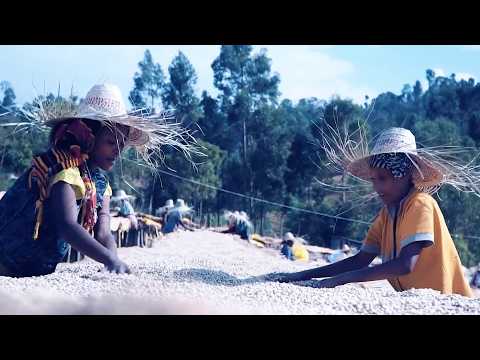
About the Act Coffee Programme
01/07/2026
Economically and culturally, we are all connected by coffee. It is one of the most traded commodities in the world and supports millions of livelihoods across the African continent.

Uplifting Indigenous Coffee Farmers in Panama: A Blend of Tradition and Innovation
02/09/2024
Coffee has long been an important economic activity for many Indigenous Peoples in Panama.
.jpg?sfvrsn=1a8f09ed_2)
News
First UN International Coffee Day celebrates the people behind every cup
FAO and partners highlight coffee’s role in supporting livelihoods, sustainable agrifood systems and trade, while celebrating its cultural significance and recognizing the essential role of women

.tmb-th600x400.jpg?sfvrsn=4565e600_1 "55562878826_4b7b3b1ddb_o (1)")
International Coffee Day 2026
01/10/2026
Inauguration Ceremony of the International Coffee Day, Celebrating Coffee, Honouring the People Behind Every Cup
Related links
See also
Learn more
- Globally Important Agricultural Heritage Systems
- The Hand-in-Hand Initiative
- One Country One Priority Product (OCOP)
- UNIDO | The ACT Coffee Programme