


Gender analysis, gender mainstreaming and the project cycle
The Food and Agriculture Organization of the United Nations (FAO) Policy on Gender Equality 2020–2030 recommends that “all projects and programmes integrate gender-related results and indicators, based on the findings of a gender analysis”. The formulation and implementation of these projects and programmes are guided by specific gender requirements established by the FAO project cycle (minimum standard 8 from the Policy).
Gender mainstreaming in the project is a strategy for making women’s and men’s concerns and experiences an integral dimension of the project cycle. It involves engaging them in the design and planning of project activities, so that they can benefit equally and inequalities are not perpetuated and exacerbated.
Addressing gender issues in the project is essential for providing equal access to productive resources, services and technologies, as well as equal opportunities to participate in planning and decision-making, so that both men and women can benefit from the expected outputs and/or outcomes. It aims at providing robust evidence of women’s and men’s specific priorities and responsibilities, thereby reducing the risk of designing a project based on incorrect assumptions and stereotypes. Additionally, it is imperative to consider intersectionality, recognizing how gender intersects with other social identities, leading to distinct experiences of discrimination or privilege. Moreover, it provides insights on how men and women are affected by the problem identified, so that solutions are informed by this information.
Conducting a gender analysis during project formulation means considering the roles of men and women and understanding:
- What roles they play in and outside of the household.
- What resources they have access to.
- What their needs and priorities are.
- What the power relations are and how decisions are taken.
Gender analysis provides the basis to address gender inequalities in projects and can be conducted at the household, community and national levels across different life stages.
The seven steps required to formulate a gender-responsive project are the following:
- Conduct a comprehensive gender analysis, engage with stakeholders, and identify potential gender-based challenges that might affect participation and benefits from the project.
Incorporate gender analysis findings into the project strategy, develop actions to address gender-based challenges, and aim for clear gender-related outcomes in the project's framework.
Design and implement a gender-sensitive monitoring framework with indicators that track project engagement and benefits across all genders, ensuring gender objectives are consistently met.
Allocate and prioritize a budget that supports gender-related activities and initiatives promoting gender equality.
Clearly define gender-related responsibilities for project staff and ensure the availability of gender expertise to guide and support the project's direction.
Assign a gender marker and integrate gender-responsive goals, indicators, and actions into the project's overarching framework, ensuring gender considerations are central.
Execute the project with a consistent focus on gender-related outcomes, periodically reviewing and adjusting activities based on feedback and monitoring insights.
- It is crucial to understand how a project might influence the role and status of rural men and women, especially the most vulnerable, who are at high risk of rural poverty and food insecurity. Recognizing the intersectionality of gender with other social identities such as age, ethnicity, and socioeconomic status is crucial. . To achieve the desired impacts, plan for gender-responsive outcomes, outputs, activities and indicators, and monitor their progress.
- Addressing gender issues in a project means targeting the needs and priorities of men and women and analyzing their access to and control over productive and natural resources, services and decision-making power, as well as how they allocate time to different activities.
- To achieve gender equality and women’s empowerment, gender issues need to be addressed at the beginning of the project and throughout the project cycle. Monitoring and evaluating potential gender impacts must also be considered, as well as taking corrective measures, if needed, during project implementation, in order to leave no one behind.
- Analyze the different needs and priorities of men and women at project identification.
- Collect sex-disaggregated baseline data.
- Plan specific gender-related outcomes, outputs and activities to address the identified gender inequalities and include a specific budget to implement them.
- Identify gender-sensitive indicators to monitor progress and evaluate gender-related results and impacts.
- Consult men, women and local institutions during stakeholder analysis, to collect their views and identify how to best engage them in the implementation of the project.
- Include gender-related tasks and responsibilities in the Terms of Reference of the project team, when relevant, or make sure gender expertise is available or recruited to support the implementation of the project, if it focuses on gender equality and women’s empowerment.
- FAO. 2001. SEAGA project cycle management. Technical guide.
- FAO. 2009. Gender equity in agriculture and rural development. A quick guide to gender mainstreaming in FAO’s new strategic framework.
- FAO. 2014. SEAGA Rural household ad resources guide. A guide for extension workers.
- FAO. 2015. Environmental and social management guidelines.
- FAO. 2015. Mainstreaming gender into project cycle management in the fisheries sector. Field manual.
- FAO. 2017. Guide to mainstreaming gender in FAO’s project cycle.
- FAO. 2017. Gender mainstreaming and human rights-based approach. Guidelines for technical officers.
- FAO. 2017. Guidelines of the assessment of gender mainstreaming. FAO Office of Evaluation.
- FAO. 2018. What gender mainstreaming means in practice: Cases from selected countries of the European Union.
- FAO. Ensuring Quality Projects: United Nations Common Country Programming Principles (Essential Principles) (FAO)
- FAO. Ensuring Quality Projects: UN Common Country Programming Principles–Full Programme (FAO)

Country Assessment
Angola: National gender profile of agriculture and rural livelihoods (Country Gender Assessment Series)
01/08/2023
In Angola around 80 percent of farmers are smallholders, so the agriculture sector still represents an important source of income, employment and food...

Publications
2022 in Review - Joint Programme on Gender Transformative Approaches for Food Security and Nutrition
01/06/2023
The 'JP GTA - 2022 In Review' offers a snapshot of the milestones, achievements and activities of the Joint Programme over the course of the past year,...

Country Assessment
Bhutan: Country Gender Assessment of agriculture and the rural sector (Country Gender Assessment Series)
17/05/2023
Bhutanese women are vital players in the food security and nutrition landscape. However, there still remain gender inequalities and constraints. This...

Publications
The status of women in agrifood systems
13/04/2023
Moving beyond agriculture, The status of women in agrifood systems reflects not only on how gender equality and women’s empowerment are central to the...

Publications
The status of women in agrifood systems - Overview
13/04/2023
This report provides the latest data, lessons learned and recommendations for policy and decision makers about gender in agrifood systems. It reviews...
-of-guyana.jpg?sfvrsn=9a50b3bc_1 "A snapshot of gender affairs in the agriculture and rural sector (ARS) of Guyana")
Publications
A snapshot of gender affairs in the agriculture and rural sector (ARS) of Guyana
01/04/2023
In alignment with the FAO Policy on Gender Equality 2020–2030, the Assessment describes women’s and men’s specific roles and opportunities in agriculture,...

Publications
A snapshot of gender affairs in the agriculture and rural sector (ARS) of Guyana
01/04/2023
In alignment with the FAO Policy on Gender Equality 2020–2030, the Assessment describes women’s and men’s specific roles and opportunities in agriculture,...

Country Assessment
Palau: Country gender assessment of agriculture and the rural sector (Country Gender Assessment Series)
01/04/2023
This abstract outlines the objectives of an assessment conducted by the Food and Agriculture Organization (FAO) of the United Nation in Palau.

Country Assessment
Guyana: Country gender assessment of the agriculture and rural sector (Country Gender Assessment Series)
01/03/2023
In alignment with the FAO Policy on Gender Equality 2020-2030, the Assessment describes women’s and men’s specific roles and opportunities in agriculture,...

Country Assessment
United Republic of Tanzania: National gender profile of agriculture and rural livelihoods (Country Gender Assessment Series)
01/03/2023
The Government of the United Republic of Tanzania recognizes that sustainable development cannot be achieved without attaining gender equality; hence,...

Publications
JP RWEE Good Practices, Phase 1 - Joint Programme: Accelerating Progress towards Rural Women’s Economic Empowerment
01/10/2022
This booklet shares selected good practices from each of the phase one countries on a number of thematic areas of intervention, including climate smart...

Publications
Regional Gender Strategy and Action Plan 2022–2025 for Asia and the Pacific
01/10/2022
The strategy and action plan includes the two-year action plan for the region and the action and outreach plan which shows how FAO intends to reach...

Country Assessment
The Republic of Azerbaijan: Gender, agriculture and rural development (Country Gender Assessment Series)
20/09/2022
This Country Gender Assessment (CGA) for Azerbaijan is an important resource in shaping efforts to achieve the common goal of a more prosperous rural...

Publications
Gender mainstreaming in agriculture and food security: FAO Türkiye’s experiences 2021
23/08/2022
In response to the challenges outlined above, FAO Türkiye – as mandated by its national and international commitments on gender quality – cooperates...

Publications
2021 in Review - Joint Programme on Gender Transformative Approaches for Food Security and Nutrition
01/08/2022
This booklet presents the second annual review of the achievements of the EU-RBA Joint Programme on Gender Transformative Approaches for Food Security...

Country Assessment
The Republic of Moldova: Gender, agriculture and rural development (Country Gender Assessment Series)
05/05/2022
This Country Gender Assessment (CGA) for the Republic of Moldova reflects FAO’s commitment to promoting gender equality, while integrating a gender...

Publications
FAO’s work on gender in forestry
23/04/2022
This brochure shows how the different initiatives, programmes and projects of the FAO Forestry Division mainstream gender into their implementing activities...

Publications
A methodological guide for mapping women's small-scale fishery organizations to assess their capacities and needs
20/01/2022
The purpose of this methodological guide is to outline how to conduct an empirical assessment of the current landscape of women’s small-scale fishery...

Country Assessment
Country Gender Assessment of the Agriculture and Rural Sector: Egypt – Brief
17/01/2022
This brief is a summary of the Country Gender Assessment of Agriculture and the Rural Sector for Egypt.The CGA provides up-to-date information on the...
Country Assessment
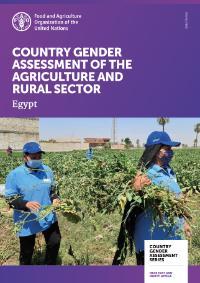
Egypt: National gender profile of agriculture and rural livelihoods (Country Gender Assessment Series)
17/12/2021
This Country Gender Assessment describes the specific roles and responsibilities that women and men perform in agriculture and documents the main gender...