


Land Cover Legend Registry

Land cover information has been playing an important role in the achievement of Sustainable Development Goals (SDGs). Maintaining and restoring land resources can play a vital task in tackling climate change, securing biodiversity and maintaining crucial ecosystem services, while ensuring resilient livelihoods and food security. According to the United Nations Global Geospatial Information Management (UN–GGIM), assessing land cover is essential and is one of the 14 fundamental geospatial data themes of the United Nations (UN).
In this context, there are many different land cover legends (LCLs) and land cover classification schemes used to classify land cover. However, in many practical situations, the rigidity and vagueness of traditional land cover classifications based on names and relative text description limit the interoperability between different LCLs and contribute to the inconsistency of land cover information at regional and global levels. Therefore, there is a need to develop a platform with updated land cover datasets along with harmonized LCLs to address regional and worldwide land monitoring requirements and environmental issues.
As a part of this effort, the Food and Agriculture Organization of the United Nations (FAO) has developed a Land Cover Legend Registry (LCLR). This open–source web catalogue is the first world’s largest repository of harmonized national, regional and global LCLs with detailed information of LCL class and is linked with original land cover datasets.

Figure 1: User interface of land cover legend registry (LCLR)
The contents in the table are extracted from the original register:
- ID: the unique identifier;
- Alpha code: (label) an alphanumeric identifier permanently associated with the concept of a registered item;
- Status: the registration status of the RegisterItem from the code list StatusCode;
- Name: a character string containing a compact and human-readable designator that is used to denote a register concept. The name should be unique within a register. Multiple items of the same item class may use the same value for name but only one such item may have a status of "Valid";
- Description: an optional character string containing a more detailed description of the object;
- Legend type: an indicator of the type of legend used;
- Class code: the code for LCL class;
- Country: the country or region to which this legend applies;
- Country code (M49): the country code for the country or region from ISO 3166 three character country codes;
- File: the LCL format in which legend or class data is available; and
- Source reference: the optional reference to source.
Publications

Land Cover Legend Registry (LCLR) Functionalities and legend preparation - User guide
21/09/2023
In 2021, FAO launched the land cover legend registry (LCLR), the world's first repository of harmonized national, regional, and global land cover legends, adhering to ISO 19135 standards. This online...

2021 land cover map of Chipipa, Angola
13/01/2023
The 2021 land cover map of Chipipa, Angola has been developed as part of the process of land degradation assessment in the area from 2001 to 2021. A stratified random...

Register implementation for land cover legends
12/08/2021
Land cover assessment and monitoring of its dynamics are essential requirements for the sustainable management of natural resources, environmental protection, food security, humanitarian programmes as well as core data for...
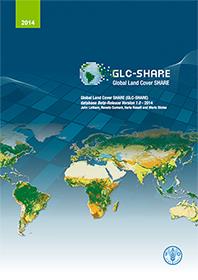
Global Land Cover Share (GLC-SHARE)
10/04/2014
The Global Land Cover-SHARE (GLC-SHARE) is a new land cover database at the global level created by FAO’s Land and Water Division in collaboration with various partners and institutions. It...
E-learning course

Using land-cover information to monitor progress on Sustainable Development Goal 15
06/03/2024
This course seeks to provide a basic understanding of land-cover data and its use for monitoring progress towards the achievement of international agreed...
News

Mapping land cover in Tunisia: In the context of the Soil Land and Water Digital Information System initiative
15/05/2024
A new report has unveiled a detailed land cover map of Tunisia, highlighting key agricultural areas such as cultivated land, olive trees, date palms,...

Training workshop on Somalia land cover legend: Adopting International Standards and FAO Software
25/01/2024
In recent years, the importance of accurate and up-to-date land cover information has become increasingly evident, especially in countries like Somalia...

Virtual consultation on the land cover mapping for Yemen
18/10/2023
Land cover and land use information is a vital information for governments, agencies and institutions of a country to make informed decisions, promote...

Launch of West African Land Cover Reference System publication
22/07/2022
The Food and Agriculture Organization of the United Nations (FAO), the Regional Center for Agrometeorology, Hydrology and Meteorology (AGRHYMET), the...

Land Cover Atlas of Jordan provides valuable baseline to monitor future land changes
19/07/2019
A new atlas expanding the coverage database of the Hashemite Kingdom of Jordan is providing valuable baseline reference data that will support monitoring...

Training on accuracy assessment of the updated national land cover of JORDAN
19/09/2017
The training course on land cover mapping and accuracy assessment was organized by the Geospatial Unit of FAO from 19-21 September under the Regional...