


Our work
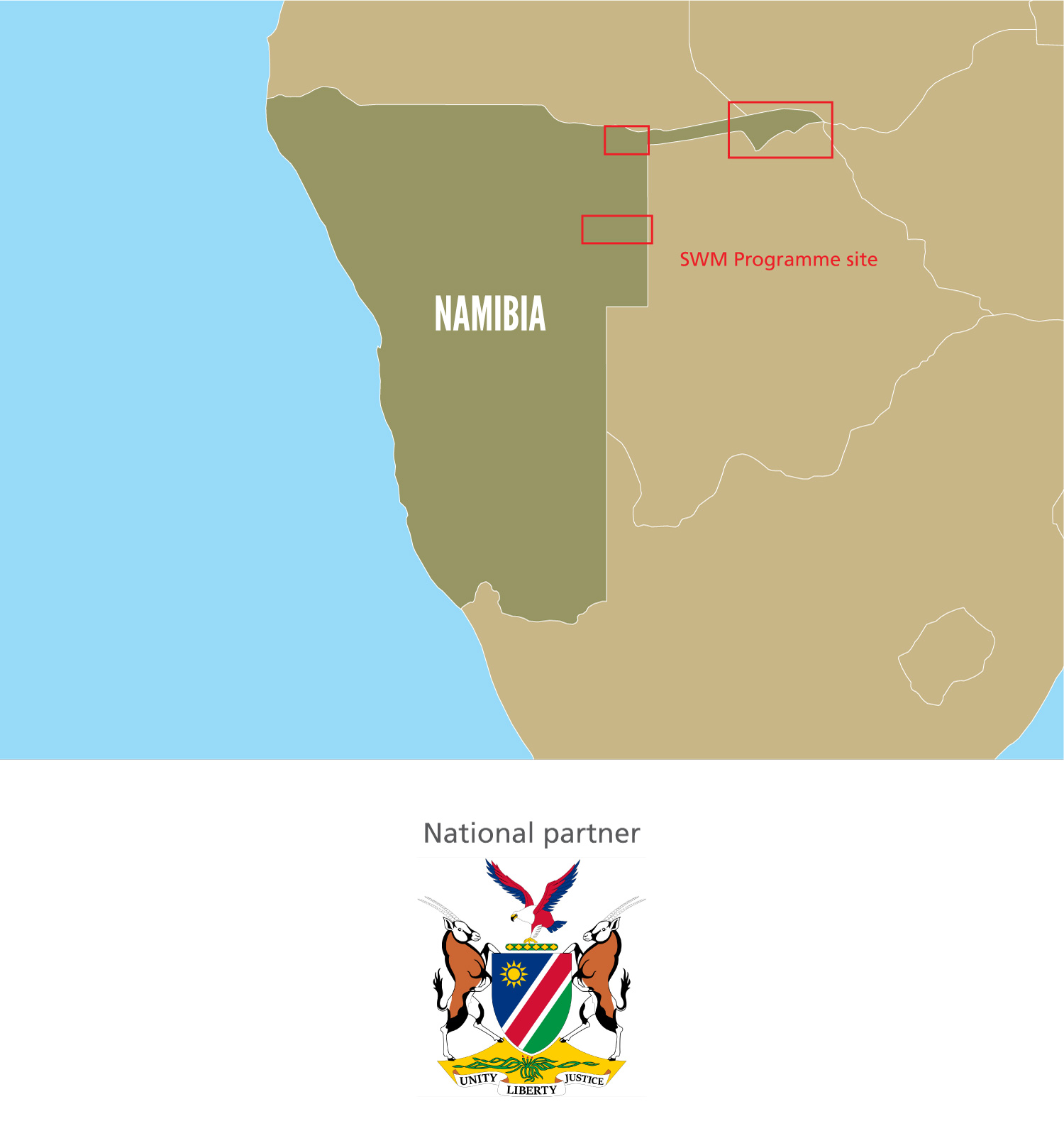
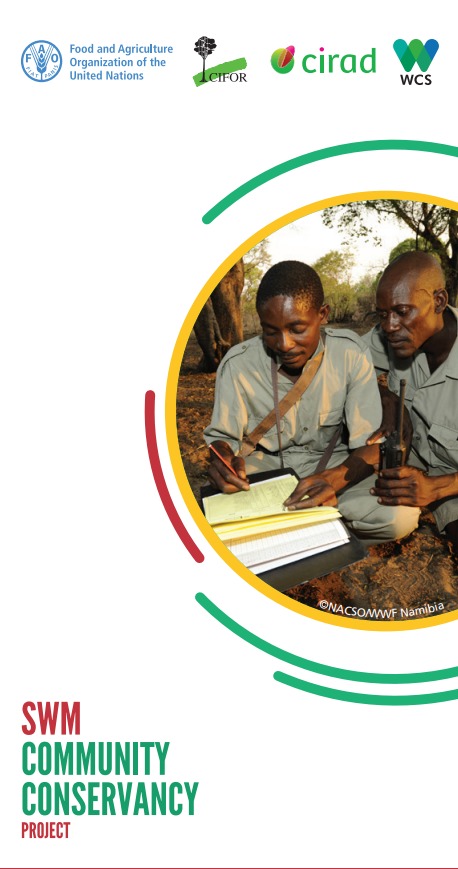
The SWM Programme in Namibia is part of the SWM Community Conservancy Project, a regional initiative focused on harmonizing wildlife conservation with food security and enhancing local livelihoods. Implemented in the Kavango–Zambezi Transfrontier Conservation Area, the Namibia site includes 12 community conservancies and one community-based organization. This site is located within key transboundary wildlife corridors that support the free movement of wildlife. The project strengthens the community conservancy model, promoting local governance and sustainable wildlife management. It aims to empower communities through improved legal and institutional frameworks, enhancing their capacity to manage and benefit from their wildlife heritage sustainably.
Who we work with
The SWM Programme in Namibia collaborates with 12 community conservancies and one community association in Bwabwata National Park. Field activities are coordinated by the Food and Agriculture Organization of the United Nations (FAO) and implemented by the World Wide Fund for Nature (WWF) Namibia, in partnership with the national government and the Namibian Association of CBNRM Support Organisations.

Community rights and governance
A comprehensive review and analysis of nearly 200 legal texts relevant for sustainable wildlife management was completed and validated by the Government of Namibia in 2025 and is now published on the SWM Programme Legal Hub for Namibia. The results of this analysis are expected to support the updating of Namibia’s legislation, including for nature conservation and wildlife. Further, the report on customary law for natural resource management is also part of the legal activities conducted by the SWM Programme.

Adaptive wildlife management
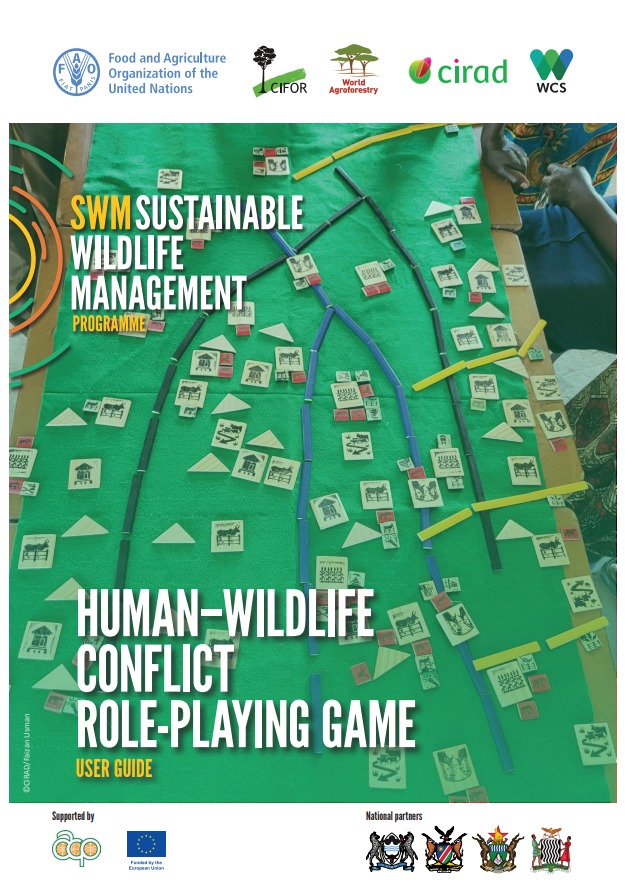
The SWM Programme supports community wildlife management plans, including annual game counts, daily patrols, livestock grazing schemes, human–wildlife conflict interventions and wildlife monitoring. This data informs adaptive management actions and the need for updates to wildlife quotas by the Ministry of Environment, Forestry and Tourism. The SWM Programme also aids the Salambala Community Conservancy in establishing a fisheries reserve on the Chobe River to reduce pressures from overfishing, with annual fish surveys supported by the SWM Programme.

Healthy and sustainable supply chains and consumption
The SWM Programme supports chili production value chains in four community conservancies (Kwandu, Mashi, Balyerwa and Wuparo). In the Zambezi region, 51 small-scale poultry producers (80 percent women) received training and mentorship in poultry production, including sanitation practices, vaccination and poultry house construction. Lima Farms acquired a 1 000-egg incubator with support from the SWM Programme. In the Kavango region, 72 community members, mostly women and youth, were trained in goat husbandry, animal health and nutrition.

Zoonotic risk prevention and management
A feedlot was developed in the Dzoti Conservancy that doubles as a 30-day quarantine for cattle before they reach the market. The cattle that enter the quarantine are subject to daily health checks for animal diseases. To date, a consignment of 17 cattle has been successfully trialed through the Dzoti feedlot.
Publications

Supported by


Consortium partners


©2025 FAO, CIRAD, CIFOR-ICRAF and WCS. The views expressed herein can in no way be taken to reflect the official opinion of the European Union. The information on this portal is provided for the convenience of users. Hence, FAO, CIRAD, CIFOR and WCS are not responsible for its accuracy, nor for any use of such information by users. See full disclaimer.