


Our work
The SWM Programme supports the establishment and management of the Mize Community Conservancy (MiCC) in the Nyawa Chiefdom of Kazungula District, Southern Province of Zambia. The aim is to achieve community-led sustainable wildlife management within a degraded wildlife corridor connecting Kafue National Park to neighbouring Kavango–Zambezi protected areas. Activities focus on restoring wildlife populations, improving habitat and game management, and enhancing community livelihoods through fish farming, beekeeping and livestock development. The SWM Programme also seeks to mitigate human–wildlife conflict and strengthen food security. The MiCC model forms part of the broader SWM community conservancy initiative implemented regionally in Botswana, Namibia, Zambia and Zimbabwe, promoting sustainable land-use planning, legal game meat value chains and inclusive community governance.
Who we work with
In Zambia, the SWM Programme collaborates with the Nyawa Chiefdom, encompassing 500 villages. The Center for International Forestry Research and World Agroforestry (CIFOR-ICRAF) coordinates field activities in partnership with the national government.


Community rights and governance
A comprehensive review of 354 legal texts on wildlife and related sectors was completed, validated and published on the SWM Legal Hub in 2023. This review informed the successful registration of the Mize Community Conservancy under the Wildlife Act, covering 585 km². In 2024–2025, a comprehensive customary law analysis was conducted across Nyawa Chiefdom, engaging 57 participants from 20 villages, including senior headmen, women and youth. Ten new community resource board members (three women) were elected, and governance structures were strengthened through exchange visits and training supported by Peace Parks Foundation and the Wildlife Producers Association of Zambia.

Adaptive wildlife management
Twelve natural resource monitors were trained in ecological monitoring, data management and the use of Spatial Monitoring and Reporting Tool (SMART) for adaptive management. Ten community scouts (two women) were recruited for training by the Department of National Parks and Wildlife to support wildlife protection and patrols. Boundary mapping and a survey of the MiCC were completed as part of the management planning process. Preparations for fencing and restocking a 10 000 hectare community wildlife sanctuary are underway with Peace Parks Foundation. It will serve as a breeding and income-generating area.

Healthy and sustainable supply chains and consumption
Baseline assessments on non-timber forest products, aquaculture and small livestock value chains guided new enterprise development plans. Five fish farming groups were established, one was formally registered as a cooperative and nine ponds were stocked with over 11 000 fingerlings. Beekeeping cooperatives installed 60 modern hives across three sites. Training in financial literacy, record-keeping and cooperative governance reached more than 100 participants. These enterprises now contribute to improved household nutrition and income security while reducing dependence on wild meat and pressure on wildlife populations.

Zoonotic risk prevention and management
The SWM Programme applies a multisectoral One Health approach to reduce zoonotic risks in Nyawa Chiefdom. Three surveys involving 308 participants assessed livestock management, meat handling and consumption practices. Results informed the design of the 2025 anthrax and trypanosomiasis study with the Central Veterinary Research Institute and the Tsetse and Trypanosomiasis Control Unit. Water points and spray races are being developed to reduce disease transmission between livestock and wildlife. Training on safer butchery, food preparation and human–wildlife interaction reached 22 community representatives.
Publications

Customary law: Customary norms and practices to strengthen the sustainable use and management of wildlife resources in Nyawa chiefdom
10/2026
Knowledge of the customary norms and practices in the Nyawa chiefdom is critical to thoroughly identify gaps and opportunities for the sustainable use...


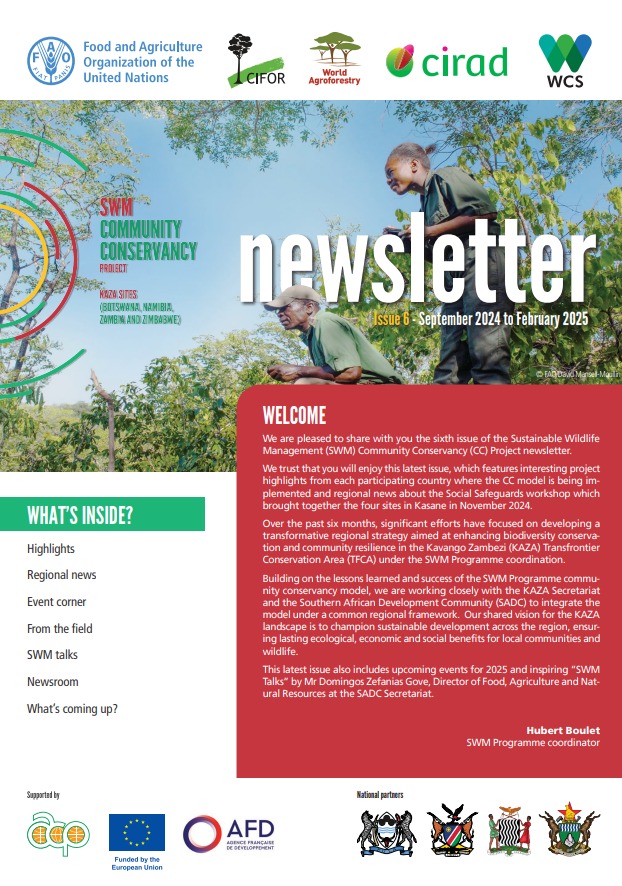
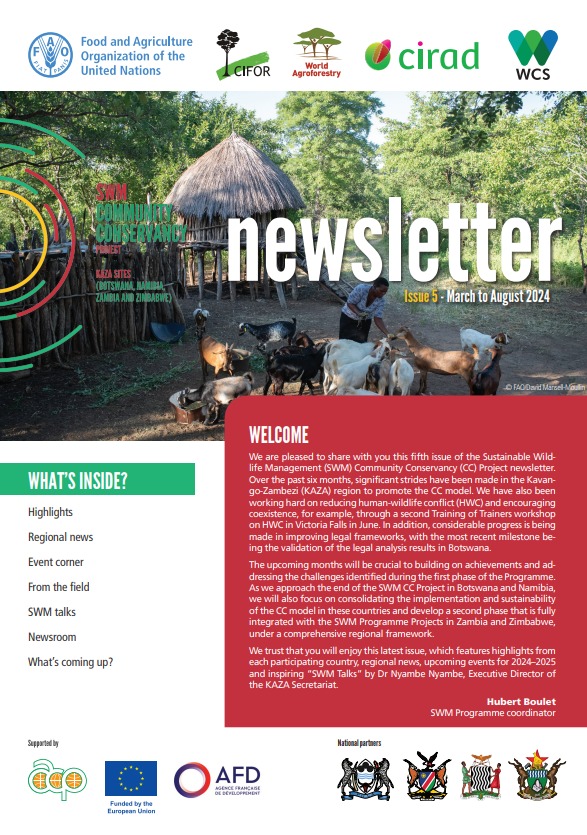

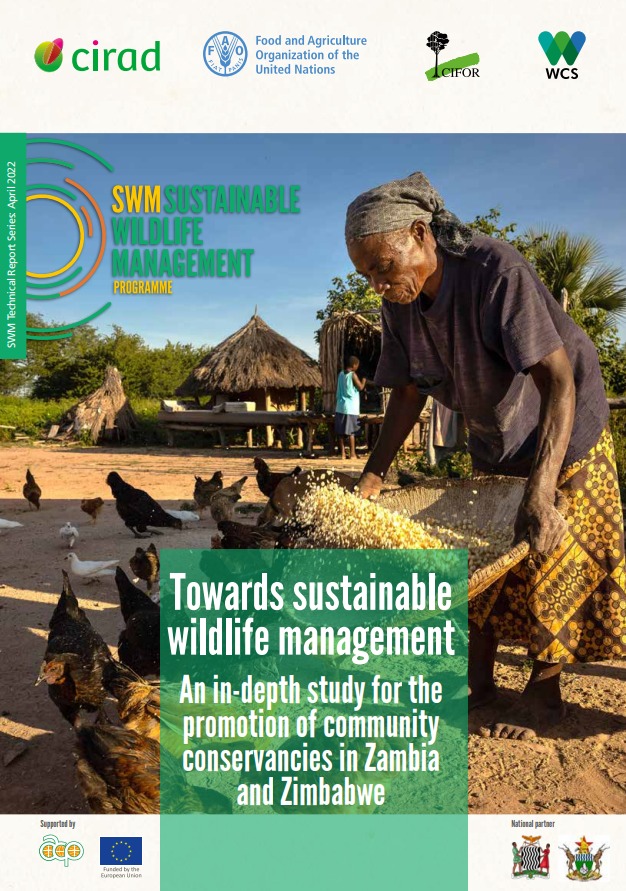
Videos
Conserving wildlife and improving livelihoods through beekeeping in southern Zambia
19/05/2026
Discover how sustainable beekeeping in Southern Zambia is helping protect forests, support biodiversity, and strengthen community livelihoods.
How Spray Races Are Protecting Cattle, Livelihoods and Wildlife in Zambia
21/01/2026
In Zambia’s Kazungula District, where livestock and wildlife share the same landscapes, tick-borne diseases can devastate cattle and farmers’ incomes....
An interview with Evans Muhanga, Permanent Secretary, Ministry of Tourism, Zambia
26/06/2025
This interview is one of a series of interviews showcasing the work of the SWM Programme and the role of the Legal Hub in supporting ongoing policy...
Supporting community and wildlife coexistence in Southern Africa
24/02/2023
The Kavango–Zambezi (KAZA) Transfrontier Conservation Area is one of the largest conservation areas in the world, spanning the international borders...
Supported by


Consortium partners


©2025 FAO, CIRAD, CIFOR-ICRAF and WCS. The views expressed herein can in no way be taken to reflect the official opinion of the European Union. The information on this portal is provided for the convenience of users. Hence, FAO, CIRAD, CIFOR and WCS are not responsible for its accuracy, nor for any use of such information by users. See full disclaimer.