


Publications
Highlights

Action Plan 2026–2029 for the implementation of the FAO Science and Innovation Strategy
01/2026
The Action Plan 2026-2029 for the implementation of the FAO Science and Innovation Strategy guides the implementation of the FAO Science and Innovation Strategy. It provides a common framework for FAO action at the country, sub-regional, regional and global levels.

FAO Science and Innovation Strategy
10/2022
The Strategy aims to strengthen FAO’s work on science and innovation by providing Organization-wide guidance, coherence and alignment on science and innovation. Science and innovation serve as a foundation for the FAO Strategic Framework 2022–31 and have cross-sectoral relevance across the Organization’s programme of work.
-
The State of Food Security and Nutrition in the World 2026
Jul 22, 2026, 09:07 AM -
The status of women in agrifood systems in sub-Saharan Africa
Apr 17, 2026, 13:50 PM -
Global Agrifood Implications of the 2026 Conflict in the Middle East
Mar 23, 2026, 10:32 AM -
Developing and promoting sustainable agricultural production and natural resources management technologies
Mar 16, 2026, 18:03 PM -
MAINSTREAM: Mission-oriented agrifood innovation systems for sustainability transition through agroecology
Mar 16, 2026, 17:30 PM -
Sowing seeds of equality
Mar 5, 2026, 10:40 AM -
Guidelines for gender integration in Farmer Field Schools
Mar 5, 2026, 10:25 AM -
Developing agricultural innovation and extension policies for transforming agrifood systems
Mar 2, 2026, 11:50 AM -
Highlights of science and innovation in FAO’s work
Feb 9, 2026, 11:24 AM -
Action Plan 2026–2029 for the implementation of the FAO Science and Innovation Strategy
Jan 7, 2026, 15:51 PM -
Agrifood Systems Technologies and Innovations Outlook (ATIO)
Dec 10, 2025, 10:58 AM -
Transforming agrifood systems through science and innovation- A Strategic Partnership with Wageningen University & Research (WUR)
Nov 5, 2025, 15:01 PM -
The State of Food and Agriculture 2025
Nov 5, 2025, 13:39 PM -
The Status of Youth in Agrifood Systems
Jul 9, 2025, 07:14 AM -
Science and Innovation Forum 2024: A Roadmap to Transformation
Jun 10, 2025, 14:07 PM -
Guidance on integrated pest management for the world’s major crop pests and diseases
May 26, 2025, 07:41 AM -
Global Report on Food Crises 2025
May 19, 2025, 10:29 AM -
Investing in trade digitalization: the case of ePhyto
Mar 24, 2025, 16:03 PM -
Multistakeholder policy dialogue to promote innovation in agrifood systems
Feb 27, 2025, 11:13 AM -
SHARP+ resilience assessment in the United Republic of Tanzania in the districts of Kaliua, Mlele, Sikonge and Urambo
Feb 27, 2025, 10:53 AM

The status of women in agrifood systems in sub-Saharan Africa
04/2026
The status of women in agrifood systems in sub-Saharan Africa provides the latest data, policy highlights and recommendations for policy- and decision-makers about gender in agrifood systems in sub-Saharan Africa.

Global Agrifood Implications of the 2026 Conflict in the Middle East Impacts on energy and fertilizer trade, and food security
03/2026
The escalation of conflict in the Islamic Republic of Iran and the Middle East has sharply increased risks to global energy, fertilizer, and agrifood systems. The Strait of Hormuz, a critical chokepoint for oil, gas, and fertilizers, has already seen disruptions that are raising energy and agricultural input costs worldwide.

Guidelines for gender integration in Farmer Field Schools Towards gender transformative programmes
03/2026
Women are central to agrifood systems, yet persistent gender inequalities continue to limit their access to agricultural extension, resources and decision-making. At a time when closing gender gaps could improve food security for 45 million people, these guidelines show how Farmer Field Schools (FFS) can move from gender-blind implementation to gender-transformative impact.

Sowing seeds of equality A global stocktaking of the integration of gender in Farmer Field School interventions
03/2026
FAO and CARE USA collaborated in conducting a gender stocktaking exercise to enhance understanding of gender equality integration within Farmer Field School (FFS) programmes. The primary objective of this exercise was to better understand the extent to which FFS have addressed the different needs of men and women in their design and implementation and what further steps are required to advance gender-transformative results for both men and women

Developing agricultural innovation and extension policies for transforming agrifood systems Insight into key areas of action
03/2026
This publication provides a set of orientations for member countries to develop agricultural innovation and extension policies to underpin agrifood systems transformations towards sustainability, highlighting key policy areas. This publication is to be used as a reference for tailored policymaking according to specific country contexts.

MAINSTREAM: Mission-oriented agrifood innovation systems for sustainability transition through agroecology
03/2026
This brochure presents the EU-funded MAINSTREAM project, implemented by FAO to support governments in operationalizing national agroecology strategies by strengthening innovation ecosystem and strategic innovation capacities and fostering mission-led collaboration across national, regional, and global levels.

Developing and promoting sustainable agricultural production and natural resources management technologies Lessons from FAO–JIRCAS collaboration
03/2026
This policy brief is part of the mutual efforts in disseminating science-based knowledge and information, leveraging the Japan International Research Center for Agricultural Sciences (JIRCAS)’s scientific expertise and FAO’s global outreach, as envisaged under the memorandum of understanding. It highlights recent JIRCAS achievements across its three major research programmes and showcases ongoing FAO–JIRCAS collaborations.
Action Plan 2026–2029 for the implementation of the FAO Science and Innovation Strategy
01/2026
The Action Plan 2026-2029 for the implementation of the FAO Science and Innovation Strategy guides the implementation of the FAO Science and Innovation Strategy. It provides a common framework for FAO action at the country, sub-regional, regional and global levels.

Highlights of science and innovation in FAO’s work
01/2026
The Highlights of science and innovation in FAO’s Work report was developed to illustrate the breadth and depth of science and innovation in FAO’s efforts. The FAO Science and Innovation Strategy is a key tool to support the implementation of the FAO Strategic Framework 2022-31. The report presents examples of FAO's work that reflect the Strategy’s broad scope, inclusive of all scientific disciplines and all types of innovation.
--use-case-analysis.jpg?sfvrsn=4a253a2c_11 "ATIO-use case analysis")
Agrifood Systems Technologies and Innovations Outlook (ATIO) Use cases analysis for the ATIO Knowledge Base: personas, content needs and search journeys
12/2025
The ATIO Knowledge Base (KB) was co-designed through a participatory consultation process to ensure it meets the diverse needs of its users. The use cases identified span a wide range of stakeholders, including researchers, policymakers, farmers, NGOs, youth, investors, and private sector actors, each with distinct information needs and search behaviors.
.png?sfvrsn=60720200_9 "Transforming agrifood systems through science and innovation A Strategic Partnership with Wageningen University & Research (WUR)")
Transforming agrifood systems through science and innovation- A Strategic Partnership with Wageningen University & Research (WUR)
11/2025
This publication highlights the strategic collaboration between FAO and Wageningen University & Research (WUR) to advance sustainable agrifood systems through science, innovation, and capacity development.

The State of Food and Agriculture 2025 - Addressing land degradation across landholding scales
11/2025
The 2025 edition of The State of Food and Agriculture explores the theme “Addressing land degradation across landholding scales”. It examines the implications of human-induced land degradation for agricultural production, producers of all scales and vulnerable populations.

The Status of Youth in Agrifood Systems
07/2025
Young people stand at the heart of a rapidly changing world. They have the vision, energy and entrepreneurial spirit to find new and innovative ways to cultivate, create, package and transport the food we all need. If adequately nourished, educated, equipped with resources and involved in decision-making, young people can drive economic transformation and global prosperity.

Guidance on strengthening national science–policy interfaces for agrifood systems
06/2025
In line with its Science and Innovation Strategy, FAO has developed this guidance on strengthening science–policy interfaces (SPIs) for agrifood systems at the national level, helping to ensure that effective policy decisions are made based upon sufficient, relevant, and credible science and evidence.

Science and Innovation Forum 2024: A Roadmap to Transformation
06/2025
The Science and Innovation Forum (SIF) 2024 Report captures the key outcomes and insights from one of the cornerstone events of the World Food Forum (WFF), held from 14–18 October 2024. Under the theme “Inclusive Science and Innovation for Agrifood Systems Transformation, Leaving No One Behind,” the report explores how inclusive, equitable, and accessible science and innovation can drive sustainable change in global agrifood systems.

Guidance on integrated pest management for the world’s major crop pests and diseases
05/2025
In this volume, FAO has compiled integrated pest management (IPM) measures for eight global priority pests and pathogens, based upon geographical distribution, severity and societal importance. Each chapter offers a ‘bundle’ of IPM solutions for the principal pest threats of cereal grains, potato, fruits and vegetables.

Global Report on Food Crises 2025
05/2025
This Global Report on Food Crises is another unflinching indictment of a world dangerously off course. Hunger is not an emergency confined to certain pockets of the world or periods of time. It is fast becoming a scar etched into the lives of millions around the globe. Fueled by conflict, geopolitical tensions, climate chaos, environmental vulnerabilities, and economic upheaval, food and nutrition crises define the lives of millions– not for weeks or months, but for years and even lifetimes.

Investing in trade digitalization: the case of ePhyto
03/2025
Global trade in plants and plant products is rapidly expanding – more than doubling in some cases – and set to grow another 11 percent by 2032. Yet, many countries still employ mostly manual rather than electronic means for issuing the phytosanitary certificates required to trade goods internationally. Relying on paper slows applications for and delivery of these certificates.
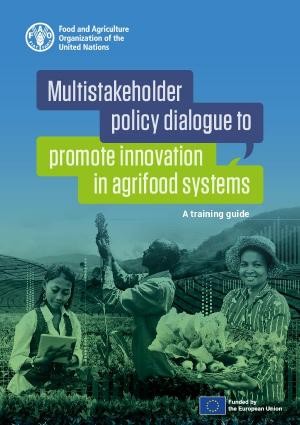
Multistakeholder policy dialogue to promote innovation in agrifood systems
02/2025
Many agrifood development projects and programmes aim to support evidence-based and inclusive policies by organizing policy dialogues. Yet, despite their widely recognized importance, there is little guidance available to date on how to organize effective policy dialogues that are inclusive of diverse stakeholders. This training guide has been developed to address this gap by providing clear and comprehensive guidance on multistakeholder policy dialogue in agrifood systems.

Leveraging space technology for agricultural development and food security
02/2025
This report underscores the transformative potential of space technologies in enhancing agricultural productivity and ensuring food security amid global challenges.