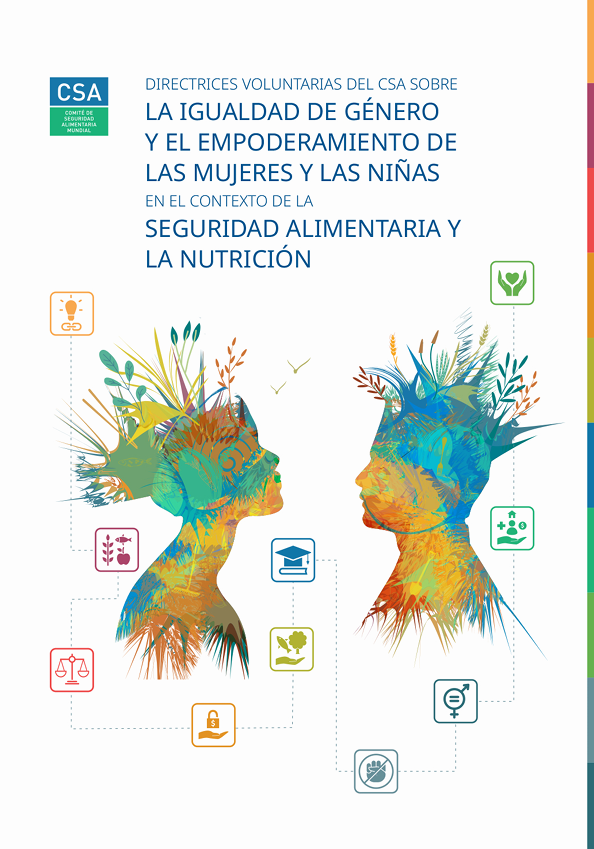
Voluntary Guidelines on Gender Equality and Women's and Girls' Empowerment

The challenge

The denial of women’s human rights is one of the major causes of poverty and food insecurity. Women still earn 82 cents for every dollar earned by men in agriculture, and the gender gap in land productivity between female- and male-managed farms of the same size is of 24 percent (FAO 2023). Despite notable progress, gender inequalities persist, and women and girls remain disproportionately affected by crises, shocks and climate change.

The opportunity

Closing the gender gap in agrifood systems could reduce the number of food-insecure people by 45 million (FAO 2023), contributing to economic growth and the achievement of zero hunger. The Voluntary Guidelines on Gender Equality and Women’s and Girls’ Empowerment in the Context of Food Security and Nutrition (VG-GEWGE) provide concrete recommendations to tackle gender-based discrimination and harmful social norms to achieve gender equality. Implementing the guidelines is a key opportunity for real change.

In action

In January 2025, FAO launched a multi-year programme to promote the uptake of the VG-GEWGE. The programme is supported by the Swiss Agency for Development and Cooperation (SDC), Global Affairs Canada, the German Federal Ministry of Food and Agriculture, and the Government of France.

The programme

The objective of this programme is to encourage stakeholders to integrate the recommendations of the VG-GEWGE into laws, policies and programmes. This is being done through initiatives tailored to each stakeholders group and participating countries which reflect their priorities, constituencies, and ways of working. Activities are designed and implemented under twomain objectives:

  • Raise awareness about the importance of the VG-GEWGE as a policy instrument and enhance understanding of its content.
  • Strengthen capacitities of stakeholders to implement the recommendations contained in the VG-GEWGE.

To provide effective support, the programme operates at global, regional, national, and local levels, with core actions in Colombia, Kenya, the United Republic of Tanzania, Zanzibar and Nepal. 

The team

The programme is hosted by FAO’s Rural Transformation and Gender Equaloty Division (ESP). The Global Coordination Unit, based in FAO HQ, counts on the support and expertise of FAO country offices, with dedicated national teams based in Nepal and the United Republic of Tanzania, Zanzibar. Meet the team below!

Alejandra Safa Barraza, Global Programme Coordinator

Silvia Rizzotto, Gender and Development Specialist

Tiziana Franceschelli, Programme Support Specialist

Julia Guimarães, Communications Specialist


Read more
20/09/2025

This booklet outlines FAO's approach towards the implementation of the CFS Voluntary Guidelines on Gender Equality and Women's and Girls' Empowerment in the Context of Food Security and Nutrition at global, regional, national and local levels.

17/08/2025

This overview outlines the FAO roadmap for the implementation of the CFS Voluntary Guidelines on Gender Equality and Women’s and Girls’ Empowerment in the Context of Food Security and Nutrition​​ from 2025-2027.