


Voluntary Guidelines on Gender Equality and Women’s and Girls’ Empowerment
Gender equality and women's and girls' empowerment are critical to achieving global food security and nutrition. According to The status of women in agrifood systems, closing the gender gap in agrifood systems could reduce the number of food-insecure people by 45 million. However, despite notable progress over the past decade, systemic inequalities and persistent challenges continue to hinder meaningful change.
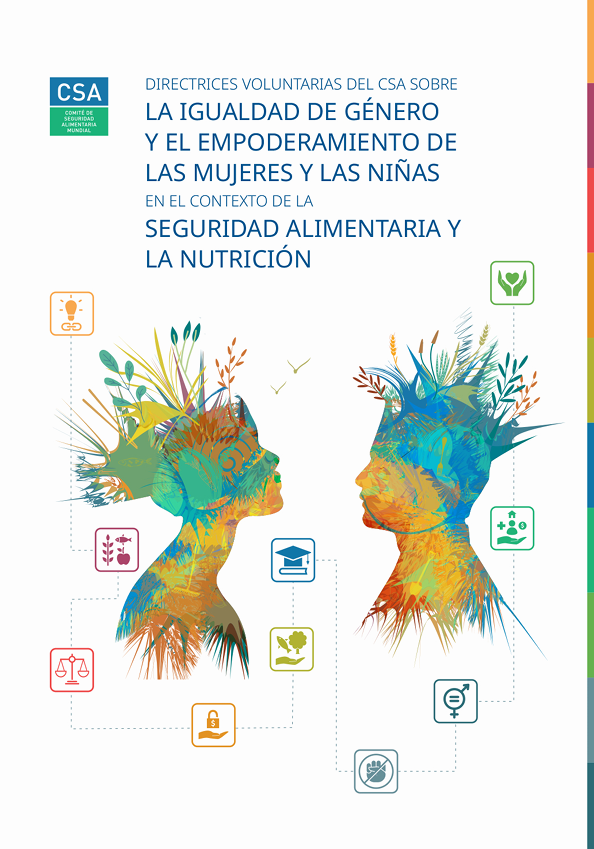
The Voluntary Guidelines on Gender Equality and Women’s and Girls’ Empowerment in the Context of Food Security and Nutrition (VG-GEWGE) represent a landmark achievement in which Committee on World Food Security (CFS) Members commit to tackle gender inequalities for enhanced food security and nutrition. They unite gender equality and food security goals, paving the way to ensure the progressive realization of the equal right to nutritious food for all. Implementing the guidelines is a key opportunity for real change. This programme aims to demonstrate how the VG-GEWGE can be used by stakeholders at all levels to achieve better lives for all.
Access the guidelines below

News

Tanzania steps up action to close gender gaps in agrifood systems
30/06/2026
Every meal begins with someone’s hard work. In Tanzania, that work is often carried out by women. Yet, women in agrifood systems continue to face barriers to access land, finance, technology, markets and decision-making opportunities that would allow them to reach their full potential.

Fueling progress: Tanzania hosts regional champions for women’s empowerment
18/05/2026
Collective commitment and strong policies are needed to tackle gender inequalities in regional agrifood systems. The Committee on World Food Security (CFS) Voluntary Guidelines on Gender Equality and Women’s and Girls’ Empowerment (VG-GEWGE) lay out the roadmap to achieve this goal. From 21-23 April 2026, the Food and Agriculture Organization of the United Nations (FAO) hosted gender champions from Ethiopia, Kenya, Malawi, Rwanda, South Africa, Uganda and the United Republic of Tanzania to learn about the guidelines and discuss their uptake at national and regional levels. The regional gathering was hosted in the context of the International Year of the Woman Farmer, a global opportunity to boost progress.

West African countries committed to boosting women’s empowerment in agrifood systems
26/11/2025
Collective commitment and political will are needed to tackle gender inequalities in West Africa, and policy tools such as the Voluntary Guidelines on Gender Equality and Women’s and Girls’ Empowerment (VG-GEWGE) can lead the way. To discuss the practical implementation of these guidelines, participants from Ghana, Liberia, Nigeria and Sierra Leone gathered in Accra, Ghana, for a workshop led by the Food and Agriculture Organization of the United Nations (FAO).

From Policy to Action: Investing in Women for a Just Agrifood Systems Transformation
21/10/2025
This event provided a dedicated space for Governments, Civil Society, UN agencies implementing the JP RWEE, and other stakeholders to explore how strategic investments and partnerships in agrifood systems can advance gender equality, empower rural women and promote food security and nutrition in line with the recommendations of the CFS Voluntary Guidelines on Gender Equality and Women’s and Girls’ Empowerment in the Context of Food Security and Nutrition (VG-GEWGE).