


EIFAAC- News

Europe’s cormorant toll: new study estimates EUR 670 million in annual fish damage
13/08/2026
A new European study reveals that predation by great cormorants is causing extensive damage to fish populations, inland fisheries and freshwater aquaculture. The EIFAAC/EAA/FEAP European inventory of fish damages caused by cormorant predation estimates annual economic damage to fish stocks from fish consumption by cormorants at more than EUR 670 million across the 26 countries surveyed.

EIFAAC advances preparations for European Cormorant Management Advisory Group
14/07/2026
The European Inland Fisheries and Aquaculture Advisory Commission (EIFAAC) convened the preparatory meeting of the Cormorant Management Advisory Group (CMAG) online on 9 July 2026, bringing together 30 experts from 18 European countries, together with representatives of the European Commission's Directorate-General for Maritime Affairs and Fisheries (DG MARE) and Directorate-General for Environment (DG ENV).

European Parliament discusses a coordinated approach to cormorant management
24/03/2026

Ukraine joins EIFAAC, strengthening regional cooperation on inland fisheries and aquaculture
03/03/2026

Save the Date – The EIFAAC 2026 International Symposium will be held in Riga, Latvia, on 5-7 October 2026
17/12/2025
The 2026 EIFAAC International Symposium on MANAGING AND CONSERVING INLAND FISHERIES AND AQUACULTURE RESOURCES IN A CHANGING WORLD will be hosted by the Ministry of Agriculture of Latvia and the Institute of Food Safety, Animal Health, and Environment (BIOR) in Riga, Latvia on 5 to 7 October 20...

EIFAAC Managers and Scientists gathered in Budapest to discuss developments in inland fisheries and aquaculture in Europe
25/11/2025
The European Inland Fisheries and Aquaculture Advisory Commission (EIFAAC) held a joint meeting of the EIFAAC Management Committee and Technical and Scientific Committee Meeting at FAO’s Regional Office for Europe and Central Asia in Budapest on 18-19 November 2025.

New European plan aims to curb cormorant impacts on fisheries
06/06/2025

Managing wildlife balance under the EU Birds Directive
26/05/2025

Why cormorants need European level management
16/05/2025

Just keep swimming: FAO works to mitigate climate change on inland aquatic resources and fisheries in Europe
07/04/2025
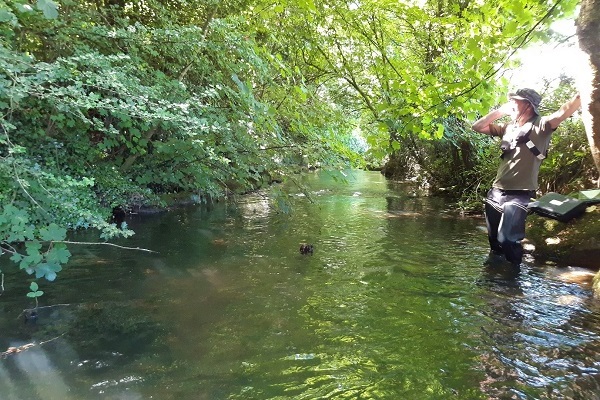
New publications from the EIFAAC Community
27/11/2024

EIFAAC welcomes Moldova as its 35th member
12/06/2022

The Republic of Serbia joins the European Inland Fisheries and Aquaculture Advisory Commission
05/03/2023

North Macedonia’s membership in European commission will boost sustainable aquaculture
06/02/2023

Slovenia becomes 38th member of the European Inland Fisheries and Aquaculture Advisory Commission
08/03/2024

FAO analysis of the aquaculture growth potential in Europe
30/09/2024
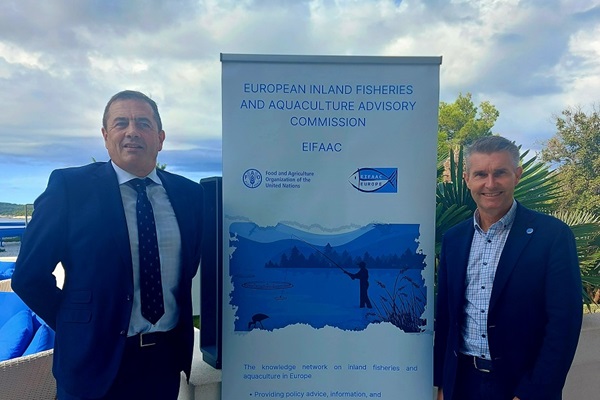
EIFAAC 32 emphasises the needs for more data collection in inland fisheries and for reducing administrative and regulatory barriers for aquaculture development.
11/10/2024
EIFAAC adopted two new Resolutions: 1) On inland fisheries statistics and information for management, and 2) On creating an enabling environment for freshwater aquaculture development.