


FRA Remote Sensing Surveys
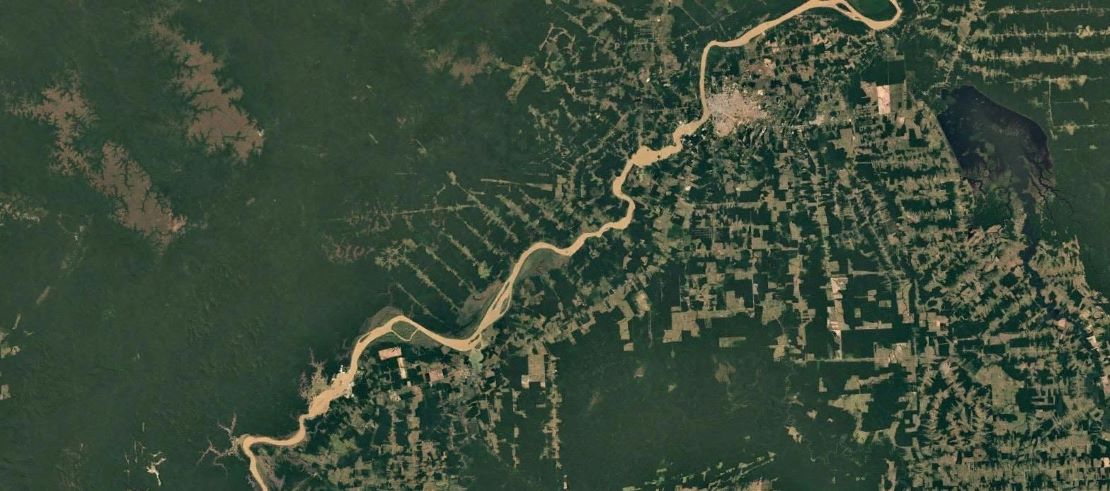
FRA complements the information collected through the country reporting process with global and regional analysis of the world’s forest resources using remote sensing.
The first FRA Remote Sensing Survey was implemented as part of FRA 1990. In FRA 2010, results from a global remote sensing survey were included as an independent means of collecting comparable time-series data on the state of the world’s forests between 1990 and 2005 at the regional, climatic domain and global levels (FAO and JRC, 2012). For FRA 2015, this quasi-systematic survey of remotely sensed data was updated with satellite imagery and analysis for the year 2010.
The objectives of the Remote Sensing Surveys are to:
- build country capacities to use remote sensing for forest monitoring; and
- generate independent, robust and consistent estimates of forest area and its changes over time at global, regional and biome levels.
What's next? FRA 2025 Remote Sensing Survey
FAO is undertaking another participatory global Remote Sensing Survey (RSS) to obtain up-to-date, reliable and consistent estimates of forest area and forest area change at regional, global and global ecological zone (GEZ) levels up to the year 2024.
This new data collection cycle is planned to be a two-year process to be completed by mid-2025, which will be carried out through the organization of 25 workshops globally. It will entail the data collection of around half
of the RSS 2020 global samples along with multiple new samples to obtain up-to-date statistics for the year 2024. The data collection process is planned to involve around 400 local experts around the world. The results of the FRA
2025 RSS are expected to be published in 2026.
The latest FRA 2025 RSS cycle commenced in 2023 with several successful pilot country studies from Bolivia, Zimbabwe and the Mediterranean region. For this new FRA
RSS cycle, the multitude of variables collected in the last cycle will be built upon with updated data through the year 2024 and additional information on agroforestry systems, pastoral systems, crop types, burned forest, mangroves and trees outside
of forests.
More information on the latest Remote Sensing Survey (FRA 2020 RSS) here.
To stay informed on the progress of the Remote Sensing Survey, subscribe to our newsletter!
See also: