


Publications

Gender transformative approaches for food security and nutrition: Gender Model Family (GOOD PRACTICE)
09/12/2020
Following a strong backlash from husbands who felt excluded from a revolving fund that was established to enable women to rehabilitate their livelihoods, Social Enterprise Development Foundation (SEND) International concluded that livelihood and food security projects would not be sustainable unless they started from a foundation of gender equity within the household. 11 pp.

Gender transformative approaches for food systems and nutrition: Individual Household Mentoring (GOOD PRACTICE)
09/12/2020
Projects supported by the International Fund for Agricultural Development (IFAD) identify individual household mentoring as a project activity and provide funding to the Ministry of Local Government for implementation. They build on experiences on household mentoring gained in an earlier IFAD-supported District Livelihoods Support Programme. This document examines the purpose of the methodology and the domains of gender inequality that are addressed. 11 pp.

Gender transformative approaches for food security and nutrition: Gender Household Approach (GOOD PRACTICE)
09/12/2020
The purpose of the HRNS Gender Household Approach methodology is to promote farming as a family business. In implementing this methodology, the main objectives include joint decision making and planning in smallholder farming households, the active participation of women in training activities, and the inclusion of women in leadership positions in farmer organizations. This publication addresses key domains of gender inequality. 9 pp.
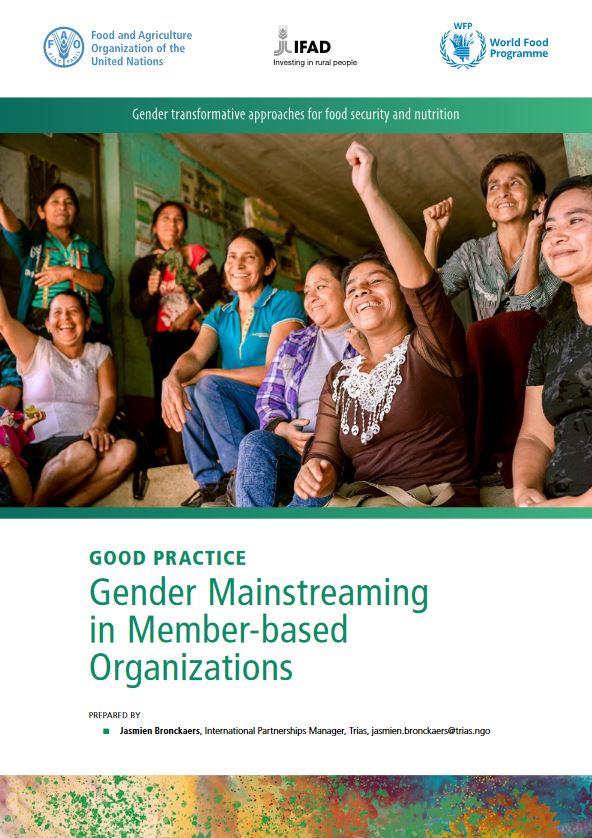
Gender transformative approaches for food security and nutrition: Gender Mainstreaming in Member-based Organizations (GOOD PRACTICE)
09/12/2020
Toolbox for Gender Mainstreaming in Member-based Organizations is the name of the methodology used to work toward individual empowerment of women and men, in parallel with an intentional change process of organizational structures towards gender equality. This paper outlines the different levels the methodology worked: the individual, enterprises/value chains and organizations while the household-level application is still under development. 10 pp.

Gender transformative approaches for food security and nutrition: Gender Action Learning System (GOOD PRACTICE)
09/12/2020
This publication builds on the experience with Oxfam Novib, a total of 51 ongoing IFAD-supported projects across 26 countries that have some activities related to household methodologies (GALS being the most widely used and innovative household methodology), 37 of which are currently under implementation. 11 pp.
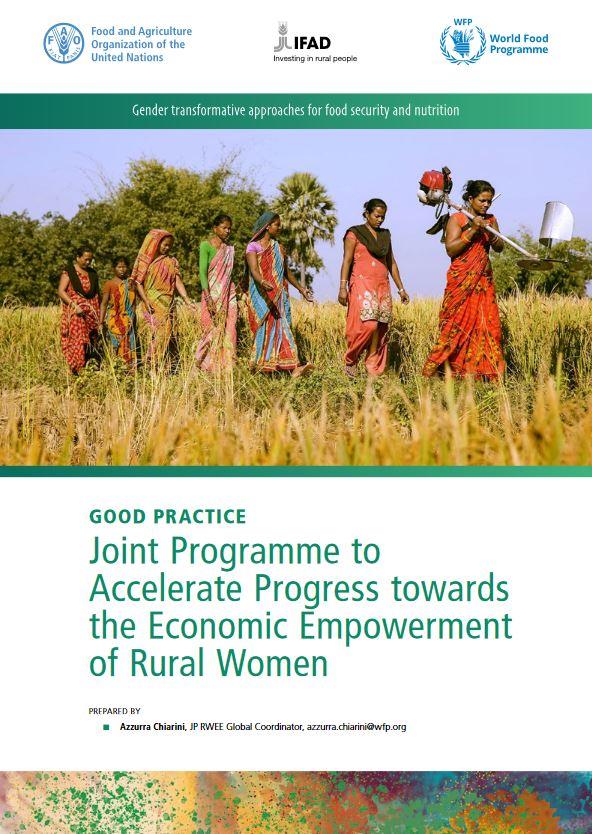
Gender transformative approaches for food security and nutrition: Joint Programme to Accelerate Progress towards the Economic Empowerment of Rural Women (GOOD PRACTICE)
09/12/2020
The methodology, a holistic, integrated approach to accelerate women’s empowerment: Joint Programme to Accelerate Progress towards the Economic Empowerment of Rural Women (JP RWEE), is based on the premise that an integrated approach to women’s empowerment in development projects has multiplying effects that enhance the reach and sustainability of project outcomes. This publication defines how the JP RWEE aims to respond to the diversity of issues rural women face in their daily lives. 11 pp.

Gender transformative approaches for food security and nutrition: Farmer Field and Life School (GOOD PRACTICE)
09/12/2020
The implementation of the methodology was developed by FAO Uganda under the programme Consolidating Gains in the Multi-sectoral Prevention and Response to Gender-based Violence (GBV) in North and North Eastern Uganda. The methodology has also been adapted to meet the specific needs of young people in JFFLS. This publication outlines the purpose of the methodology and the domains of gender inequality that are addressed including the reduction of GBV with specific the focus on women and 9 pp.

Gender transformative approaches for food security and nutrition: Dimitra Clubs (GOOD PRACTICE)
09/12/2020
The Dimitra Clubs are a community-driven approach that facilitates socio-economic empowerment, women’s leadership and self-help. They are informal groups of rural women and men who decide to join together on a voluntary basis to identify their common problems and solve them using local resources. This paper examines how the transformative approach contributes to gender equality and improve rural livelihoods. 12 pp.