


Publications

Women in Forestry: Challenges and Opportunities
05/09/2014
Men and women play different roles in forestry and agroforestry systems in developing countries. Compared with men, women are frequently disadvantaged in their access to and control over forest resources, and in the economic opportunities available to them. 11 pp.
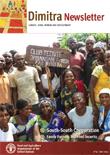
Dimitra Newsletter 25
01/09/2014
The Dimitra newsletter outlines the Dimitra project’s most recent activities and achievements, especially the development and growing impact of the listeners’ clubs. This edition focuses on South-South cooperation and on news from Dimitra listeners’ clubs in Senegal, the Democratic Republic of Congo (DRC), and more. 24 pp.
FAO success stories on climate-smart agriculture
09/06/2014
This booklet provides examples of climate-smart systems by showcasing some FAO success stories in various countries. The cases have been selected from the FAO Climate-Smart Agriculture (CSA) Sourcebook launched in 2013 to show the diversity of potential options across different regions and agricultural systems also covering subjects such as biodiversity and gender. 24 pp.

Gender-equitable governance of tenure of land, fisheries and forests: a right to food perspective
19/05/2014
In light of the endorsement of the Voluntary Guidelines on the Responsible Governance of Tenure of Land, Fisheries and Forests in the Context of National Food Security (VGGT), this Information Brief aims to provide concise and practical elements for a gender-equitable governance of tenure of land, fisheries and forests. 4 pp.

Leveling the field: Improving opportunities for women farmers in Africa
01/04/2014
Improving opportunities for women farmers in Africa. 86 p.

Dimitra Newsletter 24
31/01/2014
The Dimitra newsletter outlines the Dimitra project; most recent activities and achievements, especially the development and growing impact of the listeners & clubs. This issue highlights experiences of development approaches that are helping in the fight against poverty in rural areas. 24 pp.

Summary of the FAO policy on gender equality
29/01/2014
Gender equality is central to the Food and Agriculture Organisation of the United Nations’ (FAO’s) mandate to achieve food security for all by raising levels of nutrition, improving agricultural productivity and natural resource management, and improving the lives of rural populations. FAO can achieve its goals only if it simultaneously works towards gender equality and supports women’s diverse roles in agriculture and rural development. 4 pp.

Women’s resilience to food price volatility: A policy response
27/01/2014
Rural women, traditionally responsible for providing food and health in the household, face major constraints in fulfilling their roles, rendering them more vulnerable to food price spikes. This discussion paper points to two aspects that, in general terms, reduce women’s ability to absorb and respond to shocks in a high and volatile food price setting: the inequalities that create a gender gap in rural development and women’s traditional roles in society and the household. 25 pp.